Don’t choose crisps as a breakfast on their own. If you still want to take something savoury with you, start with a breakfast made up of foods from the Wheel of Five, as recommended by the Netherlands Nutrition Centre. Then compare crisps per 100 g for energy, saturated fat and salt, and decide on your portion in advance: a light or oven-baked variety won’t necessarily make a big difference to the calories.
Who is this choice relevant to?
Anyone looking for a quick breakfast and considering crisps
You want something savoury that needs no preparation, but don’t want crisps to make up your whole breakfast. The Netherlands Nutrition Centre recommends using foods from the Wheel of Five as the basis for breakfast.
Anyone comparing crisps for calories and fat
You want to know whether a light or oven-baked variety really differs from regular crisps. The Netherlands Nutrition Centre recommends comparing nutritional values per 100 g; a lower fat content doesn’t, by itself, tell you how many calories a product contains.
Anyone who wants to portion out a snack for the journey
You want to decide in advance how many crisps to take with you. A small pack can be practical, but it doesn’t automatically mean fewer calories per 100 g.
What should you look for when choosing?
Decide what you’ll have for breakfast first, then assess crisps by their nutritional information and the amount you actually want to eat.
| What to consider |
What to check when buying |
Who it matters to |
| Breakfast alongside the crisps |
Choose foods from the Wheel of Five for breakfast and treat crisps as, at most, a small savoury extra. |
When I’m in a hurry, I don’t want a bag of crisps to become my whole breakfast. Around 42% of consumers put having a suitable breakfast base first. |
| Energy and fat |
Compare similar flavours per 100 g for kcal, saturated fat and salt; don’t rely on ‘light’ or ‘oven baked’ alone. |
I want to know whether the lower-fat variety also contains fewer calories. Around 33% of consumers give this comparison top priority. |
| A portion for the journey |
Check the net weight and decide in advance how many grams you want to eat. |
When I’m out and about, I want to take a portion I’ve chosen in advance rather than eat from a large pack. Portion control comes first for around 25% of consumers. |
Common mistakes
-
Assuming ‘light’ means far fewer calories
According to the Netherlands Nutrition Centre, light crisps contain less fat, but the difference in calories compared with regular crisps may be limited.
Compare the nutrition tables for similar crisps and check kcal, saturated fat and salt per 100 g.
-
Having oven-baked crisps as your whole breakfast
The Consumers’ Association points out that less fat in oven crisps doesn’t necessarily mean a big difference in calories. The cooking method also doesn’t make crisps a substitute for a breakfast based on foods from the Wheel of Five.
Consider oven-baked crisps as a possible small extra, and choose your breakfast separately.
-
Looking only at the stated serving size
A serving size on a pack doesn’t have to match what you actually eat. The Netherlands Nutrition Centre gives 214 kcal as the value for a 40 g bowl of crisps; that isn’t a standard portion for every pack.
Compare products per 100 g, then decide how many grams you want to take with you.
-
Not checking the ingredients and allergens again
Ingredients can vary by flavour, and product information can change.
When you buy them, check the ingredients list and declared allergens on the current pack.
Brands and supermarket own-label options to consider
Lay's
Lay's describes Oven Baked as oven-baked potato crisps.
- According to Lay's own product information, Oven Baked contains 50% less fat than regular potato crisps.
- That difference in fat isn’t a measure of the difference in calories. Compare the nutritional information for the flavour you choose.
Albert Heijn
Albert Heijn lists AH Ridged Crisps Natural Less Fat among the varieties you can compare with regular crisps.
- A lower-fat variety gives you a specific product label to compare within the range.
- Check the kcal and salt values for the exact flavour you choose.
Jumbo
Jumbo lists Lay's Light Natural and Lay's Oven Baked Natural alongside regular crisps.
- These varieties give you a starting point for comparing product labels.
- A name such as ‘Light’ or ‘Oven Baked’ doesn’t tell you how many kcal the variety you choose contains per 100 g.
Pringles
Pringles lists Original in 40 g, 70 g and 165 g packs.
- The 40 g pack may suit a portion you’ve chosen in advance.
- A smaller pack doesn’t change the nutritional value per 100 g; check the label for that information.
Lidl / Snack Day
Lidl lists Snack Day Ridged Crisps Natural in a 250 g pack.
- The stated pack size lets you compare it with the portion you plan to have.
- Don’t assume a larger pack contains fewer calories; check the nutritional information.
Crisps for a small savoury snack
This Joybuy selection includes an oven-baked variety for anyone who wants to take something savoury alongside a quick breakfast. Check the nutritional values on the pack before comparing the varieties for calories.
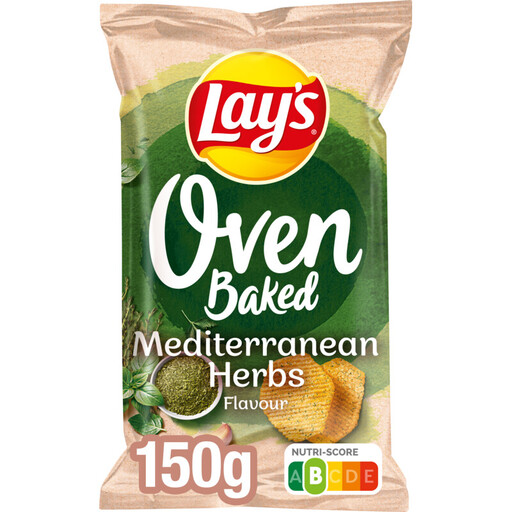 Image unavailable
Lay's Oven Baked Mediterranean Herbs, 150 g
These oven-baked crisps could make a small savoury snack, but they’re not a breakfast on their own.
Pack size: 150 g. Check the current kcal, fat and salt values per 100 g on the pack before assessing any difference in calories.
View on Joybuy
Frequently asked questions
Can light crisps be my quick breakfast?
Not as a complete breakfast. The Netherlands Nutrition Centre also places light crisps outside the Wheel of Five. Choose foods from the Wheel of Five for breakfast and keep crisps to a small extra at most.
Does ‘light’ mean crisps have far fewer calories?
No, you can’t conclude that from the description alone. According to the Netherlands Nutrition Centre, the difference in calories between light and regular crisps is limited, even when the light variety contains less fat. So compare the energy per 100 g.
How do I compare packs with different serving sizes?
Start by comparing the nutritional values per 100 g, as recommended by the Netherlands Nutrition Centre. Then check the net weight and how much you want to eat, rather than comparing the serving sizes on different packs directly.
Should I check the allergens again if I know the flavour?
Yes. Check the current ingredients list and allergen information on the pack. Recipes and product information can change, and a different flavour may contain different ingredients.


