Don’t give a baby aged 4 months to 1 year salted organic crisps as a snack. Organic certification doesn’t change the amount of added salt or whether the texture is suitable for your baby’s eating skills. For first tastes, choose a soft vegetable or fruit preparation with no added salt. If you want to offer pieces of food, also check that your baby can sit upright and swallow and chew well.
Who is this choice for?
Parents starting with first tastes
You’re looking for something that suits your baby’s eating skills, not just the age shown on a packet. The Voedingscentrum gives mashed vegetables and fruit as examples of first tastes. It also stresses the importance of sitting upright, swallowing and chewing when offering larger pieces.
Parents who choose organic products carefully
You want to know what organic certification confirms before considering a snack for your baby. According to the European Commission, the EU organic logo relates to organic certification; it doesn’t mean that crisps are suitable for babies.
Households choosing different snacks for adults and babies
You can buy organic crisps for adults and choose a different snack for your baby. Check the ingredients and nutritional information for the crisps, and assess your baby’s food separately for salt, texture and suitability for their eating skills.
What should you look for?
First, decide whether the product is intended for your baby or for adults. For your baby, salt content and a suitable texture matter more than organic certification. For crisps intended for adults, you can check the organic certification separately.
| What to consider |
What to check when buying |
Who it matters to |
| Added salt |
Read the ingredients list of any product you’re thinking of giving your baby. The Voedingscentrum recommends avoiding foods with salt for babies aged 4 months to 1 year. |
If my baby might share in the snack, I don’t want to offer a salted snack as a first taste. Avoiding salt is the deciding factor for around 45% of consumers. |
| Texture and eating skills |
Check that the food is soft enough and that your baby can sit upright and swallow and chew well before offering larger pieces. Stay nearby while they eat, as the Voedingscentrum advises. |
My baby is still learning to manage pieces of food, so I want to choose a suitable texture. A safe texture and eating skills come first for around 36% of consumers. |
| Organic certification |
For crisps intended for adults, look for the EU organic logo and also read the ingredients and nutritional information. According to the European Commission, the logo indicates organic certification, not suitability as a baby food. |
I buy crisps for adults and want to be able to tell whether they’re organically certified. For around 19% of consumers, organic credentials are the first thing they consider when buying. |
Common mistakes
-
Assuming organic means suitable for babies
According to the European Commission, the EU organic logo confirms organic certification. It doesn’t tell you whether crisps contain added salt or have a suitable texture for your baby.
Check the ingredients and your baby’s eating skills first. Use the certification only to assess the product’s organic credentials.
-
Assuming lentil or vegetable crisps are suitable for babies
A name that mentions lentils or vegetables doesn’t mean the product is free from added salt. Albert Heijn’s product information lists sea salt in BioToday Lentil Crisps Sea Salt and AH Organic Vegetable Crisps with Sea Salt.
Read the ingredients for the exact variety. For first tastes, it’s better to choose a soft vegetable or fruit preparation with no added salt.
-
Assuming a small or crisp piece is suitable without considering your baby’s eating skills
The size of a piece doesn’t tell you enough about how your baby will manage it. The Voedingscentrum says that babies should be able to sit upright and swallow and chew well before you offer larger pieces.
Start with a suitably soft texture, gradually introduce more texture and stay with your baby while they eat.
Brands to consider
These examples show why you should assess each variety of organic crisps individually; they aren’t suggestions for baby foods.
AH Biologisch
Albert Heijn describes organic vegetable crisps made with beetroot, carrot, parsnip and potato in this range.
- The product information lists organic vegetables and sunflower oil.
- According to Albert Heijn, these vegetable crisps contain sea salt, so they aren’t a suitable snack for a baby aged 4 months to 1 year.
BioToday
BioToday makes organic lentil crisps for adults to enjoy as a snack.
- For the Sea Salt Lentil Crisps variety, the ingredients list published by Albert Heijn includes lentil flour.
- The same ingredients list also mentions sea salt. The fact that these crisps contain lentils doesn’t make them suitable for babies.
Trafo
On its own website, Trafo describes organic crisps made with ingredients including potatoes, vegetables and pulses.
- If you’re looking for organic crisps for adults, you can check the ingredients of individual varieties in the range.
- The ingredients information for Trafo Lentil Crisps Sea Salt lists sea salt. Check the packet and don’t treat this variety as a baby food.
A soft alternative on Joybuy
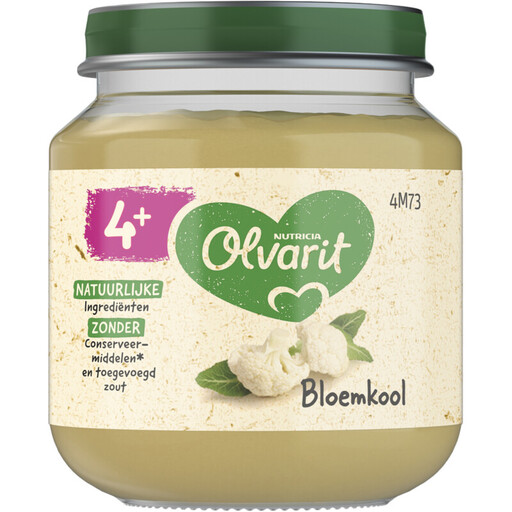
This cauliflower purée is a soft alternative when you’re starting with first tastes. It isn’t organic crisps or a piece of food your baby can hold independently. Choose how to offer it based on your baby’s eating skills, and check the current packaging if ingredients or organic certification matter to your choice.
 No image available
Olvarit cauliflower purée 4M+, 125 g
A smooth cauliflower purée for anyone looking for a first vegetable taste instead of crisps; purée doesn’t replace practising with pieces of food for independent eating.
The product name states 4M+ and a pack size of 125 g. Check the ingredients and nutritional information on the current packaging before giving it to your baby.
View on Joybuy
Frequently asked questions
Can I give my baby organic crisps for baby-led weaning?
Salted organic crisps aren’t a suitable choice for a baby aged 4 months to 1 year. The Voedingscentrum recommends avoiding foods with salt for babies in this age group. For first tastes, try mashed vegetables or fruit, for example.
Does the EU organic logo mean that crisps are suitable for babies?
No. According to the European Commission, the EU organic logo indicates organic certification; it doesn’t tell you whether a product is suitable for a baby’s diet or eating skills. Check the ingredients and texture separately.
When can my baby eat larger pieces?
Only offer larger pieces once your baby can sit upright and swallow and chew well, as the Voedingscentrum advises. If your baby struggles with lumpier textures, introduce them gradually and stay nearby while they eat.
How can I tell if crisps are organically certified?
Look for the EU organic logo on the packaging. According to the European Commission, it can only appear on products certified as organic by an approved control authority or control body. Also read the ingredients and nutritional information for the variety you’re buying; the logo doesn’t automatically make crisps suitable for your baby.


