
If you’re comparing sugars
You want to compare the amount of sugars per 100 g with that in other crispbread options, without mistaking a claim on the front of the pack for a nutritional value.


Choose crispbread by comparing the sugars per 100 g; a low sugar figure alone does not prove that it meets the requirements for a formal ‘reduced sugars’ claim. Jumbo lists 1.5 g of sugars per 100 g for Wasa Wholegrain 260 g and 2.4 g for Jumbo Wholegrain Crispbread 5 × 5. Fibre, salt, ingredients and allergens may affect which of these options is right for you.
You want to compare the amount of sugars per 100 g with that in other crispbread options, without mistaking a claim on the front of the pack for a nutritional value.
You look at the flour used and the fibre content, even when a product looks like a wholegrain option at first glance.
You want to assess the salt content, grains and other ingredients in the specific option you’ve chosen. If you have an allergy, it’s essential to check the latest allergen information too.
Start by comparing the nutritional information per 100 g for the options you’re considering. Then check the ingredients and the amount you usually eat, including any toppings.
| What to consider | What to check | Who it matters to |
|---|---|---|
| Sugars and claims | Compare ‘of which sugars’ per 100 g and assess any ‘reduced sugars’ claim separately. | If I’m looking for less sugar, I want to compare similar options rather than rely on wording on the packaging alone. Sugar would be the top priority for around 42% of consumers. |
| Wholegrain and fibre | Check which types of flour are used and compare fibre per 100 g. | For my everyday crispbread, I want to know whether the grain used and the fibre content match my preferences. Wholegrain and fibre would come first for around 33% of consumers. |
| Salt and ingredients | Check the salt per 100 g, the ingredients list and the allergen information for the option you’ve chosen. | If I need to watch my salt intake or avoid specific ingredients, a low sugar figure isn’t enough to make a choice. Salt and ingredients would be the main considerations for around 25% of consumers. |
A low figure next to ‘of which sugars’ doesn’t show that a product meets the requirements for a comparative claim such as ‘reduced sugars’.
Compare the nutrition tables on a like-for-like basis and treat any claim on the packaging as a separate matter.
Salt levels can also vary between wholegrain options. Jumbo lists 1.2 g of salt per 100 g for Wasa Wholegrain 260 g and 0.71 g for Jumbo Wholegrain Crispbread 5 × 5.
Compare sugars, fibre and salt per 100 g, then consider your usual portion size.
A name such as ‘wholegrain’ or ‘protein’ doesn’t tell you which gluten-containing cereals or other allergens are in a particular option.
Check the latest allergen information on the packaging every time you buy it, especially if you need to avoid an ingredient.
The crispbread category doesn’t tell you which type of salt is used in a particular product.
If the iodine content matters to your choice, check the product information or ask the manufacturer which salt is used.
Wasa offers wholegrain and protein crispbread options, among others. Compare the nutritional information for each one.
Jumbo sells its own crispbread alongside options from other brands.
Albert Heijn offers its own crispbread options, including wholegrain, pumpkin seed and sesame varieties.
Lidl Netherlands has a product page for 250 g wholegrain crispbread.
These crispbread options are worth considering if you want to compare sugars and also take the grain used, fibre and salt into account. Check the current packaging before comparing nutritional values or ingredients across options.
 Image unavailable
An option to consider if you want to weigh up wholegrain alongside sugars and salt. The pack contains 265 g; check the label for precise nutritional values and allergen information.
 Image unavailable
A wholegrain option to compare if you also want to assess the type of flour and salt content. The pack contains 260 g; check the nutritional information and allergens for this product.
 Image unavailable
An option to consider if you want to compare the flours used and fibre alongside sugars. The pack contains 375 g; check the ingredients list to see which flours are used in this product.
 Image unavailable
An option to compare with other crispbreads when weighing up sugars, salt and ingredients together. The pack contains 215 g; check the allergen information for this product too.
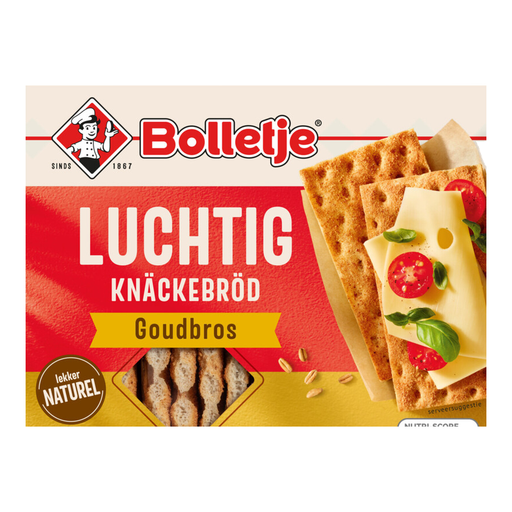 Image unavailable
Compare this option using the nutrition table, rather than assuming ‘Light’ indicates a sugar value or a ‘reduced sugars’ claim. The pack contains 240 g; check the flours and allergens too.
No. A low sugar figure on its own doesn’t support this comparative nutrition claim. The EU sets requirements for nutrition claims; use the nutrition table to compare products per 100 g and assess any claim separately.
The term refers to the flour used, not to all the product’s nutritional values. According to the Netherlands Nutrition Centre, crackers may be called ‘wholegrain’ when they’re made from 100% wholegrain flour. You should also compare fibre and salt on the label.
The Wasa Wholegrain and Wasa Protein Wheat options reviewed here aren’t suitable: the first contains rye and the second contains wheat and wheat gluten. Always check the latest allergen information for any other option.
Don’t assume based on the product category or the name ‘crispbread’. Check the information for the specific option or ask the manufacturer which salt is used if iodine is important to your choice.