For a school lunchbox, crispbread clearly labelled as wholegrain is a good starting point if your child likes the taste and texture. A thin, mild wholegrain option can help them get used to it; golden-brown crispbread made with wheat flour is not automatically an equivalent wholegrain choice. Check the nutritional information, allergens and school or after-school club policies for every option.
Who is this choice relevant to?
Parents of fussy crispbread eaters
If a strong rye flavour or thick texture makes school lunch less appealing, you could try a thinner, milder option. According to the Voedingscentrum, getting used to a new flavour can take repeated exposure; try not to put pressure on your child.
Families comparing wholegrain options and fibre
When choosing between packs, look beyond the colour: read the grain ingredients and compare fibre per 100 g. This makes it easier to compare nutritional information when pack sizes or portions differ.
Parents who need to check allergens
If your child or their school has allergy policies, the current ingredients and allergen information are key. Crispbread varieties can differ in the gluten-containing grains, milk and sesame they contain, as well as in warnings about possible traces.
What should you look for when choosing?
Start with what your child will actually eat, then check the grain ingredients, nutritional information and allergens. If there are allergy restrictions, a suitable label always takes priority over taste preferences or choosing wholegrain.
| What to consider |
What to check when buying |
Who is this important to? |
| Wholegrain and fibre |
Check the wholegrain claim, grain ingredients and fibre per 100 g. |
If wholegrain is my priority, I want the label to show which grain has been used and how the nutritional value compares. This is a priority for around 36% of consumers. |
| Taste and texture |
Look for descriptions such as thin and mild; try an option without assuming your child will eat it. |
If firm rye crispbread comes back untouched, I want to try a texture my child is more likely to accept. Around 29% of consumers prioritise this. |
| Pack size and the school week |
Compare pack sizes and portions when planning lunches; follow the storage instructions after opening. |
I want to plan how much I need for school days without opening more than we will use. This is the main consideration for around 21% of consumers. |
| Allergens and school policies |
Read the current allergen information and ask which policies apply at school or the after-school club. |
If an allergen is relevant to my child or their class, the specific pack must meet the agreed policies. This check is a priority for around 14% of consumers; for anyone affected, it remains essential regardless of that figure. |
Common mistakes
-
Assuming golden-brown means wholegrain
The colour does not tell you which flour the crispbread is made from. Jumbo Goudbruin lists wheat flour as an ingredient; this is different from a wholemeal flour base.
Check the wholegrain claim and ingredients list, then compare the fibre per 100 g.
-
Checking for gluten only
Milk and sesame can also be relevant, depending on the crispbread variety. According to the Netherlands Food and Consumer Product Safety Authority, allergens must be listed on the label; also check for warnings about possible traces.
Read the current pack before putting anything in your child’s lunchbox and check with the school or after-school club if you are unsure.
-
Putting pressure on a fussy eater
A new rye flavour may not be accepted straight away. The Voedingscentrum points out that getting used to flavours can take repeated offers.
Try a small amount of a milder option without making a fuss, and see what your child actually eats.
A lunch that repeatedly comes home untouched can also lead to food waste.
-
Assuming crispbread is a straightforward substitute for bread
The Voedingscentrum describes bread, particularly bread made with baker’s salt, as an important source of iodine. So if you are replacing bread regularly, do not assume it provides the same amount of iodine without checking product-specific information.
Check the ingredients in your chosen crispbread and consider the replacement in the context of the rest of your child’s diet.
Brands to consider
Wasa
Among the varieties mentioned, you can choose from wholegrain rye crispbread, a thin and mild option, and high-fibre crackers.
- Wasa Wholegrain lists 100% wholegrain rye flour and 20 g of fibre per 100 g; Wasa Lightweight is described as thin and mild.
- Wasa Lightweight contains milk. Check the allergen information for each individual variety, including any other allergens.
Bolletje
Bolletje Wholegrain Crispbread is made with wheat, rye and barley, making it an option for comparing grain ingredients.
- Jumbo’s product information describes this variety as 100% wholegrain.
- The ingredients include gluten-containing grains and sesame, among other things, so check the pack against the relevant allergy policies.
Jumbo
The own-brand varieties mentioned have different grain bases: Wholegrain contains wholemeal wheat and rye flour, while Goudbruin contains wheat flour.
- The product information lists 10,9 g of fibre per 100 g for Jumbo Wholegrain and 4,2 g per 100 g for Jumbo Goudbruin.
- A golden-brown variety is therefore not necessarily interchangeable with the wholegrain option mentioned; check the allergens on each pack too.
Albert Heijn
AH Wholegrain Crispbread is an own-brand option whose nutritional information and allergens you can compare with those of other packs.
- Albert Heijn lists 12 g of fibre per 100 g for the variety mentioned.
- The product information includes sesame and gluten-containing grains, among other things. Check the current pack before buying.
Ryvita
Ryvita Wholegrain Crackerbread is a distinct crackerbread option for anyone looking for a light, crisp texture.
- According to Ryvita, this variety contains 99 g of wholemeal wheat flour per 100 g of product.
- The product specification also lists skimmed milk powder and possible traces of soya. Check the exact variety and pack before choosing it for a school lunch.
Crispbread and crackers on Joybuy
These products offer different starting points for a school lunchbox: a thin rye option, wholegrain crispbread and crackers made with other grains. Check the current pack if fibre, allergens or a specific wholegrain claim will determine your choice.
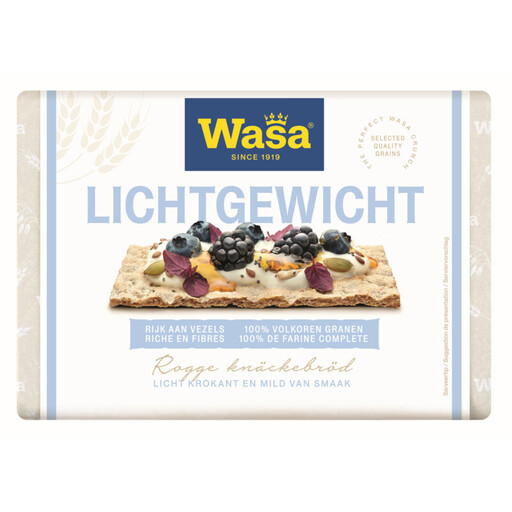 Image unavailable
Wasa Lightweight crackers, 300 g
A thin rye option described as mild, worth trying if your child is less keen on firmer crispbread.
The product information for Wasa Lightweight lists wholegrain rye and milk. Check the current allergen information, including warnings about possible traces, before putting the crackers in your child’s school lunchbox.
View on Joybuy
 Image unavailable
Wasa Wholegrain crispbread, 260 g
A rye option for a school lunch if your child is happy to eat crispbread.
Jumbo’s product information lists 100% wholegrain rye flour and 20 g of fibre per 100 g. Check the current allergen information on the pack before putting it in your child’s lunchbox.
View on Joybuy
 Image unavailable
Bolletje Wholegrain crispbread, 265 g
An option to consider if you are looking for wholegrain crispbread made with several types of grain for your child’s lunchbox.
The product information for this Bolletje variety lists wholemeal wheat, rye and barley, as well as sesame. Check the current pack if allergens are a concern.
View on Joybuy
 Image unavailable
Wasa high-fibre crackers, 300 g
Crackers for comparing grain ingredients and fibre with other options for a school lunch.
The product information lists rye, wheat, oats and sesame. Check the nutritional information per 100 g and the current allergen information; do not rely on the product name alone to tell you what the whole product contains.
View on Joybuy
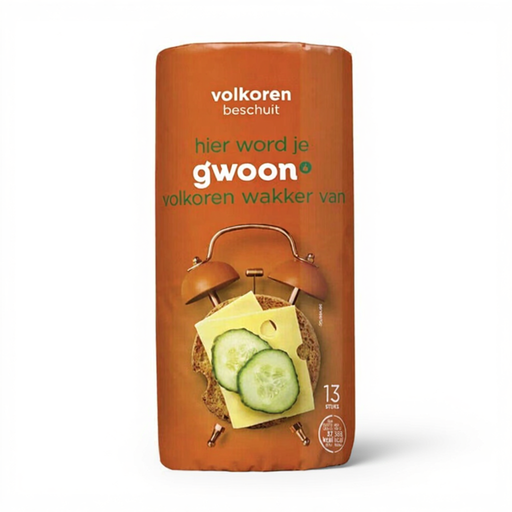 Image unavailable
g'woon Wholegrain crispbreads, 125 g
A light, crunchy cracker to compare if texture is important for your child’s school lunch.
The product description lists wholemeal wheat flour, wheat gluten and egg. Check the full ingredients list, fibre per 100 g and allergen information on the pack.
View on Joybuy
Frequently asked questions
Is golden-brown crispbread automatically wholegrain?
No. A golden-brown colour does not prove that wholemeal flour has been used: Jumbo Goudbruin, for example, lists wheat flour as an ingredient. Check the wholegrain claim, ingredients and nutritional information on the pack.
Can regular crispbread be included in a gluten-free diet?
Do not assume so. Varieties made with rye or wheat contain gluten-containing grains. Only choose a product whose current labelling meets the child’s dietary requirements.
Should I check for milk and sesame for school too?
Yes, if those allergens are relevant to your child or the school’s policies. According to the product information, Wasa Lightweight contains milk, while sesame is present in some of the other varieties mentioned. Always read the specific pack and ask the school or after-school club which policies apply.


