For a Boxing Day buffet, serve a wholegrain crispbread alongside one with a different flavour or texture if your guests have varied preferences. Check the ingredients, nutrition information per 100 g and allergens on both packs: a different colour, flavour or thickness does not tell you whether a product is wholegrain.
Who is this choice important for?
Buffet organiser catering for different tastes
You want to give guests a choice between crispbread with a distinctive grain flavour and one with a different flavour or texture. Serving two types of product is more practical than assuming everyone wants the same cracker.
Consumer keeping an eye on wholegrains and fibre
You’re looking for a product that is actually labelled wholegrain, and comparing the fibre and salt content per 100 g. The Netherlands Nutrition Centre recommends using the same basis when comparing labels.
Buffet organiser who needs to consider allergens
Before serving, you check the pack for cereals containing gluten and other relevant allergens. According to the Netherlands Nutrition Centre, certain allergens must be clearly stated on the label; any warnings are worth checking too.
What should you look for when choosing?
Decide which preferences you want to cater for at the buffet, then compare the labels on your chosen products. The Netherlands Nutrition Centre recommends comparing nutritional values per 100 g, as portion sizes can vary.
| What to consider | What to check when buying | Most relevant for |
|---|
| Wholegrains and fibre |
Check that the product is labelled wholegrain and compare fibre per 100 g. |
If I want to offer guests a clear wholegrain option, I want to know what grains it contains. Around 45% of consumers prioritise this choice of wholegrains and fibre. |
| Flavour and texture |
Check the product name and ingredients if you want to serve two different varieties. |
For fussy guests, I don’t want to rely on just one grain flavour or texture. This variety is the most important consideration for around 33% of consumers. |
| Allergens and labelling |
Read the current label, including any warnings; compare salt per 100 g if needed. |
If I need to account for an allergen or a specific ingredient, checking the label comes before choosing a flavour. This is the first thing to consider for around 22% of consumers. |
Common mistakes
-
Assuming brown or multigrain means wholegrain
A brown colour or the word multigrain doesn’t mean that all the flour is wholemeal. The Netherlands Nutrition Centre distinguishes between a wholegrain product and one that also contains refined flour.
If wholegrain is what you’re looking for, check for the wholegrain label and read the ingredients list to see which grains it contains.
-
Comparing nutritional values per cracker
Crackers can vary in weight, so the figures per cracker don’t always give you a fair comparison of the nutritional value of two products.
First compare fibre, sugars, fat, salt and energy per 100 g. Then check the pack size and number of crackers to work out what you need for your buffet.
-
Putting a pack on the table without checking allergens
Ingredients and warnings can vary between varieties. At a shared buffet, guests should be able to tell which product goes with which label.
Check the packaging of each product you choose and keep it available when serving.
-
Assuming all crispbread contains iodine
The product category doesn’t tell you whether a particular crispbread is made with baker’s salt containing iodine.
If this matters to your choice, check the ingredients on the pack you’ve chosen. If the label doesn’t make it clear, ask the manufacturer for product information.
Brands and shops to consider
Wasabröd / Wasa
Wasa offers wholegrain crispbread among its products. Albert Heijn lists Wasa Wholegrain in its product information.
- A familiar brand name if you’re looking for a wholegrain variety.
- Albert Heijn recommends checking the pack, as ingredients and nutritional information can change.
Ryvita
Ryvita’s UK brand page lists wholemeal rye flour, rye flour and salt as the ingredients in its Original Crispbread.
- For this specific variety, the brand page states that it contains 88 g of wholemeal rye flour per 100 g.
- Don’t rely on the UK product information without checking the label on any pack sold in the Netherlands.
Albert Heijn
Albert Heijn’s range includes different types of crispbread, including branded products and a sesame variety.
- You can compare product names and varieties side by side.
- Check the availability and current label of each product you choose; a listed organic wholegrain variety is marked as no longer available.
Jumbo
Jumbo describes its own-brand wholegrain crispbread as a 375 g pack containing 25 pieces.
- The product page lists ingredients, allergens and nutritional values, making it easy to compare this variety directly.
- The listed variety contains wheat and rye. If you have allergies, check the other information on the pack you buy too.
Lidl
Lidl lists wholegrain crispbread in a 250 g pack.
- The product listing gives you a specific pack size to help plan your buffet.
- Check the ingredients, allergens and nutritional values on the pack in store.
ALDI / Goud Gebakken
ALDI describes Goud Gebakken Wholegrain Crispbread as a 375 g pack containing 25 pieces.
- The number of pieces and pack size help you decide how many packs to put out for your buffet.
- Before serving, read the ingredients and allergen information on the physical pack.
Crispbread and crackers on Joybuy
These products offer a range of names, flavours and pack sizes for your buffet. Choose a wholegrain option based on the current label, and add a variety with a different flavour or texture if you like.
 Image unavailable
Wasa Wholegrain crispbread – 260 g
An option if you want to offer wholegrain-labelled crispbread at your buffet.
Pack size: 260 g. Check the grain composition and allergens on the label.
View on Joybuy
 Image unavailable
Wasa Lightweight crackers – 300 g
A differently named cracker if you’d like to offer another option alongside crispbread.
Pack size: 300 g. Check the ingredients and allergens before choosing this variety for your guests.
View on Joybuy
 Image unavailable
Bolletje Whole Grain crispbread – 265 g
A second wholegrain-labelled crispbread to consider if you’d like to choose between brands.
Pack size: 265 g. Compare the nutritional values per 100 g and check the allergens on the pack.
View on Joybuy
 Image unavailable
g'woon Wholemeal crispbread – 375 g
A pack to consider if you want to put out more of one type of crispbread for your buffet.
Pack size: 375 g. Don’t assume from the name Wholemeal that all the flour used is wholemeal without checking the label.
View on Joybuy
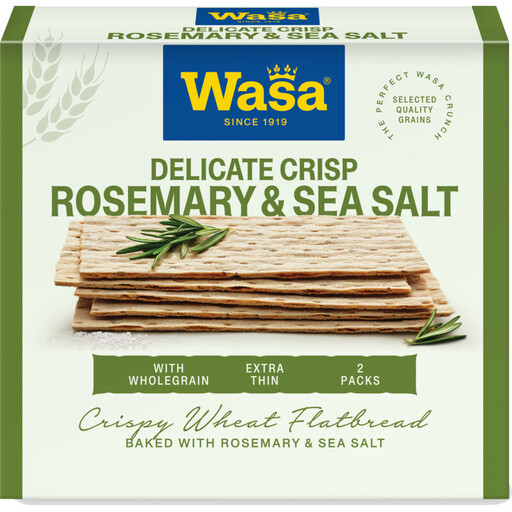 Image unavailable
Wasa Thin Crisp Rosemary & Salt – 190 g
A rosemary and salt cracker if you want to serve a seasoned option alongside a wholegrain staple; bear in mind that its flavour may not be mild enough for every guest.
Pack size: 190 g. Compare the salt content per 100 g and check the ingredients on the label.
View on Joybuy
Frequently asked questions
When can crispbread be labelled wholegrain?
According to the Netherlands Nutrition Centre, crackers can only be labelled wholegrain if they’re made entirely from wholemeal flour. A mixture of wholemeal flour and refined flour is therefore not the same as fully wholegrain crispbread.
How do I compare packs of crackers in different sizes?
First compare the nutritional values per 100 g, as recommended by the Netherlands Nutrition Centre. Then check the weight per cracker and the total pack size to work out how much you’ll need for your buffet.
What should I look out for if a guest has a food allergy?
Read the current label and any warnings for every type of crispbread you choose. According to the Netherlands Nutrition Centre, wheat, rye and other relevant allergens must be clearly listed. Keep the packaging available at the buffet so guests can see which information applies to each product.
How should I store an opened pack until the buffet?
Follow the storage instructions on the pack and seal it properly after opening. Jumbo recommends storing its wholegrain crispbread in a cool, dry place; check the instructions for the variety you buy.


