
Host serving a range of toppings
You want to serve one type of crispbread with a variety of toppings and check whether the pack contains enough to share.


If you’re serving a range of toppings, start with a crispbread whose flavour and texture work well with them, then choose a pack you can use after the evening too. If you want the crispbread itself to add flavour, compare the varieties carefully. For each option, check the net weight, allergens and current label rather than relying on the ‘family pack’ description.
You want to serve one type of crispbread with a variety of toppings and check whether the pack contains enough to share.
You eat crispbread more often than just on this evening. A larger pack is most practical if you can finish it after opening while it’s still crisp.
You’re choosing for guests with specific dietary requirements. In that case, the ingredients and allergens in the exact variety matter more than a general claim on the front of the pack.
First decide what role the crispbread will play alongside the toppings at your world food night. Then compare pack sizes and check the label on the variety you’ve chosen.
| What to consider | What to check | Who is it most relevant to? |
|---|---|---|
| A base to share | Check the net weight and consider whether the flavour and texture will work with your planned toppings. | If I’m putting out lots of different toppings, I want enough crispbread without having to open a different pack for every combination. Around 31% of consumers put a shareable base first. |
| Wholegrain and fibre | Read the ingredients and compare the nutrition information per 100 g for the varieties you’re considering. | I choose my crispbread mainly for the type of grain and the stated fibre content, not its colour. This is the top priority for around 31% of consumers. |
| Allergens and dietary requirements | Check the current packaging for ingredients, allergens and warnings about possible traces. | If a guest needs to avoid certain ingredients, I want to know whether this particular variety is suitable. This check comes first for around 23% of consumers. |
| Pack size and use after opening | Compare the net weight and current price per kilogram, and read the storage instructions. | If there’s crispbread left over, I want to be able to use it later rather than opening a large pack just for this evening. Around 15% of consumers consider this the most important factor. |
According to the Voedingscentrum, using baker’s salt in bread is not compulsory. So you can’t assume a product contains iodine based on its category alone.
If baker’s salt matters to your choice, read the ingredients on the crispbread you’re considering.
The Wasa sesame variety listed by Jumbo as gluten- and lactose-free contains sesame; it may also contain milk, mustard and soya.
Check the allergen information on the current packaging for each guest, and keep a suitable alternative separate when serving.
The appearance of a pack doesn’t tell you how much crispbread it contains or how much you’ll have left after the evening.
Compare the net weight and current price per kilogram, and choose an amount that suits how much you expect to use.
According to Jumbo’s product information, Wasa Protein Wheat contains, among other things, wheat flour and wheat gluten.
If you have dietary requirements, always read the ingredients and allergen information for the specific variety.
These brands and retailers give you a starting point for comparing product types and labels; features vary from one variety to another.
Jumbo lists Wasa varieties made with different grains, with different textures and dietary claims.
Albert Heijn lists its own-brand wholegrain crispbread, as well as an organic wholegrain variety.
Jumbo lists its own-brand wholegrain crispbread in a 375 g pack, as well as several Wasa varieties.
Lidl Netherlands lists 264 g packs of crispbread with sunflower seeds or pumpkin seeds.
These products come in a range of pack sizes, whether you’re setting out toppings or want some for after the evening. Don’t choose on weight alone: the variety you want and its label matter too.
 Image unavailable
An option if you’re looking for a larger pack to serve with a variety of toppings.
Pack size: 375 g. If you have allergies, check the current packaging.
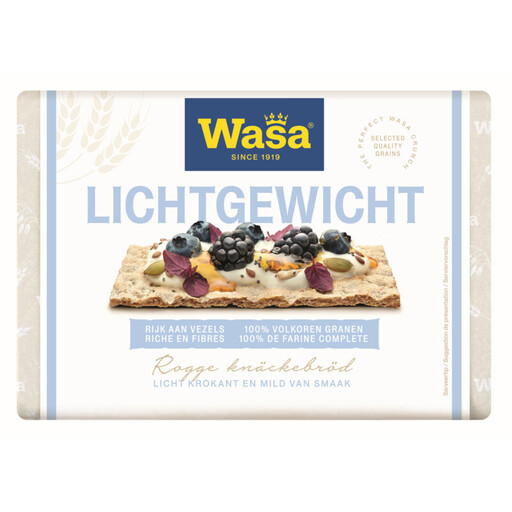 Image unavailable
An option if you want one pack to serve with both sweet and savoury toppings; decide for yourself whether the flavour suits your table.
Pack size: 300 g. Read the label if allergens are a concern.
 Image unavailable
A wholegrain option if you don’t need a 300 g pack or larger for the toppings you’ve planned.
Pack size: 260 g. Choose the number of packs to suit your guests, and check the current label.
 Image unavailable
A smaller pack to consider if you’re looking for crispbread to serve with toppings.
Pack size: 215 g. Check whether it’s enough for the number of people eating, and read the label if you have allergies.
 Image unavailable
An option to compare with other packs if the stated fibre content is important to your choice.
Pack size: 300 g. Compare the nutrition information per 100 g, and check the ingredients and allergens on the packaging.
No, don’t assume it does. The Voedingscentrum says baker’s salt isn’t compulsory in bread, so check the ingredients of the specific crispbread product.
Start with a variety whose flavour and texture you think will work with several toppings. Choose a seeded or sesame variety specifically for that combination, and remember to check the product’s allergens too.
No. The Wasa sesame variety listed by Jumbo as gluten- and lactose-free contains sesame and may contain milk, mustard and soya. Check the allergen information on the current packaging for each guest.