What should you look for when choosing?
Start by deciding whether fully wholegrain ingredients are the priority, or whether a blend of grains would better suit the tastes of your guests. Then compare the remaining options by their nutritional information and serving format.
Fully wholegrain crispbread
Best when: You specifically want a fully wholegrain base for your toppings.
Consider: Rye varieties in particular can have a pronounced flavour; compare the salt content and allergens of each product too.
Wholemeal flour and white flour
Best when: You want to try a blended base for guests who may find fully wholegrain crispbread too strong in flavour.
Consider: A blend isn’t fully wholegrain, and its flavour will depend on the specific recipe.
| What to consider |
What to check when buying |
Who it matters to |
| Wholegrain and fibre |
Read the ingredients and compare fibre per 100 g. Don’t treat a blend as fully wholegrain. |
I want to choose a fully wholegrain base for all kinds of savoury toppings, even if it has a more robust flavour. This is the priority for around 36% of consumers. |
| Milder grain base |
For a blend, check which types of flour are listed and in what proportions; colour alone won’t tell you enough. |
My guests are fussy, so I want to consider another grain base alongside a strongly flavoured rye option. Around 29% of consumers put this taste consideration first. |
| Salt and allergens |
Compare salt per 100 g and read the allergen information on the pack you’ve chosen. |
When serving a variety of guests and savoury toppings, I want to know which ingredients need attention. This check is a priority for around 21% of consumers. |
| Serving with toppings |
Consider the shape, portion size and recipe; serve toppings separately if you like. |
I want to make bites that guests can top themselves easily, without the base overpowering their chosen topping. This is the first consideration for around 14% of consumers. |
Crispbread and crackers to consider
These products offer different grain bases to consider for a table of toppings: wholegrain varieties, as well as crackers where you can check the proportions of wholemeal and white flour. The product name alone won’t tell you whether the flavour will be mild enough for your guests.
 No image available
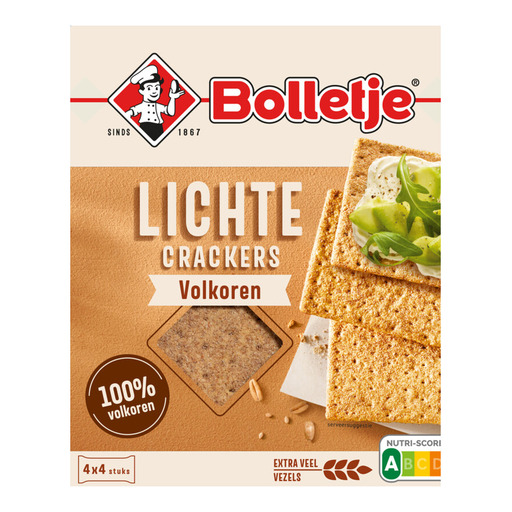
Bolletje Light Whole Grain Crackers, 190 g
An option to consider if you’re looking for a wholegrain base to serve with a range of toppings. The pack contains 190 g; if you’re serving guests with allergies, check the current ingredients and allergen information.
View at Joybuy
 No image available
Wasa Lightweight Crackers, 300 g
An option to consider if you want a rye base for your topping table. The pack contains 300 g; check the flavour description and allergen information for this specific variety rather than relying on details of other Wasa products.
View at Joybuy
 No image available
g'woon Wholemeal Crispbread, 375 g
An option to consider if you’re looking for a cracker made with both wholegrain ingredients and white flour. The pack contains 375 g; check the current flour proportions before choosing this variety as a blended base.
View at Joybuy
 No image available
Wasa Sourdough Rye Crackers, 235 g
This rye cracker is a good fit if you’re looking for a strongly flavoured grain base. The pack contains 235 g; if your guests are fussy, don’t assume it will have a mild flavour.
View at Joybuy
 No image available
Wasa High-Fiber Crackers, 300 g
A cracker to compare if grain composition and fibre content matter to you. The pack contains 300 g; check the ingredients and allergen information before serving it to guests too.
View at Joybuy
Frequently asked questions
Is fully wholegrain crispbread the right choice for every guest?
No, your guests’ tastes matter too. The Netherlands Nutrition Centre points out that wholegrain cereal products contain more fibre and other nutrients than white varieties. For guests who prefer a different grain flavour, you could also consider a product made with both wholemeal and white flour.
How can I tell whether a cracker is fully wholegrain?
Read the product description and ingredients list, rather than judging by colour alone. According to the Netherlands Nutrition Centre, crackers can be labelled ‘wholegrain’ when all the cereal ingredients used are wholegrain; for a blend, you’ll need to assess the proportion of wholemeal flour separately.
Does Dutch crispbread always contain iodised baker’s salt?
No, don’t assume that for any individual product. To find out what type of salt has been used in a specific crispbread, check the product information or ask the manufacturer.
How should I compare the salt in crispbread for a topping table?
Compare the salt content per 100 g so differences in pack and portion sizes don’t skew the comparison. When putting your table together, also bear in mind the salt in the toppings, spreads and dips.
What should I look for if a guest has a gluten or sesame allergy?
Read the allergen information on the exact pack you’re going to serve. The Netherlands Nutrition Centre stresses the importance of checking labels when you have a food allergy. Products containing rye, wheat or sesame, as well as any ‘may contain’ warnings, each need to be checked individually.


