
Someone working from home who looks for wholegrains and fibre
You want a base for a lunch with toppings and check whether it’s labelled wholegrain and how much fibre it contains per 100 g, rather than relying on the name or texture alone.


Wholegrain rye crispbread is a useful base for a work-from-home lunch if you can eat gluten. If fibre is your main priority, compare the fibre content per 100 g. If you need to avoid gluten, choose a product explicitly labelled gluten-free and check the other allergens too. What you put on your crispbread also affects the nutritional make-up of your lunch.
You want a base for a lunch with toppings and check whether it’s labelled wholegrain and how much fibre it contains per 100 g, rather than relying on the name or texture alone.
You check the grains, any gluten-free labelling and the information about other allergens for each product. Even with gluten-free crispbread, it’s important to check the full allergen information.
You regularly have crispbread for lunch and compare pack size, ingredients and nutritional information before choosing a variety.
Choose crispbread for your work-from-home lunch based on what matters most to you. If you have an allergy or dietary restriction, always check first that the specific variety is suitable.
| What to consider | What to check before buying | Best suited to |
|---|---|---|
| Wholegrains and fibre | Look for a wholegrain label and compare the fibre content per 100 g across the different varieties. | If I’m looking for a base for a lunch with toppings, I want to know whether it’s wholegrain and how much fibre it contains. This is the top priority for around 33% of consumers. |
| Gluten and allergens | Read the ingredients and allergen information. If needed, look for an explicit gluten-free label. | If I have a dietary restriction, I need to be able to check which grains and other allergens are in this specific product. This is the top priority for around 25% of consumers. |
| Texture and suitability for toppings | Compare the described texture and size with the toppings you want to use. | I mainly want a thin, crunchy base for my usual toppings. This comes first for around 17% of consumers. |
| Pack size and stocking up | Check the pack weight and make sure the ingredients and nutritional information suit your needs. | When I’m shopping for several days working from home, I want to be able to choose a pack size that suits me. Around 25% of consumers prioritise having enough in stock. |
A dark colour or a multigrain label doesn’t tell you whether the crispbread is labelled wholegrain.
Look for the wholegrain label, then compare the ingredients and fibre content of each variety.
According to Jumbo, the gluten-free Wasa variety with sesame and sea salt contains sesame. The product information also lists possible traces of milk, soya and mustard.
Check the latest allergen information, even if the front of the pack says gluten-free.
Not all crispbread contains iodised baker’s salt. According to the Netherlands Nutrition Centre, using baker’s salt is not compulsory.
If this matters to you, check the ingredients list for baker’s salt or iodised salt.
The nutritional value of your finished lunch also depends on what you put on the crispbread.
Choose a suitable base first, then decide what toppings you’d like to have with it.
Wasa offers wholegrain, high-fibre, lightweight and gluten-free varieties, among others. The ingredients vary from product to product.
ALDI lists a 375 g pack of Goud Gebakken wholegrain crispbread.
Albert Heijn describes Leksands Knäcke Original as a variety made with 100% wholegrain rye.
These Joybuy products are crispbread varieties you can compare as a base for a lunch with toppings. Check the grains, nutritional information and allergens listed for each variety. A lightweight or wholegrain label doesn’t tell you everything about its ingredients.
 No image available
If you’re comparing fibre content, Joybuy lists 26 g of fibre and 1,1 g of salt per 100 g. If you have an allergy or dietary restriction, check the latest ingredients and allergen information on the pack.
 No image available
A rye variety for a lunch with toppings if you can eat gluten. Rye contains gluten. If you have other dietary restrictions, check the latest label too.
 No image available
A variety labelled wholegrain to consider for a lunch with toppings. Compare the nutritional information per 100 g, and if you have an allergy, check the latest allergen information.
 No image available
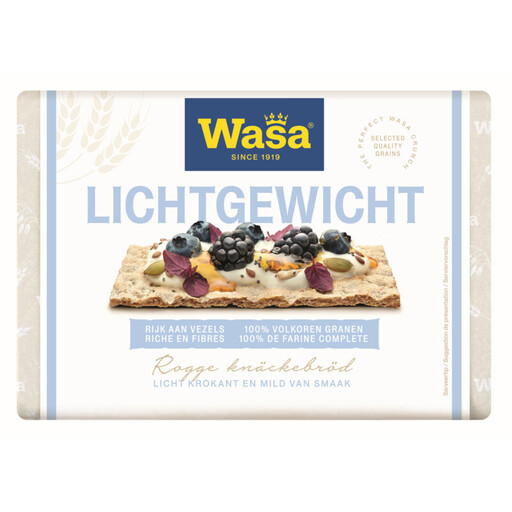
For anyone looking for a thin, crunchy base for toppings; that’s how Joybuy describes this variety. If fibre content is a deciding factor for you, compare the amount per 100 g on the pack.
 No image available
A variety to compare as a base for toppings. If wholegrains or fibre are your main priorities, check the grains and fibre content per 100 g on the pack.
Not necessarily: crispbread provides the base, while the toppings also affect what you get from your lunch. The Netherlands Nutrition Centre lists wholegrain crispbread as one possible lunch option. Choose toppings that suit your meal.
No, rye contains gluten. Choose a product explicitly labelled gluten-free, and check the information about other allergens on the latest packaging too.
No, you can’t assume that every product does. According to the Netherlands Nutrition Centre, using baker’s salt is not compulsory. If this matters to you, check the ingredients list for baker’s salt or iodised salt.
First compare the salt content per 100 g on the same basis, then consider your portion and toppings. That way, you’re assessing not just the crispbread, but the lunch you’re putting together with it.