Looking for crispbread in a hurry for a fussy eater? Check both the flavour description and the ingredients: a multigrain name doesn’t prove that a product is entirely wholegrain, and a blend of flours isn’t necessarily mild. If clearly labelled wholegrain is your priority, choose a pack marked wholegrain and compare the fibre per 100 g. Whichever you choose, check that the pack suits any allergy requirements and that the product is available for your purchase.
Who is this choice for?
Fussy eaters who want to try wholegrain
If the flavour or texture makes the switch tricky, it may be worth comparing products made with different grains. Check which flours are used: multigrain doesn’t automatically mean entirely wholegrain. A flavour description on the pack is no guarantee that someone will enjoy it.
Shoppers looking for a wholegrain option in a hurry
For a quick top-up to your shopping, a clear wholegrain label is a useful place to start. Then compare the nutritional information per 100 g on the packs you can actually buy, rather than relying on the product name alone.
Shoppers who need to check ingredients and allergens
If you have a relevant allergy or need to follow a gluten-free diet, the label matters more than choosing between mild and wholegrain. The Voedingscentrum notes that wheat and rye are cereals containing gluten; check the specific product for other allergens and any warnings about cross-contamination too.
What should you look for?
For a quick top-up, decide what matters most: a flavour the eater is willing to try, a clearly labelled wholegrain product, or a pack that meets your household’s practical and dietary requirements.
Wholegrain crispbread
Choose this when: a wholegrain label and comparable nutritional information matter more than a particular flavour expectation.
Bear in mind: a wholegrain label doesn’t tell you whether a fussy eater will enjoy the flavour or texture.
Multigrain or a flour blend
Consider this when: you’re looking for a different mix or flavour and are happy to check the proportion of wholemeal flour.
Bear in mind: multigrain doesn’t prove that a product is entirely wholegrain, and a blend doesn’t guarantee a milder flavour.
| What to consider |
What to check before buying |
Who it matters to |
| Flavour and types of flour |
Read the ingredients. For a multigrain product, check which flours are used and whether any percentages of wholemeal flour are given. |
When buying for a fussy eater, I want to be able to try a different flavour without mistaking multigrain for entirely wholegrain. For around 40% of shoppers, finding a flavour they’ll enjoy during the transition is the top priority. |
| Wholegrain and fibre |
Check the wholegrain label and compare fibre on a like-for-like basis: per 100 g, not per cracker, which may weigh a different amount. |
If you regularly keep crispbread in stock, you’ll want to be able to see whether the pack you’ve chosen really is wholegrain. For around 30% of shoppers, being able to verify their wholegrain choice comes first. |
| Suitability for your household |
Check the allergens, storage instructions and availability for the specific pack at your chosen shop or delivery service. |
When I need to check allergens or pick up supplies in a hurry, I want to be able to choose a product that meets my requirements. For around 30% of shoppers, practical suitability is their main concern. |
Common mistakes
-
Assuming multigrain means entirely wholegrain
The fact that a product contains different grains doesn’t, by itself, tell you how much wholemeal flour it contains. A Bolletje Oerknack Multigrain product previously listed by Albert Heijn contained 71% wheat flour and 6.2% wholemeal rye flour, according to its product page. The page also stated that the product had been discontinued.
For an entirely wholegrain option, look for a wholegrain label. If you’d rather try a blend, check the ingredients on the pack you’re buying.
-
Mistaking a product page for confirmation that it’s in stock
The fact that a product has a page online doesn’t mean the same pack is available at your shop or through your delivery service. For example, Lidl lists its crispbread with sunflower seeds or pumpkin seeds as an in-store product.
Check current availability before making a special trip for one particular variety or completing your order.
-
Assuming rye crispbread is gluten-free
The Voedingscentrum lists rye, wheat and barley as cereals containing gluten. A wholegrain label doesn’t change that.
If you need to follow a gluten-free diet, choose only a product explicitly labelled as gluten-free, and check the allergen information on the pack too.
-
Assuming the type of crispbread tells you whether it contains iodine
According to the Voedingscentrum, bakers aren’t required to use baker’s salt. So the product category alone won’t tell you whether a particular cracker contains it.
If baker’s salt is important for your purchase, check the ingredients or ask the manufacturer.
Brands and own-label options compared
Compare specific product ranges and packs here, rather than brands as a whole. Ingredients, nutritional information and current availability can vary from one product to another.
Wasa
Wasa Wholegrain is a rye option to compare if you’re specifically looking for wholegrain crispbread.
- Wasa says its Wasa Wholegrain contains wholemeal rye flour, yeast and salt; it lists 20 g of fibre per 100 g for this product.
- Rye contains gluten. The ingredients don’t guarantee that a fussy eater will enjoy the flavour.
Albert Heijn
AH Wholegrain is an own-label product whose grains and nutritional values you can compare.
- Albert Heijn lists wholemeal wheat and rye flour, 12 g of fibre and 0.7 g of salt per 100 g for AH Wholegrain Crispbread.
- Check the label and availability of this specific variety when you buy it; other AH crispbread products won’t necessarily have the same ingredients.
Jumbo
Jumbo Wholegrain Crispbread is an own-label option in a 375 g pack.
- For this variety, Jumbo lists wholemeal wheat and rye flour, 10.9 g of fibre and 0.71 g of salt per 100 g.
- If wheat, rye or possible traces are relevant to your choice, check the allergen information on the specific pack.
ALDI / Goud Gebakken
Goud Gebakken Wholegrain Crispbread is an in-store option in a pack of 25 pieces weighing 375 g.
- ALDI Nederland describes this specific variety as wholegrain crispbread.
- Check the pack on the shelf for its ingredients, nutritional information and allergens.
Lidl
Lidl lists crispbread with sunflower seeds and a variety with pumpkin seeds, both as in-store options.
- Lidl Nederland gives a pack weight of 264 g and says the product is only available in store.
- Don’t assume that seeds or the product name mean it’s wholegrain or suitable for your allergies; check the label.
Ryvita
Ryvita Multigrain Crispbread is an option to compare with other multigrain products.
- Ryvita states that this product contains 75 g of wholemeal rye flour per 100 g of product and 18% toasted seeds and grains.
- Check separately whether this product is available at your chosen retailer; its ingredients don’t tell you what’s in stock locally.
Crispbread and crackers at Joybuy
These products include varieties labelled as wholegrain, as well as crackers where a different mix or flavour description may be a factor. Use the product name as a starting point, then check the current pack for the proportion of wholemeal flour, nutritional information and any allergens before choosing for a fussy eater.
 Image unavailable
Wasa High-Fiber crackers, 300 g
For anyone looking for crackers to keep in stock and compare by grain content. The 300 g pack alone won’t tell you whether a fussy eater will enjoy the flavour; check the product description and label for more information.
View at Joybuy
 Image unavailable
g'woon Wholemeal Crispbread, 375 g
If you’re considering a larger pack, check which flours it contains before choosing it as a wholegrain option. Compare the ingredients on the pack with the Wholemeal label; don’t rely on the name alone if the proportion of wholemeal flour is important.
View at Joybuy
 Image unavailable
Bolletje wholegrain crispbread, 265 g
For anyone looking to compare a variety labelled as wholegrain. This pack weighs 265 g; compare the nutritional information per 100 g if you’re checking it against packs of a different size, and check the label for allergens.
View at Joybuy
 Image unavailable
Wasa wholegrain crispbread, 260 g
For anyone looking for a variety labelled as wholegrain, while keeping flavour preferences in mind. This 260 g pack is different from the Wasa crackers above, so check the ingredients and flavour description for each product separately.
View at Joybuy
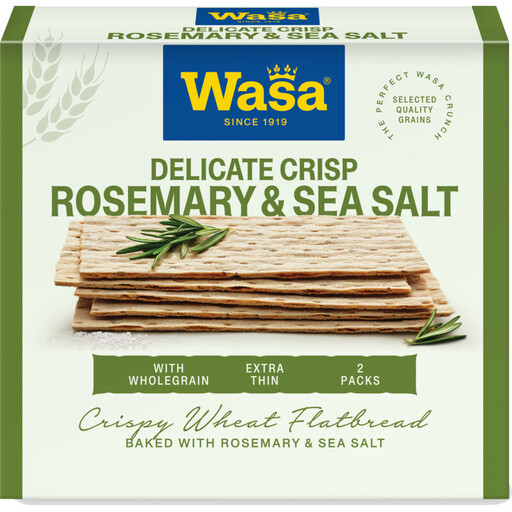 Image unavailable
Wasa Thin Crisp Rosemary & Salt, 190 g
For anyone who specifically wants to try a cracker with rosemary and salt, rather than someone simply looking for a neutral flavour. If these details matter to your choice, compare the flours and salt content on this 190 g pack with the other options.
View at Joybuy
Frequently asked questions
Is multigrain crispbread always wholegrain?
No. Multigrain describes the types of grain used, not how much of it is wholegrain. If you want entirely wholegrain crispbread, check for a wholegrain label. For a multigrain variety, read the ingredients and look for any stated percentages of wholemeal flour.
Is ordinary rye or wheat crispbread gluten-free?
No. According to the Voedingscentrum, rye and wheat are cereals containing gluten. If you need to follow a gluten-free diet, choose a product explicitly labelled as gluten-free and check the label on the pack you’re buying.
How should you store crispbread after opening?
Seal the pack well after opening and follow the storage instructions on it. Bolletje says to store its wholegrain crispbread in a cool, dry place after opening; check the instructions for other products separately.
Does crispbread always contain iodine from baker’s salt?
No. The name crispbread doesn’t tell you whether it contains baker’s salt. According to the Voedingscentrum, bakers aren’t required to use baker’s salt. Check the ingredients or ask the manufacturer if this matters for your purchase.


