
Buffet planner looking for fibre
You’re looking for a crisp base whose fibre content you can compare on the label, without presenting a product as a solution for digestive problems.


For a wedding buffet, choose a neutral, clearly labelled crispbread as your base, then add high-fibre, gluten-free or more distinctive flavours if they suit your guests and the labels. If you’re looking for fibre, compare the nutritional information per 100 g: crispbread isn’t a solution for digestive problems. If you’re serving unpackaged food, keep information about any allergens present available.
You’re looking for a crisp base whose fibre content you can compare on the label, without presenting a product as a solution for digestive problems.
You want to know which ingredients and allergens are in each option. If a caterer or other provider serves unpackaged food, the applicable information requirements of the Netherlands Food and Consumer Product Safety Authority apply.
You’re looking for enough packs of a classic option and want to decide whether you need a few separate varieties for specific guest preferences.
First, decide what allergen information and separate options you need. Then choose the base, pack size and flavours for the rest of the buffet.
| What to consider | What to check when buying | Who is this most important for? |
|---|---|---|
| Fibre and wholegrain | Compare the fibre content per 100 g in the nutritional information and check whether the chosen variety is labelled wholegrain. | I want to choose a crisp base for the buffet and see how much fibre it contains. For around 27% of consumers, this focus on fibre comes first. |
| Allergens and gluten-free options | Read the label for each variety and keep any explicitly gluten-free option separate from crispbread made with cereals containing gluten. | If guests have dietary restrictions, I want to be able to say clearly what’s in each option and avoid mix-ups. Clear allergen information is the main concern for around 33% of consumers. |
| Pack size and quantity | Compare the pack size and number of pieces; tailor the quantity to the toppings and other items on the buffet. | For a large gathering, I want to be able to serve enough of the same basic option without relying only on speciality varieties. Around 20% of consumers prioritise quantity. |
| Serving and variety | Alongside a neutral base, choose no more varieties than will work with the toppings, and follow the storage instructions on the packaging. | I want to offer a choice without guests mixing up the platters or the product information that goes with them. Buffet presentation is the top priority for around 20% of consumers. |
According to the Netherlands Nutrition Centre, fibre is part of a varied diet. A type of crispbread is not a treatment for bowel problems.
Use the stated fibre content per 100 g to compare products, rather than attributing a medical effect to the buffet.
For example, AH Biologisch Knäckebröd vezelrijk met tarwebloem lists rye, wheat and sesame as allergens. Choosing a product for its fibre content doesn’t tell you whether a guest can eat it.
Keep the information from each pack and match it to the correct platter. For applicable unpackaged food, the Netherlands Food and Consumer Product Safety Authority requires information about allergens present; for cereals containing gluten and nuts, the specific type must also be stated.
Bakers’ salt contains iodine, but according to the Netherlands Nutrition Centre, bakers aren’t required to use it. So you can’t be sure what’s in a particular pack of crispbread.
Only make a product-specific statement about iodine if the label or manufacturer confirms that bakers’ salt or iodised salt is used.
Jumbo stocks a range of Wasa products, including wholegrain, sesame and sourdough varieties, as well as separately labelled gluten-free and lactose-free products.
The own-brand range includes classic crispbread and an organic, high-fibre variety with nutritional and allergen information.
The own-brand range includes wholegrain and golden-brown varieties, as well as options with sesame or seeds.
Lidl lists crispbread with sunflower seeds and pumpkin seeds as possible flavour options.
Goud Gebakken wholegrain crispbread is a classic option when planning how much you need for a buffet.
These products are mainly wholegrain or high-fibre crispbread options for the buffet base; the filled Wasa snack is a separate addition. Check the nutritional information and allergens on each pack you choose.
 Image unavailable
An option to consider if fibre content is a factor when choosing a base for the buffet. Compare the amount per 100 g and check the allergens on the packaging; this pack contains 300 g.
 Image unavailable
Rye crispbread made with sourdough for a buffet where you’d like to offer another type of grain. The pack contains 235 g; check the label for cereals containing gluten and other allergens.
 Image unavailable
A wholegrain base to include when planning for a larger buffet. This pack contains 375 g; check the information for this variety to find out about its fibre content and allergens.
 Image unavailable
A wholegrain alternative for your crispbread base. The pack contains 265 g; compare the nutritional information per 100 g and keep the allergen information with the platter.
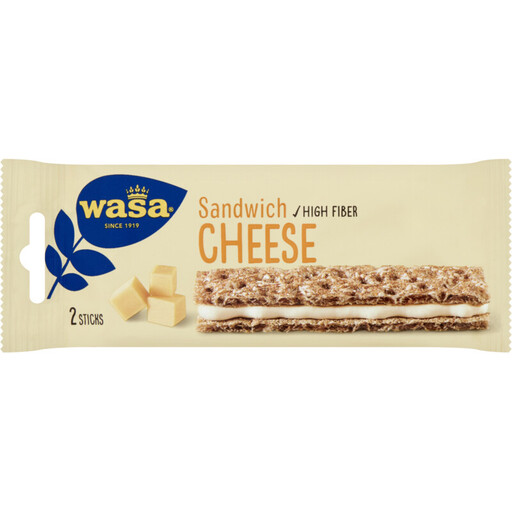 Image unavailable
A filled snack to serve as a separate addition, rather than as a neutral base for toppings. The pack contains three 31 g portions; check the allergens in the whole snack before serving.
No. Crispbread can add fibre to your diet, but it isn’t a treatment for digestive problems. The Netherlands Nutrition Centre emphasises that fibre comes from a variety of foods; for the buffet, compare the fibre content of the varieties you choose per 100 g.
If a caterer, hospitality business or other provider offers unpackaged products to consumers, information about any allergens present must be available. According to the Netherlands Food and Consumer Product Safety Authority, the specific type must also be stated for cereals containing gluten and nuts; the authority’s requirements apply to written or verbal information. Match the information to the correct platter.
No. According to the Netherlands Nutrition Centre, bakers aren’t required to use bakers’ salt. Check the label or ask the manufacturer before making a claim about the iodine content of a particular variety.
Follow the storage instructions on the pack you choose and only put the crispbread on platters shortly before serving. For AH Biologisch Knäckebröd vezelrijk met tarwebloem, Albert Heijn recommends a cool, dark and dry place, and storing it in a sealed tin after opening. Keep moist toppings separate until serving.