Choose crispbread as a base for savoury toppings such as hummus, cheese and vegetable spreads; a digestive is a sweet biscuit and is better suited to dessert. Then choose the flavour and texture you prefer, and if you have dietary requirements, check the ingredients and allergens of the exact product and its toppings.
Who is this choice relevant to?
Anyone putting together savoury snacks
For hummus, tapenade, cheese or fish, you need a crunchy base whose flavour works with the topping. Crispbread is a different choice from the sweet digestive biscuit that Albert Heijn describes as McVitie’s Digestives Original.
Anyone comparing wholegrains and fibre
Look beyond the colour or picture of grains on the packaging. The ingredients list helps you assess the wholegrain claim, while the nutritional information shows the fibre per 100 g, so you can compare products on the same basis.
Anyone keeping allergens in mind
A label such as ‘gluten-free’ does not tell you which other allergens a product contains. Check the ingredients, allergen information and any warnings on the packaging of both the crunchy base and the toppings.
What should you look for when choosing?
First decide whether your snacks will be savoury or sweet. For a savoury spread, compare the type of crispbread or cracker by checking its ingredients, nutritional information and how well it suits your guests’ needs.
| What to consider |
What to check when buying |
Who is this important for? |
| A base for savoury toppings |
Check whether you’re choosing crispbread or a cracker rather than a sweet digestive. Match the flavour to the toppings you plan to serve. |
For a platter with hummus, cheese or vegetable spreads, I want a base that works with a range of savoury flavours. For around 40% of consumers, this versatility with savoury toppings would be the main reason for their choice. |
| Wholegrains and fibre |
Check the grains in the ingredients list and compare the stated fibre per 100 g; a wholegrain claim and a fibre declaration do not tell you the same thing. |
If I want to choose a crunchy base based on wholegrains or fibre, I want to be able to compare products using the label. For around 30% of consumers, this would be their top priority. |
| Ingredients and allergens |
Check the exact packaging for, among other things, cereals containing gluten, sesame and warnings about the possible presence of other allergens. Check the toppings too. |
When a guest needs to avoid certain ingredients, I want to know what’s in every part of the snack. This check would be a priority for around 30% of consumers. |
Common mistakes
-
Treating a digestive as a neutral cracker
According to Albert Heijn’s product information, McVitie’s Digestives Original is a biscuit that contains ingredients including sugar. It gives you a different flavour profile from crispbread served with savoury dips.
Choose a digestive when you’re deliberately adding something sweet. For a savoury spread, choose crispbread or a cracker whose flavour works with your toppings.
-
Assuming ‘wholegrain’ and ‘high in fibre’ mean the same thing
These terms describe different qualities. According to the Voedingscentrum, ‘wholegrain’ refers to the flour used; you can find the amount of fibre in the nutritional information.
Check the ingredients and compare fibre per 100 g if both qualities matter to you.
-
Assuming gluten-free means allergen-free
Jumbo’s product information states that Wasa Gluten- & Lactosevrij Sesame & Sea Salt contains sesame and may contain milk, mustard and soya. So a gluten-free label does not answer every question about allergens.
Read the label on the product you buy and check the toppings separately. When serving, take care to avoid crumbs coming into contact with other products.
Brands to compare
Ingredients and allergens can vary between products from the same brand. Use these brand examples to help you compare specific products, not as a substitute for checking the label of the product you buy.
Wasa
Jumbo lists Wasa varieties that include wholegrains, thin rye and sesame. This gives you a choice of different flavours and products for a savoury platter.
- Compare the specific products if you’re looking for a neutral base, a thinner crispbread or a seed variety.
- Allergens vary: according to Jumbo, Wasa Protein Wheat contains wheat and wheat gluten, while Wasa Gluten- & Lactosevrij Sesame & Sea Salt contains sesame and may contain milk, mustard and soya.
Ryvita
Ryvita Original Crispbread is a rye-based crispbread.
- According to Ryvita’s UK product information, Original Crispbread contains 88 g of wholemeal rye flour per 100 g of product and 13.4 g of fibre per 100 g.
- When buying, check the variety on offer, the packaging and the allergen information.
Albert Heijn
AH Volkoren knäckebröd is an own-brand option made with wholemeal wheat and rye flour.
- Albert Heijn states that this variety contains 12 g of fibre per 100 g and labels it as vegan and lactose-free.
- The product information also lists wheat, rye, gluten and sesame. Check the full allergen information if a guest needs to avoid certain ingredients.
Jumbo
Jumbo’s range includes own-brand crispbread, including wholegrain and pumpkin seed varieties, as well as products from other brands.
- You can compare a plain base with a seed variety.
- Check the information for the specific variety for its ingredients, nutritional information and allergens.
Lidl
Lidl Netherlands lists crispbread in sunflower seed and pumpkin seed varieties.
- An option to compare if you want to see how a seed variety works with your toppings.
- Check the packaging for the ingredients and allergens in the variety you choose.
Aldi
ALDI Netherlands lists Goud Gebakken Volkoren knäckebröd as an own-brand product.
- A familiar wholegrain label to look out for when comparing different crispbread varieties.
- Check the current packaging for the full ingredients, nutritional information and allergen details.
Crispbread and crackers on Joybuy
These products offer crispbread and crackers as a crunchy base for savoury snacks. The seasoned, thin cracker offers a different flavour from the varieties labelled as wholegrain; check whether the ingredients in each product suit your guests.
 No image available
Wasa Sourdough Rye Crackers, 235 g
An option if you want to pair rye and sourdough with savoury toppings. Check the allergen information for this variety before serving it to guests.
View on Joybuy
 No image available
Bolletje Whole Grain Crispbread, 265 g
A crispbread to compare if wholegrains are an important factor in your choice. If you’re serving it to several guests, check the ingredients and allergens on the current packaging.
View on Joybuy
 No image available
Wasa High-Fiber Crackers, 300 g
These are crackers to compare if fibre is a factor in your choice. Check the nutritional information per 100 g, then check the ingredients and allergens separately.
View on Joybuy
 No image available
g'woon Wholemeal Crispbread, 375 g
A crispbread to consider as a base for cheese or vegetable spreads. If fully wholemeal is essential to you, check the ingredients on the current packaging rather than relying on the product name alone.
View on Joybuy
 No image available
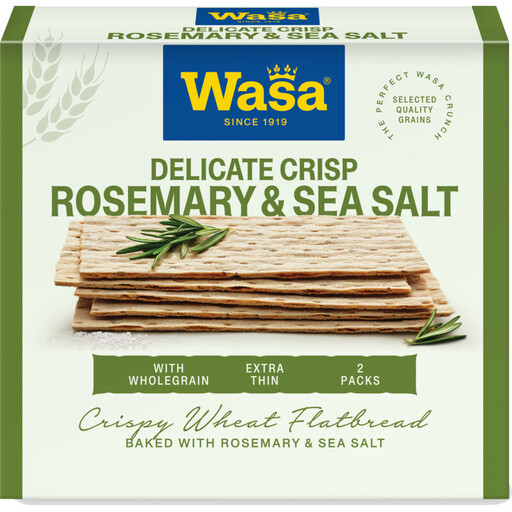
Wasa Thin Crisp Rosemary & Salt, 190 g
This thin cracker with rosemary and salt is an option if you’d like the base itself to add flavour. Pair it with your toppings, and check the nutritional information and allergens on the packaging.
View on Joybuy
Frequently asked questions
Is a digestive the same as crispbread?
No. A digestive is a biscuit, while crispbread is a crunchy bread product. Albert Heijn’s product information lists ingredients including sugar in McVitie’s Digestives Original, so crispbread is generally the better flavour choice for a savoury platter.
How do I compare wholegrain crispbread and fibre content?
Check the ingredients to see which grains are used, then compare the stated fibre per 100 g. A brown colour or seeds on the outside alone won’t tell you how the flour is made up.
Can I serve gluten-free crispbread to every guest with an allergy?
No. Gluten-free does not mean free from all allergens. According to Jumbo’s product information, Wasa Gluten- & Lactosevrij Sesame & Sea Salt contains sesame and may contain milk, mustard and soya. Check the packaging of the variety you choose and the ingredients in the toppings.
When should I add toppings to crispbread?
For best results, add moist toppings to crispbread just before serving so the base doesn’t soften unnecessarily. Follow the pack instructions for storing an opened packet; Albert Heijn recommends keeping its wholegrain crispbread in a sealed container.


