
If you’re looking for something to top
For cheese, fish or a spread, you’ll mainly want a crunchy base. When comparing crispbreads, check the fibre and salt per 100 g, as well as the grains and allergens in the product you choose.


Choose crispbread if you’re looking for a crunchy base for toppings on St Nicholas' Eve; go for a digestive biscuit if you’d like something sweet with coffee or tea. If you eat it regularly, compare the ingredients and nutritional values of the exact product, even if it’s labelled ‘wholegrain’. If you often use it instead of bread, don’t assume it will provide the same amount of iodine: according to the Netherlands Nutrition Centre, bakers aren’t required to use iodised baker’s salt.
For cheese, fish or a spread, you’ll mainly want a crunchy base. When comparing crispbreads, check the fibre and salt per 100 g, as well as the grains and allergens in the product you choose.
A digestive biscuit could be just the thing for your St Nicholas' Eve spread if you’re after something sweet and crumbly. Check the serving size and compare sugars, fats and nutritional values per 100 g; a wholemeal digestive is still a biscuit.
If you need to avoid certain grains or other allergens, check the ingredients of the exact product. If you regularly eat very little bread, also make sure you’re not assuming that crispbread or biscuits will provide the same amount of iodine.
First decide whether you want a base for toppings or a sweet biscuit. Then compare products within that category using the label; allergens could be the deciding factor for either option.
| What to consider | What to check when buying | Who is this important for? |
|---|---|---|
| Base for toppings and fibre | Compare fibre and salt per 100 g, and check the types of grain too. | If I want to serve cheese or a spread, I’m looking for something crunchy that I can top, and I pay attention to fibre. For around 38% of consumers, a base for toppings is the top priority. |
| A sweet biscuit to enjoy | Check the serving size and compare sugars and fats per 100 g. | With coffee or tea, I’d rather have a sweet, crumbly biscuit to put out on the table. Around 37% of consumers say that having a biscuit to enjoy is their top priority. |
| Allergens and replacing bread | Read the ingredients and allergen information; if you regularly use it instead of bread, also check whether baker’s salt is used. | If I need to avoid certain ingredients or often replace bread, I want to know what the product contains. For around 25% of consumers, checking the label is the first priority. |
The product name doesn’t mean the biscuit has any effect on digestion. The digestive biscuits described here contain ingredients including wheat, sugar and oil.
Choose according to when you plan to eat it, and check the ingredients and nutritional values per 100 g.
A wholemeal digestive is still a biscuit. Albert Heijn lists 460 kcal and 20 g of sugars per 100 g for its wholemeal digestive; Jumbo lists 458 kcal and 19.3 g of sugars per 100 g for its wholemeal version.
Compare fibre, sugars, fats, salt and energy together, and think about whether you need a biscuit or a base for toppings.
Crispbread and digestive biscuits may contain gluten-containing grains. Wasa High-Fiber Crackers also contain sesame.
If you have an allergy or follow a strict gluten-free diet, check the packaging of the product you choose for its ingredients, allergens and an appropriate explicit label.
According to the Netherlands Nutrition Centre, baker’s salt contains iodine, but bakers aren’t required to use it. So you can’t tell how much iodine a product provides simply from its category.
If you regularly eat very little bread, check the label and consider your other sources of iodine too.
Wasa makes crackers and crispbread. Its High-Fiber Crackers are a specific example for anyone wanting to compare fibre per 100 g.
Ryvita Original Crispbread is a rye crispbread that you can compare with a digestive biscuit as a different type of product.
Albert Heijn sells classic and wholemeal digestive biscuits for anyone looking for a biscuit to enjoy with coffee or tea.
Jumbo also sells classic and wholemeal digestive biscuits in 400 g packs.
Lidl lists crispbread with sunflower seeds or pumpkin seeds as options for a crunchy base.
These products suit anyone looking for a crunchy grain-based option or something to top. If you’d like a sweet biscuit with coffee or tea, choose a different type of product.
 Image unavailable
A crunchy base for toppings at breakfast or lunch. If the grains used are important to you, check the ingredients and allergen information on the packaging.
 Image unavailable
A grain cracker for anyone wanting to compare fibre per 100 g. Joybuy lists 26 g of fibre per 100 g; the product information lists rye, wheat, oats and sesame, so bear these in mind if you have any allergies.
 Image unavailable
A crunchy option for breakfast or lunch. Check the ingredients and allergen information for this variety before comparing it with other crispbreads.
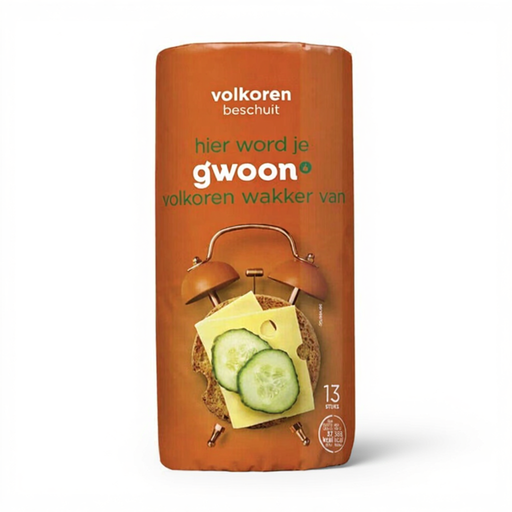 Image unavailable
A crunchy base to serve with toppings. When comparing it with other varieties, check the ingredients and nutritional values per 100 g.
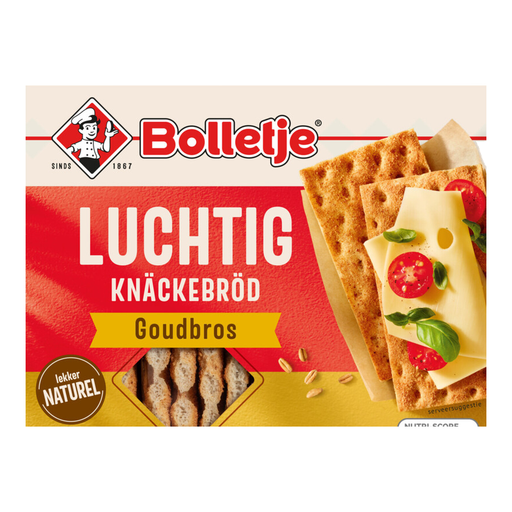 Image unavailable
A crispbread for a crunchy base at breakfast or lunch. Don’t assume ‘Light’ in the product name tells you about its nutritional values; check the label for this variety instead.
No. A digestive is a biscuit, while the crispbread and crackers discussed here are intended as a crunchy grain-based option. So for St Nicholas' Eve, first decide whether you want something to top or a sweet biscuit to enjoy with coffee or tea.
No, you can’t assume that’s true for every product. Joybuy lists 26 g of fibre per 100 g for Wasa High-Fiber Crackers; Albert Heijn lists 6 g for its wholemeal digestive, and Jumbo lists 5.8 g per 100 g for its wholemeal version. Compare the packaging of the products you’re actually choosing.
Check the ingredients and allergen information for the exact crispbread or biscuit. Products containing wheat or rye aren’t suitable for a strict gluten-free diet; choose only products with a clear, appropriate gluten-free label. If you have a wheat allergy, always check the label for wheat too.
No, you can’t tell that from the name crispbread. According to the Netherlands Nutrition Centre, baker’s salt contains iodine, but its use isn’t compulsory. Check the label and, if you regularly eat very little bread, consider your other sources of iodine too.
Store them in a dry place in a tightly sealed container or packet. Albert Heijn and Jumbo’s product information advises resealing biscuits after opening; Joybuy’s listing for Wasa recommends keeping the packaging closed and avoiding moisture.