
Those looking for entirely wholemeal options
You’re looking for crispbread made entirely with wholemeal flour and don’t mind a firm rye bite. Check the wholemeal claim and ingredients of the variety you choose.


Choose 100% wholemeal crispbread if using entirely wholemeal flour is your priority and your household enjoys a firm rye bite. A lighter cracker made with both wholemeal flour and rice flour offers a different flour base, but it isn’t entirely wholemeal. And with golden-brown crispbread, the colour alone tells you nothing about the ingredients. Compare the types of flour, fibre and salt per 100 g, and check the label of the exact variety if you have allergies.
You’re looking for crispbread made entirely with wholemeal flour and don’t mind a firm rye bite. Check the wholemeal claim and ingredients of the variety you choose.
Not everyone at the table likes the same firm bite. A cracker made with wholemeal flour and a lighter flour, such as rice flour, is one option to compare without leaving out the wholemeal element.
You want a pack size that works for breakfast or lunch, and you’re also considering fibre, salt, allergens and storage advice. That way, you can compare varieties that may not all be served equally often.
First, decide whether entirely wholemeal flour or a lighter product texture matters more to your household. Then compare the ingredients and nutritional information per 100 g. According to the Netherlands Nutrition Centre, this makes it easier to compare products sold in different pack sizes.
| What to consider | What to look for | Who it matters to |
|---|---|---|
| Wholemeal flour and fibre | Check for a wholemeal claim and look at the first ingredients; compare fibre per 100 g. | I want wholemeal flour to be the main ingredient, even if the rye bite is firmer. For around 50% of consumers, choosing wholemeal is the top priority. |
| Flavour and texture | See which types of flour have been combined and whether the product is described as a light or thin cracker. | If a firm cracker isn’t to everyone’s taste, I look for a different texture without losing the wholemeal element. This texture choice comes first for around 30% of consumers. |
| Pack size and storage | Compare the weight or number of pieces, and read how to store the product after opening. | For several breakfasts and lunches, I want a pack we can use while keeping the crispbread crunchy. Around 20% of consumers give pack size and storage the highest priority. |
In Jumbo Golden Brown Crispbread, wheat flour is listed first in the ingredients. So the colour doesn’t tell you which flour forms the base.
Look for a wholemeal claim and compare the ingredients and fibre per 100 g.
A fibre claim doesn’t tell you which types of flour have been used or how much salt the product contains.
Alongside the fibre content, check the ingredients list and salt per 100 g.
A variety with seeds may contain different allergens from a plain rye cracker. For its pumpkin seed variety we checked, Jumbo lists sesame among the ingredients, along with separate warnings about possible traces.
If you have allergies, check both the ingredients and warnings on the pack you’re buying.
Crispbread can lose its crunch if it isn’t kept dry or is left open after opening.
Choose a pack size that suits how often you eat it, and follow the storage advice on the packaging.
The flour base, texture and nutritional values can vary between varieties from the same brand. So compare specific products, not just brand names.
Wasa offers wholemeal rye crispbread, as well as varieties made with different combinations of grains.
The supermarket’s own brand offers several types of crispbread, including a wholemeal variety.
Jumbo offers light crackers and golden-brown crispbread, among other options, with different flour bases to compare.
Goud Gebakken offers wholemeal crispbread, as well as a robust variety with seeds.
According to Ryvita, Original combines wholemeal rye flour with rye flour, making it a different choice from crispbread made exclusively with wholemeal rye.
These products offer packs to consider when choosing between a mixed flour base and a wholemeal option. To make your final choice, compare the ingredients and nutritional information for each individual variety.
 No image available
Worth considering if you want to compare different types of flour. Check the pack for the exact flour proportions, fibre, salt and allergens.
Pack size: 375 g.
 No image available
A cracker to compare with other grain mixes. Check the label to see which grains and allergens apply to this variety, and compare the nutritional information per 100 g.
Pack size: 300 g.
 No image available
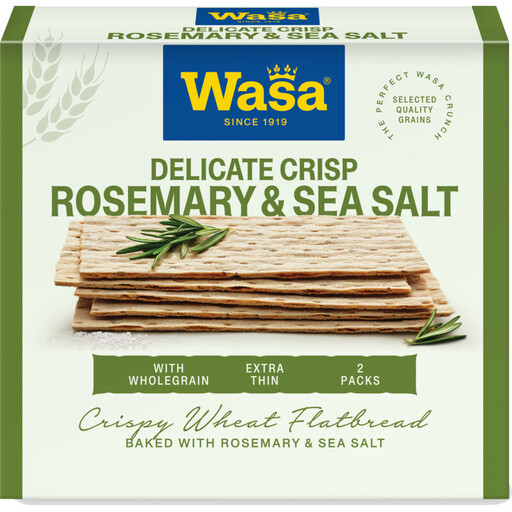
A thin cracker to compare if the product’s shape and texture matter to you. Also check the packaging for the types of flour, salt, fibre and allergens; a thin shape alone doesn’t tell you anything about the flavour.
Pack size: 190 g.
 No image available
An option to compare with crackers made from a mix of flours if wholemeal flour is your priority. Check the ingredients and fibre and salt values on this pack before choosing.
Pack size: 260 g.
No, the colour doesn’t prove that the flour is wholemeal. Wheat flour is listed first in the ingredients for Jumbo Golden Brown Crispbread, so check the wholemeal claim and ingredients for the exact variety.
Start with the types of flour, then compare fibre and salt per 100 g. Jumbo lists wholemeal rye and wheat flour, as well as rice flour, for its High-Fibre Light Crackers. That’s different from a product made entirely with wholemeal flour.
Check the label of the exact variety for allergens, even if you’re choosing a different flavour from the same brand. The Netherlands Nutrition Centre lists gluten-containing cereals as allergens; sesame, for example, may be relevant in varieties with seeds. Also read any warnings about possible traces.
You can’t tell from the product name. An agreement published by the Dutch government in 2008 describes efforts to encourage the use of iodised salt in bread and bread substitutes, but it doesn’t say which salt is in an individual pack of crispbread. Check the packaging or ask the manufacturer.
Keep it somewhere dry and seal the pack tightly after opening to keep the crispbread crunchy. Follow the storage advice for the product you’ve bought.