
Fans of topped lunches
You’re looking for crispbread where the cheese, spread or vegetables provide the flavour. A simple wholegrain rye variety is a good starting point; decide for yourself whether its size and texture work with your toppings.


Choose crispbread for a topped lunch based on what you need it to do, not because the packaging says ‘premium’. A simple wholegrain rye variety lets the toppings take centre stage. If fibre or the flavour of seeds matters more, compare the relevant products on the label. Whatever you choose, check the ingredients and allergens: wholegrain or high-fibre doesn’t mean gluten-free.
You’re looking for crispbread where the cheese, spread or vegetables provide the flavour. A simple wholegrain rye variety is a good starting point; decide for yourself whether its size and texture work with your toppings.
You’re mainly looking at the amount of fibre per 100 g, then choosing based on taste. Check the ingredients too: the Wasa variety described by Joybuy Netherlands, with 26 g of fibre per 100 g, includes cereals containing gluten and sesame.
The latest allergen information determines which products are suitable for you. Rye, wheat, oats, sesame and milk vary by variety; descriptions such as wholegrain or high-fibre don’t replace checking the label.
First decide what matters most for your lunch: the toppings, fibre content, the flavour of the crispbread or a specific allergen requirement. Then compare the packaging of the varieties that meet your needs.
| What to consider | What to check before buying | Who it matters to |
|---|---|---|
| A base for toppings | Check the type of grain and choose a size and texture that work with your toppings. | If I use plenty of toppings, I want them to be the main attraction. For around 36% of consumers, a simple base for lunch is the priority. |
| Wholegrain and fibre | Compare the fibre per 100 g and check which grains and seeds are used. | I want to compare products by their fibre content, even if that means taste becomes a secondary consideration. Around 29% of consumers prioritise this comparison. |
| Flavour and seeds | Check which seeds, grains or other flavourings the variety contains. | When I’m using few toppings, I want the crispbread itself to have more flavour or a different texture. Around 21% of consumers prioritise this. |
| Allergens | Check the latest ingredients and allergen information for the specific product. | If I need to avoid an allergen, any products that don’t meet this requirement are immediately ruled out. For around 14% of consumers, this is the first thing they check. |
The word doesn’t tell you which grains, fibre or allergens the crispbread contains. A seeded or sourdough variety isn’t automatically a better match for a lunch with plenty of toppings.
First decide what role the crispbread will play in your lunch, then compare the ingredients and nutritional information of suitable varieties.
The wholegrain rye crispbread and the high-fibre Wasa variety described by Joybuy Netherlands contain cereals with gluten. Sesame is also listed for the high-fibre variety.
If you need gluten-free food, choose a specific product labelled as gluten-free and check the latest packaging for other allergens too.
The fact that a product is crispbread doesn’t tell you whether iodised baker’s salt has been used. So if you’re checking for iodine, don’t rely on the general product name.
Check the ingredients of the product you’ve chosen or ask the manufacturer which salt it uses.
Compare varieties from the same brand individually: ingredients and allergens can differ across a range.
Jumbo lists, among others, wholegrain rye, high-fibre and sourdough Wasa varieties, as well as varieties specifically labelled gluten-free and lactose-free.
The own-brand range includes wholegrain crispbread, an organic high-fibre variety made with wheat flour, and a high-fibre variety labelled gluten-free.
ALDI describes Robuust crispbread under this brand, made with wholegrain cereals and seeds, as well as a separate sesame variety.
For its UK product range, Ryvita lists Original Crispbread, made with wholegrain rye, and Multigrain Crispbread, made with seeds and grains, among others.
These products offer a range of wholegrain and fibre-focused options for a topped lunch. When choosing, compare the ingredients and allergens of the specific variety too.
 No image available
A wholemeal crispbread to consider as a base for a topped lunch. 375 g pack; check the nutritional information and allergens on the packaging if they affect your choice.
 No image available
A simple rye base if you want the toppings to provide the flavour. Joybuy Netherlands lists wholegrain rye, yeast and salt as ingredients for this Wasa variety; rye contains gluten. 260 g pack.
 No image available
A wholegrain crispbread for anyone looking to compare different lunch options. 265 g pack; check the label for fibre content and the grains used.
 No image available
A variety to compare by fibre content. Joybuy Netherlands lists 26 g of fibre per 100 g and identifies cereals containing gluten and sesame as allergens for this product. 300 g pack; if you have allergies, check the latest label.
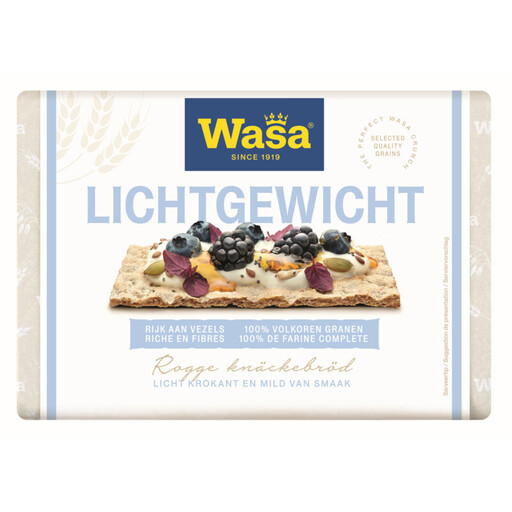 No image available
Another Wasa variety to consider as a base for toppings. 300 g pack; compare the ingredients, fibre content and allergens with those of the other varieties.
No, you can’t tell from the product category. To find out which salt is used in a particular crispbread, check the ingredients or ask the manufacturer.
Read the ingredients and allergen information for the specific product. According to the Netherlands Food and Consumer Product Safety Authority, allergens must be listed on the label of pre-packed foods. The grains and other allergens present vary by variety.
No, those qualities alone don’t tell you whether a product is suitable for a gluten-free diet. The Wasa varieties described as wholegrain rye or higher in fibre contain cereals with gluten. If needed, look for a specific product labelled gluten-free and check the packaging.
Ask the seller about allergens in the unpackaged product and the toppings. The Netherlands Food and Consumer Product Safety Authority states that allergen information for unpackaged foods must be provided to consumers in a way other than on a packaging label.