When choosing crispbread for a young child or toddler, don’t be swayed by the word ‘digestive’. Compare the wholegrains, fibre, salt and allergens listed on the packaging instead. A variety with more fibre may also contain more salt or other allergens. Also consider the topping, your child’s ability to chew and how crispbread fits into a varied breakfast.
Who are these options relevant to?
Parents comparing fibre content
You’re looking for a wholegrain breakfast option and want to compare the fibre per 100 g with the salt content and ingredients. Fibre content is a point of comparison, not an indication that crispbread treats digestive problems.
Parents keeping an eye on salt and variety
For a child aged 1 to 3, look beyond the crispbread itself to the topping and what else they eat throughout the day. The Voedingscentrum also recommends including bread and variety at breakfast and lunch for this age group.
Parents checking allergens and chewability
Check whether the grains, sesame and any other potential allergens listed are suitable for your child. Also consider whether your child can eat the crunchy portion calmly and under supervision, especially if you plan to send it in with them.
What should you look for when choosing?
Start with the ingredients and nutritional information, then consider the portion with its topping and finally check the allergens and your child’s eating situation.
| What to consider |
What to check when buying |
Who should pay particular attention? |
| Wholegrains and fibre |
Compare the grains used and fibre per 100 g; also consider how much you’ll actually serve. |
If I choose crispbread as a wholegrain part of breakfast, I want to be able to compare fibre content without claiming it helps with tummy troubles. For around 40% of consumers, fibre is the main priority. |
| Salt and a balanced breakfast |
Check the salt per 100 g and consider the portion alongside its topping. |
For a toddler’s breakfast, I want to avoid the crispbread and topping making the meal too salty, while still leaving room for variety. This is the most important consideration for around 30% of consumers. |
| Allergens and ease of eating |
Check the ‘contains’ and ‘may contain’ information on the current packaging; tailor the portion to your child’s chewing ability and have them eat sitting down. |
When allergens or chewing need particular attention, I want to know whether my child can have this product in the situation in which they’ll be eating it. This check matters most to around 30% of consumers. |
Values on labels can only be compared fairly when they use the same basis. Product information published by Albert Heijn lists 20 g of fibre and 1.2 g of salt per 100 g for Wasa Wholemeal; for AH Wholemeal Crispbread, the figures are 12 g of fibre and 0.7 g of salt per 100 g. These figures apply to these particular varieties, not every product from those brands. Always check the current packaging for the portion you’re serving.
Common mistakes
-
Taking ‘digestive’ as a promise to help with tummy troubles
Fibre content helps you compare products, but it doesn’t show whether a particular crispbread will ease symptoms. The Voedingscentrum recommends discussing suspected food hypersensitivity with your GP or child health clinic rather than cutting foods out yourself.
Use the term as a prompt to read the label, not as a reason to choose a product as a treatment.
-
Comparing fibre and forgetting about salt
The wholemeal varieties reviewed differ in their salt content. According to Albert Heijn’s product information, AH Wholemeal Crispbread contains 0.7 g of salt per 100 g and Wasa Wholemeal contains 1.2 g per 100 g. Salt from the topping adds to the total at breakfast.
Compare the values per 100 g, then consider how many pieces you’ll actually give your child and what you’ll put on them.
-
Assuming wholegrain means allergen-free
The varieties reviewed contain gluten-containing cereals. Sesame is an ingredient in some products or is listed under ‘may contain’. A wholegrain label doesn’t tell you whether a product is suitable for a specific allergy.
Check the current allergen information every time you buy, and follow your child’s individual care plan where needed.
-
Judging the product alone, rather than the eating situation
How a toddler eats matters too. The Voedingscentrum recommends staying nearby while they eat and having them sit calmly at the table.
Make the pieces smaller if your child is still learning to chew confidently. If you’re sending it in with them, check the arrangements at their childcare setting or school.
Brands and product ranges compared
Compare specific varieties: the ingredients and nutritional values of one crispbread don’t necessarily apply to the rest of the brand’s range.
Wasa
Wasa Wholemeal is a useful reference if you want to compare wholegrain rye, fibre and a short ingredients list with other labels.
- Albert Heijn’s product information lists wholemeal rye flour, yeast and salt for Wasa Wholemeal, along with 20 g of fibre per 100 g.
- The same variety contains 1.2 g of salt per 100 g and includes rye and gluten. Check the full allergen information.
Albert Heijn
AH Wholemeal Crispbread offers a label you can use to compare wholegrains, fibre, salt and sesame.
- Albert Heijn lists 12 g of fibre and 0.7 g of salt per 100 g for this variety.
- The ingredients include wholemeal wheat, wholemeal rye, wheat gluten and sesame.
Bolletje
Bolletje Wholemeal High-Fibre Crispbread is a fibre-enriched option to compare with products that haven’t been enriched.
- Product information published by Albert Heijn lists oligofructose and 14 g of fibre per 100 g.
- This variety contains 0.97 g of salt per 100 g and includes wheat, rye, barley and sesame.
Jumbo
Jumbo Wholemeal Crispbread provides another product to compare for nutritional values and allergens.
- Jumbo lists 10.9 g of fibre and 0.71 g of salt per 100 g for this variety.
- The product contains gluten, rye and wheat; the product information also mentions that other allergens may be present.
Ryvita
Ryvita Original Crispbread is a reference for a rye product. The details given come from the UK product page and don’t necessarily reflect the range available in the Netherlands.
- Ryvita lists wholemeal rye flour, rye flour and salt for Original Crispbread, with 13.4 g of fibre per 100 g.
- The UK product page lists 0.75 g of salt per 100 g. Check the packaging of the product you actually buy.
Crispbread and related products on Joybuy
These products offer different options for a toddler’s breakfast: wholemeal crispbread to compare labels and a filled Wasa sandwich that’s better assessed as a snack. The product name alone doesn’t tell you which portion or ingredients are right for your child.
 No image available
g'woon Wholemeal Crispbread 375 g
A wholemeal crispbread to consider as part of breakfast. Check the packaging for the grains used, fibre per 100 g, salt and allergens, and tailor the portion to what your child can chew.
View on Joybuy
 No image available
Bolletje Whole Grain Crispbread 265 g
A wholemeal crispbread to compare with other breakfast options. Check the current nutritional information and allergen details; don’t assume from the name that it’s the same variety as Bolletje Wholemeal High-Fibre Crispbread.
View on Joybuy
 No image available
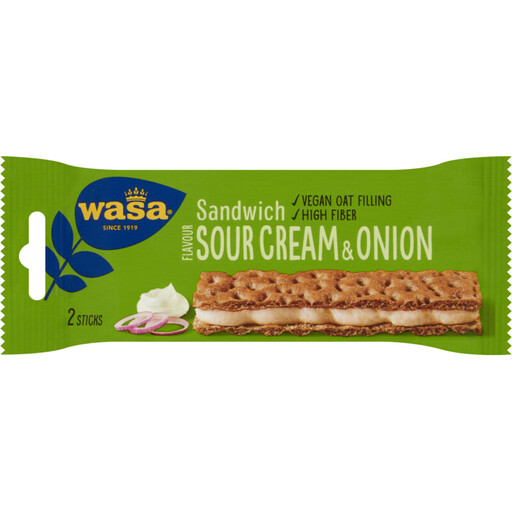
Wasa Sandwich Sour Cream & Onion 99 g
This is a filled sandwich-style product, not plain crispbread. For a toddler’s breakfast, assess the ingredients and nutritional information for the whole product, and consider the portion and your child’s ability to chew.
View on Joybuy
 No image available
Wasa Wholegrain Crispbread 260 g
A wholemeal crispbread for anyone who wants to compare its ingredients with other breakfast options. Check the fibre and salt on the current packaging; don’t automatically apply values from a differently named Wasa variety.
View on Joybuy
 No image available
Wasa Rustic Crispbread 215 g
A crispbread variety to compare with other products for ingredients, fibre and salt. When serving it, consider whether the crunchy pieces are suitable for your child’s ability to chew, and stay nearby while they eat.
View on Joybuy
Frequently asked questions
Can crispbread replace bread at a toddler’s breakfast every day?
Don’t automatically treat crispbread as a complete everyday replacement for bread. The Voedingscentrum recommends around 2 to 3 slices of bread a day for children aged 1 to 3 and also highlights the importance of variety at breakfast and lunch. Consider your child’s overall diet rather than judging a single type of crispbread on its own.
What does ‘digestive’ mean on crispbread for my toddler?
The word doesn’t prove that crispbread treats tummy troubles. Use fibre and wholegrains as label details to compare products. If symptoms keep coming back or you suspect food hypersensitivity, discuss it with your GP or child health clinic, as the Voedingscentrum advises.
When should I check for gluten and sesame?
Check the current packaging if gluten or sesame is relevant to your child. The AH, Wasa, Bolletje and Jumbo varieties reviewed contain gluten-containing cereals; sesame is an ingredient in some varieties or is listed under ‘may contain’. Check the information for the specific product against your child’s individual care plan.
How should I serve crispbread to a toddler at breakfast?
Have your child sit calmly while eating and stay nearby. Make the pieces smaller if you’re unsure about their ability to chew, and consider the topping and allergens alongside the crispbread. If you’re sending it in with them, ask about the arrangements at their childcare setting or school.


