Choose 100% wholegrain rye crispbread if you want a distinctive rye base and a short ingredients list. If you’re catering for people who prefer a mix of wheat and rye with your Sunday roast, compare a fully wholegrain grain mix with an option that also contains flour: the latter isn’t fully wholegrain. Before serving, check the ingredients and allergens on the exact pack, and consider how the crispbread will work with your toppings.
Who is this choice relevant to?
Fussy eaters
Would you like to serve crispbread with your Sunday roast, but aren’t sure whether a strong rye flavour will go down well? Compare the grains and check whether an option contains flour as well as wholemeal flour. This tells you about its ingredients, not how a guest will find the taste.
People looking for wholegrains and fibre
If wholegrains are the main reason for your choice, it matters whether a product is made entirely from wholemeal flour or only partly from it. The nutritional information per 100 g also helps you compare the fibre content of different products.
Hosts serving a range of toppings
If you’re serving a selection of toppings alongside the main course, consider the crispbread’s flavour, pack size and ingredients for your guests. Check the allergens on the packaging of the product you’re actually serving.
What should you look for when choosing?
First decide whether fully wholegrain is a must. Then compare the grains, nutritional information and how you want to serve the crispbread with your meal.
100% wholegrain rye
Choose this if: you’re looking for a distinctive rye base and fully wholegrain is your priority.
Bear in mind: fussy eaters may not automatically prefer the taste of rye; compare the salt content and allergens of each product too.
Wholegrain wheat and rye
Choose this if: you want to combine both grains without flour in the grain base.
Bear in mind: products described this way can vary in their other ingredients, nutritional values and allergens.
Wholemeal flour with flour
Choose this if: you’d like to try a mix containing flour and fully wholegrain isn’t essential.
Bear in mind: the proportion of wholemeal flour varies between products; a mix containing flour isn’t fully wholegrain.
| What to consider |
What to check when buying |
Who this matters most to |
| Wholegrain or a grain mix |
Check which grains and types of flour are listed in the ingredients. Look for the term ‘wholegrain’ if fully wholegrain is a must. |
If not everyone enjoys a strong rye flavour, I want to be able to consider a grain mix without mistaking it for a fully wholegrain option. For around 33% of consumers, this balance between ingredients and taste is the main priority. |
| Fibre and nutritional value |
Compare fibre per 100 g and check what a typical portion of your chosen product contains. |
When crispbread is only a small side dish, I want to be able to see what my portion contributes. Around 27% of consumers prioritise comparing fibre and wholegrains. |
| Toppings and when to serve |
Check that the flavour works with your toppings, and ideally add them to the crispbread shortly before serving. |
When serving a selection alongside the main course, I want guests to be able to choose a crisp base and toppings they like. This is the main consideration for around 20% of consumers. |
| Pack size and allergens |
Check how much is in the pack and read the ingredients and allergen information on the current packaging. |
When serving several guests, I want to make sure I have enough and take into account any ingredients they need to avoid. This practical consideration is a priority for around 20% of consumers. |
Common mistakes
-
Assuming dark colour or high fibre means fully wholegrain
Colour, a mix of grains and a fibre claim don’t, on their own, tell you whether all the flour used is wholemeal. According to the Voedingscentrum, a cracker can only be called ‘wholegrain’ if it’s made from 100% wholemeal flour.
Read the product name and ingredients list. If it also contains flour, check the stated proportion of wholemeal flour.
-
Comparing fibre alone
Crispbread can also vary in salt, ingredients and allergens. Toppings add their own ingredients to what you serve, too.
Compare nutritional information on a like-for-like basis, such as per 100 g, and check the allergen information on the exact pack for every guest.
-
Assuming all crispbread contains iodine
A general assumption about bakers’ salt won’t tell you whether your chosen product contains iodine.
If iodine matters to your choice, check the ingredients list or ask the manufacturer.
-
Planning your serving platter based on an online listing
A product listing doesn’t tell you whether the pack is available in your shop when you’re buying it. For example, Lidl describes its listed wholegrain crispbread as an in-store product.
Check availability before you shop and read the current packaging when you buy it.
If an option is only available in store, you may need to make an extra trip.
Brands compared
Compare specific products rather than a brand as a whole: the grain base, nutritional value and allergens can vary within the same range.
Wasa
The range includes both a fully wholegrain rye option and products made with other combinations of grains or flour.
- Albert Heijn lists Wasa Volkoren as 100% wholegrain rye, with three ingredients and 20 g of fibre per 100 g.
- According to Jumbo, Wasa Protein Wheat contains 41% wholemeal wheat flour and 35% wheat flour; don’t treat this as fully wholegrain. Check the allergens on each pack.
Albert Heijn
AH Knäckebröd volkoren combines wholemeal wheat and wholemeal rye in a 375 g pack.
- Albert Heijn lists 12 g of fibre per 100 g and includes both wholegrain types in the ingredients list.
- The ingredients list also includes sesame and cereals containing gluten. Check the current label when you buy it.
Jumbo
Jumbo Knäckebröd Volkoren is a wheat and rye option to compare if you’re considering that combination alongside other wholegrain products.
- Jumbo lists 10.9 g of fibre and 0.71 g of salt per 100 g for this product.
- The ingredients include wheat and rye. Check the pack for any warnings about other allergens too.
Goud Gebakken
ALDI lists a 375 g pack of Goud Gebakken wholegrain crispbread.
- The listed pack size can be useful when planning a platter for several guests.
- For details of the ingredients, nutritional value and allergens, check the packaging in store.
Lidl
Lidl Netherlands lists a 250 g pack of wholegrain crispbread as an in-store product.
- The listed pack size can help you plan how much you’ll need for the meal.
- Check availability in store, along with the label for ingredients, nutritional value and allergens.
Crispbread and crackers on Joybuy
These products offer a range of grain bases for a crisp side dish, from wholegrain options to crackers with a distinctive, savoury flavour. Compare the packaging and current label with what you’d like to serve with your Sunday roast.
 Image unavailable
Bolletje Whole Grain Crispbread 265 g
An option to consider if you’d like to serve wholegrain wheat and rye crispbread with your Sunday roast. Compare the ingredients and allergens on the current packaging for your guests.
View on Joybuy
 Image unavailable
Wasa High-Fiber Crackers 300 g
Worth a look if you want to compare the fibre and grain content of a crisp side dish. Before choosing it for your guests, check the exact proportions of ingredients and the allergens on the packaging.
View on Joybuy
 Image unavailable
g'woon Wholemeal Crispbread 375 g
The larger pack may be worth considering if you’re serving crispbread and toppings to several guests. Check the current label for the exact proportions of wholemeal and wheat flour, and check the allergens.
View on Joybuy
 Image unavailable
Wasa Lightweight Crackers 300 g
A rye option to consider if you’re looking for a crisp base for toppings. Don’t judge the flavour by the name alone; check the ingredients and allergen information on the pack too.
View on Joybuy
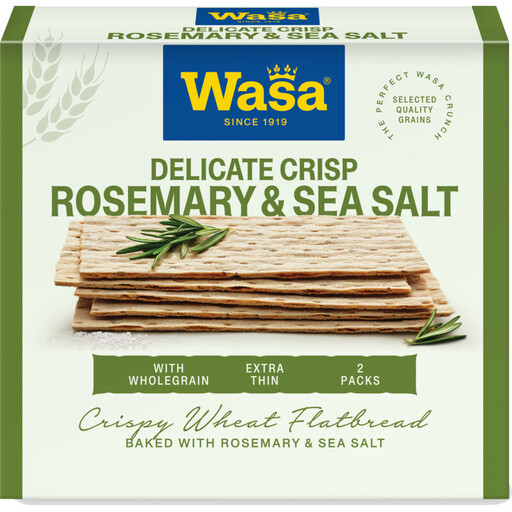 Image unavailable
Wasa Thin Crisp Rosemary & Salt 190 g
A herby cracker to try with savoury toppings if you’re not looking for a neutral flavour. Compare the salt content and check that the ingredients suit your guests and the rest of the meal.
View on Joybuy
Frequently asked questions
Is crispbread with a little wholemeal flour fully wholegrain?
No. According to the Voedingscentrum, a cracker can only be called ‘wholegrain’ if it’s made from 100% wholemeal flour. An option containing both wholemeal flour and flour is a different choice; check the stated proportion on the packaging.
Can I assume Dutch crispbread contains iodine?
No, don’t assume that for an individual product. If iodine matters to your choice, check the ingredients list or ask the manufacturer which salt is used.
What should I look for if guests need to avoid certain ingredients?
Read the allergen information on the exact pack you’re serving. The options mentioned use a range of cereals containing gluten; depending on the product, the label may also list other ingredients or warnings. Check the toppings separately.
How can I serve crispbread with my Sunday roast and keep it crisp?
Store it according to the instructions on the packaging and, ideally, add moist toppings shortly before serving. You can also serve the crispbread separately so guests can add their own toppings.


