Choose crispbread for your summer holiday based on its ingredients, nutritional value and allergens, rather than the look of the packaging. Wholegrain rye is a good choice if you’re mainly looking for a rye base; sourdough or sesame can add extra flavour or texture. If you need to follow a strict gluten-free diet, choose a product explicitly labelled gluten-free. Before you travel, check the storage instructions too. And if you eat crispbread instead of bread, check whether the label mentions baker’s salt.
Which choice is right for you?
Holidaymakers looking for wholegrain rye and fibre
For breakfast, lunch or a snack with toppings, you can compare the amount of wholegrain rye and fibre per 100 g. Albert Heijn provides this information for products including Wasa Wholegrain and Leksands Knäcke Original.
Lunch and nibbles fans looking for flavour and texture
If you want the cracker itself to stand out alongside your toppings, sourdough and sesame offer two different flavour profiles. Compare the ingredients and allergens of the variant you choose too.
People who need to choose strictly gluten-free products
Rye crispbread isn’t gluten-free. Look for a product explicitly labelled gluten-free and check the current allergen information on every pack.
What should you look for when choosing?
First decide whether wholegrain rye, flavour, a gluten-free option or ease of carrying it with you matters most. Sourdough and rye can feature in the same product, so compare the specific variant rather than just the name on the front of the pack.
| What to consider |
What to check before buying |
Who it matters to |
| Wholegrain and fibre |
Check the proportion of wholegrain cereal in the ingredients list and compare the fibre per 100 g. |
If crispbread is going to be a regular part of my holiday breakfast, I want to know how much wholegrain rye and fibre my chosen variety contains. Around 36% of consumers put this need for a wholegrain base first. |
| Flavour and texture |
Compare sourdough, seeds or kernels, and check the associated allergens. |
For lunch with toppings or a sharing platter, I want the crispbread to add flavour or texture too. Around 29% of consumers prioritise this. |
| Gluten-free and allergens |
If you need to avoid gluten strictly, look for an explicit gluten-free label and read the allergen information. |
If I need to avoid gluten strictly, that restriction determines my choice before flavour or fibre content. For around 21% of consumers, choosing a gluten-free option is the first requirement. |
| Taking it with you and storage |
Check the packaging and the instructions for keeping it dry and resealing it after opening. |
If a pack needs to last several days while I’m away, I want to be able to reseal it properly and keep it dry once opened. This practical need comes first for around 14% of consumers. |
Common mistakes
-
Assuming all crispbread contains baker’s salt
You can’t tell from the product type whether iodised baker’s salt has been used. The Voedingscentrum also points out that bread doesn’t have to be made with baker’s salt.
If you eat crispbread instead of bread and iodine matters to your diet, check the ingredients list for baker’s salt or iodised salt.
-
Mistaking wholegrain rye or seeds for gluten-free
Rye contains gluten, and adding seeds to a cracker doesn’t change that. So, if you need to avoid gluten strictly, the type of grain makes all the difference.
Choose a product explicitly labelled gluten-free and check the packaging again when you buy a different pack.
-
Comparing fibre content alone
A seeded variety may also contain other allergens. For example, Albert Heijn lists wheat and sesame for Wasa Sesame; salt and nutritional values also vary by product.
Compare the nutritional information per 100 g and read the ingredients and allergen lists before choosing a variety for several people.
-
Taking an opened pack with you without resealing it
When packing food for a holiday, storage instructions still matter after opening. For the Bolletje variety reviewed, Albert Heijn advises storing it in a cool, dry, dark place and keeping it sealed after opening.
Follow the instructions on your pack and, if needed, take a resealable container or bag to keep the crispbread dry.
Brands and product ranges compared
The differences below apply to the specific varieties mentioned, not automatically to every product from the same brand.
Wasa
The Wasa range reviewed includes rye varieties, a sesame variety and a separate gluten-free classic.
- Albert Heijn lists 100% wholegrain rye for Wasa Wholegrain and Wasa Sourdough Rye; their stated fibre content is 20 g and 19 g per 100 g respectively.
- Wasa Sesame contains wheat and sesame. The classic labelled gluten-free has a different composition from the rye varieties, so don’t choose on brand name alone.
Leksands
Leksands Knäcke Original is a triangular rye crispbread for anyone looking for a rye option for lunch or toppings.
- Albert Heijn’s product information lists 97% wholegrain rye flour and 20 g of fibre per 100 g for this variety.
- This rye variety contains gluten. Also check the nutritional information if salt is a factor in your choice.
Bolletje
Bolletje Oerknäck robust wholegrain combines different grains, kernels and sesame for a different texture from a simple rye cracker.
- The ingredients listed by Albert Heijn include wheat, rye, barley, pumpkin seeds and sunflower seeds.
- The grains listed contain gluten, and the variety contains sesame. Check the packaging if any of these ingredients are a concern for you.
Ryvita
Ryvita Original Crispbread is a rye variety you can compare with other crispbreads by its ingredients.
- According to Ryvita, Original Crispbread contains 88 g of wholegrain rye flour per 100 g of product.
- Rye contains gluten. When buying in the Netherlands, check the information on the pack in front of you.
Crispbread and crackers for holidays and toppings
This selection of Joybuy products includes rye and wholegrain crispbread, plus a thin sesame cracker for breakfast, lunch or snacks with toppings. Check the ingredients, allergens and storage instructions for each variety to see what matters to you.
 Image unavailable
Wasa Sourdough Rye Crackers 235 g
A rye cracker made with sourdough, worth considering if you’d like the cracker itself to add flavour to a lunch with toppings.
This variety contains gluten. If you have an allergen-related restriction, also check the packaging for warnings about possible traces. Store in a dry place and reseal carefully after opening.
View on Joybuy
 Image unavailable
Bolletje Whole Grain Crispbread 265 g
Wholegrain crispbread to enjoy with toppings at breakfast or lunch, and to take with you on holiday while keeping it dry.
Bear in mind that it contains wheat, rye, barley and sesame; also check the warning about possible lupin. Reseal the pack carefully after opening.
View on Joybuy
 Image unavailable
g'woon Wholemeal Crispbread 375 g
Wholegrain crispbread to consider as a base for toppings or a light meal.
Check the listed gluten and other allergens. If the proportion of rye and wheat flour matters to your choice, read the ingredients list on the pack.
View on Joybuy
 Image unavailable
Wasa Rustic Crispbread 215 g
A rye base for toppings or a snack, if you’d rather choose rye than a cracker with sesame as its main flavour.
This variety contains gluten and may contain milk and sesame. If fibre content is a deciding factor, compare the nutritional information per 100 g on the pack.
View on Joybuy
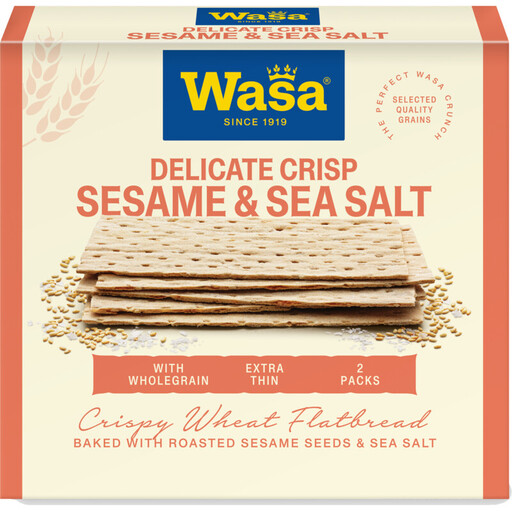 Image unavailable
Wasa Thin Crisp Sesame 190 g
A thin sesame cracker to serve with toppings if you’re after sesame flavour and a different texture from rye crispbread.
This variety contains sesame and gluten, and may contain milk. Read the allergen information and keep the crackers dry and well sealed after opening.
View on Joybuy
Frequently asked questions
How can I tell whether crispbread contains iodised salt?
Check whether the ingredients list mentions baker’s salt or iodised salt. The Voedingscentrum points out that even bread doesn’t have to be made with baker’s salt, so don’t assume it’s present just because the product is crispbread.
Can I choose regular rye crispbread if I need to eat gluten-free?
No, rye contains gluten. If you need to avoid gluten strictly, choose a product explicitly labelled gluten-free and check the allergen information and any warnings on the packaging.
How should I store crispbread while I’m on holiday?
Follow the storage instructions on the pack and reseal it carefully after opening. For the Bolletje variety reviewed, Albert Heijn advises storing it in a cool, dry, dark place and keeping it sealed after opening.
Does premium-looking packaging tell me anything about the fibre content?
No. To compare fibre content, check the nutritional information per 100 g for each product. For example, Albert Heijn lists 20 g of fibre per 100 g for Wasa Wholegrain and Leksands Knäcke Original, compared with 7 g per 100 g for Wasa Gluten-free and Lactose-free Classic; they have different compositions.


