When choosing your first pack of crispbread, compare the sugars per 100 g, then check the fibre, salt, ingredients and allergens. According to Albert Heijn’s product information, sugar levels range from 0.3 to 3.5 g per 100 g across three Wasa varieties. So labels such as ‘wholegrain’ or ‘light’ won’t tell you which variety has the lowest sugar level.
Who is this choice relevant to?
If you want to compare sugars
You’re looking for crispbread for breakfast, lunch or a snack, and want to compare the sugar levels in similar packs. The nutritional information per 100 g is more useful for this than the wording on the front of the pack alone.
If you’re also keeping an eye on fibre
You want a crisp base and would like to compare the fibre content and type of grain as well as the sugars.
If you need to check the ingredients
You want to know before buying whether your chosen variety contains ingredients you avoid. The Wasa varieties reviewed contain rye and gluten; according to Albert Heijn, the Light variety also contains milk.
What should you look for when buying?
Start with the nutritional information per 100 g, so differences in pack and serving sizes don’t skew your comparison. Then check the ingredients and allergens on the pack you’re planning to buy.
| What to consider |
What to check when buying |
Who is this most important for? |
| Sugars |
Compare ‘of which sugars’ per 100 g across similar types of crispbread. Check the ingredients list too if you want to identify sources of sugar. |
For my first breakfast shop, I mainly want to know which suitable crispbread has fewer sugars per 100 g. Around 36% of consumers put this sugar comparison first. |
| Fibre and grains |
Compare fibre per 100 g and check which grain is listed in the ingredients. |
If I regularly use crispbread as a base for lunch, I also want to take the fibre content into account. Around 29% of consumers prioritise this. |
| Allergens |
For the exact variety, check both the ‘contains’ information and any ‘may contain’ warning. |
If I need to avoid an ingredient, I need to know what’s in the pack before I buy it. Around 21% of consumers prioritise checking the ingredients. |
| Pack size and salt |
Check the pack weight, storage instructions and salt per 100 g. |
For my first shop, I want to choose a pack I can use up and check how much salt it contains. Around 14% of consumers put this practical consideration first. |
Common mistakes
-
Judging by the front of the pack alone
‘Wholegrain’ and ‘light’ don’t tell you how many sugars a variety contains per 100 g. For three Wasa varieties, Albert Heijn’s product information lists sugar levels ranging from 0.3 to 3.5 g per 100 g.
Compare the nutrition table per 100 g, then read the ingredients list.
-
Assuming crispbread is always gluten-free or dairy-free
Recipes vary. The Wasa varieties reviewed contain rye and gluten; according to Albert Heijn, Wasa Light also contains milk.
Check the current allergen information for the exact variety, even if you already know the brand.
-
Comparing individual pieces or portions directly
A piece or a manufacturer’s suggested serving may not weigh the same for every product. The Netherlands Nutrition Centre recommends comparing the nutritional values of products per 100 g.
Use the same weight basis for your comparison, then consider how many pieces you usually eat.
Brands to compare
Compare the specific varieties from these brands: a brand name alone won’t tell you the sugar level or allergens in a pack of crispbread.
Wasa
Wasa’s range includes Wholegrain, Sourdough Rye and Light crispbread.
- According to Albert Heijn, these three varieties contain 1.5 g, 0.3 g and 3.5 g of sugars per 100 g respectively.
- The varieties reviewed contain rye and gluten; Light also contains milk. Check the label on the pack you choose.
Albert Heijn
The own-brand range includes wholegrain crispbread and varieties with sesame, sunflower seeds or pumpkin seeds.
- The range offers different ingredients to compare as part of your first shop.
- Check the information for the specific variety to compare sugars, fibre and allergens.
Bolletje
According to Albert Heijn’s range overview, Bolletje offers Oerknäck, light and wholegrain crispbread, among other varieties.
- You can compare different types of crispbread by texture and grain base.
- Check the nutritional information and allergen details for your chosen variety before drawing conclusions about sugars or ingredients.
Leksands
Albert Heijn’s range overview includes Leksands varieties made with rye, oats and seeds.
- The different grain and seed varieties give you specific ingredients to compare.
- Check the nutritional values per 100 g and allergen information on each pack.
Crispbread at Joybuy
These crispbreads are worth comparing when you’re putting together your first breakfast or lunch shop. Use the nutritional information on the exact pack to compare sugars, fibre and salt on the same basis.
 No image available
Wasa Sourdough Rye, 235 g
A variety to consider if sugar is your first point of comparison. According to Joybuy’s product information, it contains 0.3 g of sugars and 19 g of fibre per 100 g.
Contains rye, barley and gluten. Check the allergen information on the pack, including for possible traces.
View at Joybuy
 No image available
Bolletje wholegrain crispbread, 265 g
A wholegrain option for anyone looking to compare both sugars and fibre for a lunch shop. Check the nutritional information per 100 g and the allergen details on the pack.
View at Joybuy
 No image available
g'woon wholegrain crispbread, 375 g
The 375 g pack may be useful if you want to work out in advance how much crispbread you’ll use. Compare the nutritional values per 100 g and check the ingredients and allergens for this variety.
View at Joybuy
 No image available
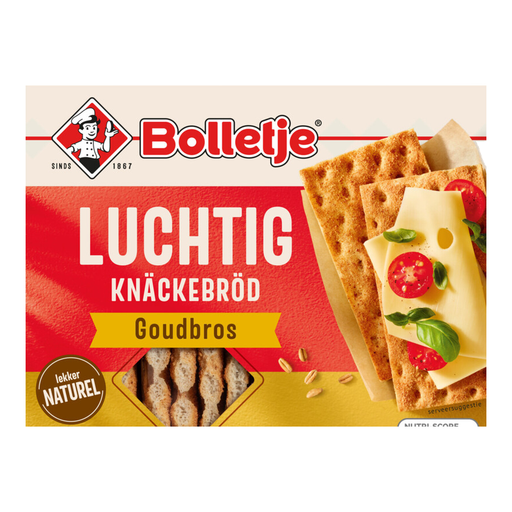
Bolletje Light Golden Crisp crispbread, 240 g
An option for anyone who also considers texture when choosing crispbread for breakfast or lunch. Don’t assume ‘Light’ means it’s low in sugars: compare the nutritional information per 100 g and check the allergen details.
View at Joybuy
 No image available
Wasa Rustic crispbread, 215 g
A 215 g pack to compare with other sizes as part of your first shop. Check the label to compare the sugars, fibre and allergens in this variety.
View at Joybuy
Frequently asked questions
Is low-sugar crispbread automatically the right choice?
No. Compare sugars, fibre and salt per 100 g across similar products, and check the ingredients and allergens. ‘Of which sugars’ also includes sugars that occur naturally in ingredients.
Does wholegrain mean less sugar?
No. The wholegrain label won’t tell you the sugar level in the pack. According to Albert Heijn, three Wasa varieties made with wholegrain rye that were reviewed contain between 0.3 and 3.5 g of sugars per 100 g. So check the nutrition table for the exact variety.
Can I choose crispbread if I avoid gluten or milk?
It depends on the exact variety and which ingredients you need to avoid. According to Albert Heijn, the Wasa Wholegrain and Sourdough Rye varieties reviewed contain rye and gluten; Wasa Light also contains milk. Always check the current allergen information on the pack.
Does every pack of crispbread contain iodised baker’s salt?
Don’t assume it does. If the presence of iodine matters to your choice, check the ingredients and product-specific information on the pack, or ask the manufacturer.
How should I store crispbread after opening?
Seal the pack tightly and store the crispbread in a dry place. Follow any additional storage instructions on the pack.


