
If you keep an eye on sugars
You’re looking for a crisp base for toppings or dip and comparing the amount of sugars per 100 g. A lower figure doesn’t automatically make a product suitable for a formal reduced-sugar claim.


If you mainly want to keep the sugar content of your crispbread low for a savoury snack night, Wasa Wholegrain has the lowest stated value of the three Wasa varieties compared: Albert Heijn lists 1.5 g of sugars per 100 g. Jumbo lists 2.7 g per 100 g for Wasa Protein Wheat, while Albert Heijn lists 3.5 g per 100 g for Wasa Lightweight. If allergens, protein or what you serve on top matter more, check the ingredients and nutritional information for the variety you choose. A lower sugar figure on its own is not a formal claim that the product has reduced sugar.
You’re looking for a crisp base for toppings or dip and comparing the amount of sugars per 100 g. A lower figure doesn’t automatically make a product suitable for a formal reduced-sugar claim.
You need to know whether the variety you choose contains ingredients such as rye, wheat, milk or sesame, or carries a warning that they may be present. The current ingredients and allergen information for that specific variety is what matters.
You may also choose crispbread based on how it works with your toppings. According to Albert Heijn’s product information, Wasa Wholegrain contains 20 g of fibre per 100 g; Jumbo lists 20 g of protein per 100 g for Wasa Protein Wheat.
First check that the ingredients are suitable for you. Then compare the nutritional values per 100 g and decide what you’d like to serve on your crispbread.
| What to consider | What to check when buying | Who it matters to |
|---|---|---|
| Sugars and claims | Compare ‘of which sugars’ per 100 g. If the pack makes a reduced-sugar claim, also check what the product is being compared with. | I mainly want to keep the sugar content of my crispbread low for a snack night, without mistaking a lower figure for a formal claim. Around 50% of consumers would choose this sugar comparison as their first consideration. |
| Ingredients and allergens | Read the ingredients, allergens and any ‘may contain’ statements for the exact variety you’ve chosen. | If I need to avoid certain ingredients, the cracker must first meet my dietary requirements, whatever its sugar content. Around 30% of consumers would put suitability first. |
| Nutritional value and toppings | Compare fibre and protein per 100 g, and check the nutritional information for any toppings or dip you’re serving with it. | I want the base to work with my toppings, so I also consider its nutritional value and texture. This would be the most important selection criterion for around 20% of consumers. |
Comparing two figures on a label isn’t the same as making the nutrition claim ‘reduced sugars’. Under Regulation (EC) No 1924/2006, published on EUR-Lex, the claim requires a reduction of at least 30% compared with a similar product.
Compare the values per 100 g and assess any claim based on the stated comparison, not just the sugar figure.
The nutritional value of the crispbread doesn’t tell you everything about your snack platter. Your chosen toppings or dip also count if you want to compare the complete snack.
Decide what you’ll serve with it and check the nutritional information for that too.
The Wasa varieties compared differ in their grains and other ingredients. According to Albert Heijn’s product information, Wasa Lightweight also contains milk ingredients.
Check the label for the exact variety just before buying, including its allergens and any warnings about possible traces.
According to the Dutch Bakery Centre, using iodised baker’s salt isn’t a legal requirement. The rules on permitted iodine levels therefore don’t make it a standard ingredient in every crispbread.
If you want to know what salt a product contains, read the ingredients list on the pack.
The Wholegrain, Lightweight and Protein Wheat varieties differ in their sugar, fibre and protein content, as well as their ingredients. Compare the variety you’re actually planning to buy.
Ryvita has rye varieties such as Original and Dark Rye. Ryvita International’s product information for Original relates to a UK version.
Alongside other brands, Albert Heijn also stocks its own-brand crispbread, including wholegrain and sesame varieties.
These products include both crispbread to top yourself and ready-filled savoury snacks. Compare the current nutritional information and ingredients for each product with what you’d like to serve that evening.
 No image available
A wholegrain base for choosing your own savoury toppings. Compare the sugars per 100 g on the label and, if you have an allergy, check for wheat, rye, barley and sesame, as well as a warning that lupin may be present.
 No image available
An option to compare if fibre matters alongside sugar content when choosing crackers to top. When checking the ingredients, look for rye, wheat, oats and sesame, and check whether the label says milk may be present.
 No image available
A rye variety to consider as a base for your own toppings. Check the sugar content on the pack; this variety contains gluten from rye, and milk and sesame may be present.
 No image available
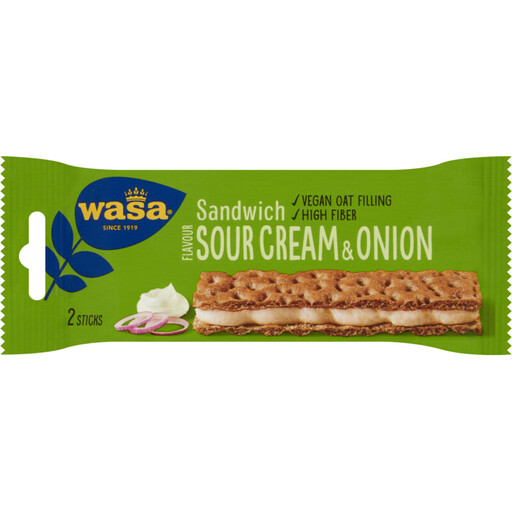
A filled savoury option if you don’t want to choose separate toppings. Check the nutritional information for the whole product and read the ingredients: the product description lists rye and oats, with sesame, milk, soya and lupin potentially present.
 No image available
A wholegrain base for anyone who wants to choose their own toppings and take fibre into account too. Read the latest allergen information carefully: it lists wheat, rye, barley, sesame, egg, milk and lupin, among other ingredients; soya may also be present.
No. Under Regulation (EC) No 1924/2006, published on EUR-Lex, the ‘reduced sugars’ claim requires at least 30% less sugar than a similar product. A single figure per 100 g doesn’t demonstrate that comparison.
Albert Heijn lists 1.5 g of sugars per 100 g for Wasa Wholegrain. Jumbo lists 2.7 g per 100 g for Wasa Protein Wheat, while Albert Heijn lists 3.5 g per 100 g for Wasa Lightweight. This comparison applies to these three varieties, not to all crispbread.
Check the exact variety and its current label. According to the product information listed, Wholegrain and Lightweight contain rye and gluten; Lightweight also contains milk ingredients, while Protein Wheat contains wheat and wheat gluten. If you have an allergy, check for any warnings about the possible presence of other allergens too.
No, you can’t assume that for every product. The Dutch Bakery Centre states that using iodised baker’s salt isn’t a legal requirement. Check the ingredients list to find out what salt a particular variety contains.
Store it as directed on the pack and seal the pack well once opened. Add moist toppings or dip just before eating if you want to stop the crispbread from going soft.