
Student with limited storage space
If you’ve only just moved into your own place, you might want to start by buying a small amount. The pack weight and number of crackers can help you work out whether a pack suits your usage and cupboard space.


Choose crispbread for your student room based on the pack weight, number of crackers and how much you expect to use, rather than relying on the term ‘half loaf’. Then compare the ingredients and nutritional information that matter to you; don’t assume crispbread provides the same iodine as bread made with iodised baker’s salt.
If you’ve only just moved into your own place, you might want to start by buying a small amount. The pack weight and number of crackers can help you work out whether a pack suits your usage and cupboard space.
If you eat crispbread regularly for breakfast or lunch, you can compare the wholegrain information and fibre content per 100 g. However, a wholegrain product isn’t automatically gluten-free.
If you avoid certain ingredients or allergens, the ingredients list and allergen information on the pack matter more than the name or shape of the cracker.
First, work out how much crispbread you’re likely to use. Then compare the nutritional information and ingredients on packs that are the right size for you.
| What to consider | What to check when buying | Who does this matter to? |
|---|---|---|
| Pack size | Compare the weight, number of crackers and storage instructions on the pack. | If I’m not sure how often I eat crispbread, I don’t want to buy a bigger pack than I expect to use. Around 36% of consumers prioritise keeping their stock manageable. |
| Wholegrain and fibre | Check the wholegrain information, ingredients and fibre content per 100 g. | If I eat it regularly for breakfast or lunch, I want to see which grains it contains and how much fibre is listed. This is the first consideration for around 29% of consumers. |
| Ingredients and allergens | Read the current ingredients list, allergen information and any ‘may contain’ statements. | If I need to avoid an ingredient, I don’t want to rely on the product name. Around 21% of consumers prioritise checking ingredients and allergens. |
| Everyday use | Check whether the shape and number of crackers suit the occasions you want to eat them. | I want a practical cracker to eat with toppings or as a snack. Around 14% of consumers give this convenience the highest priority. |
The term doesn’t tell you how much crispbread you’ll take home. The Dutch Albert Heijn product examples list pack weights and, in some cases, the number of crackers.
Use this information to choose an initial supply, and check the pack if you want to break the crackers into smaller pieces.
The Wasa and Leksands varieties reviewed contain gluten-containing grains; Wasa Lichtgewicht also lists milk ingredients. Ingredients vary between varieties.
Check the ingredients, allergens and any ‘may contain’ statements on the pack you buy.
According to the Voedingscentrum, bread made with iodised baker’s salt is an important source of iodine in the Netherlands, although using baker’s salt isn’t compulsory. So the name ‘crispbread’ tells you nothing about the salt used.
If you’re going to eat less bread, consider your overall diet rather than assuming crispbread will provide iodine.
Wasa Volkoren and Wasa Lichtgewicht show why you should compare different varieties from the same brand separately.
Leksands Punt sourdough is triangular crispbread in a 200 g pack, as listed by Albert Heijn.
Ryvita Original Crispbread gives you another product to compare ingredients and nutritional information with.
These crispbread products come in different pack sizes and varieties. Choose an amount that suits how much you expect to use, and check the ingredients on the pack.
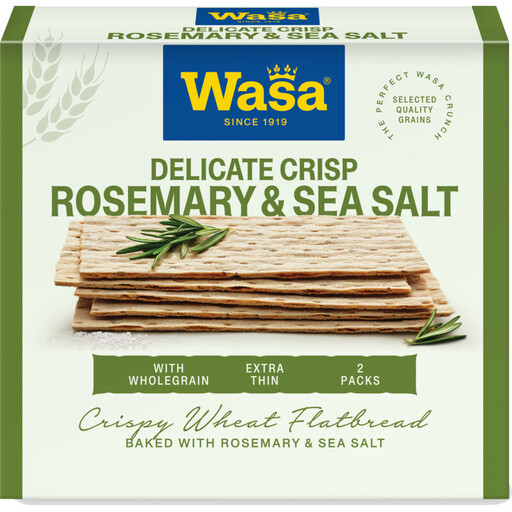 Image unavailable
The 190 g pack could be a good fit if you want to start with a small amount. Check the allergen information on the label if you need to avoid any ingredients.
 Image unavailable
For anyone looking for wholegrain crispbread who expects to use a 265 g pack. Compare the nutritional information per 100 g and read the allergen information before buying.
 Image unavailable
An option if you want light crackers for breakfast or lunch and a 300 g pack suits how much you use. Check the label if you avoid milk or gluten.
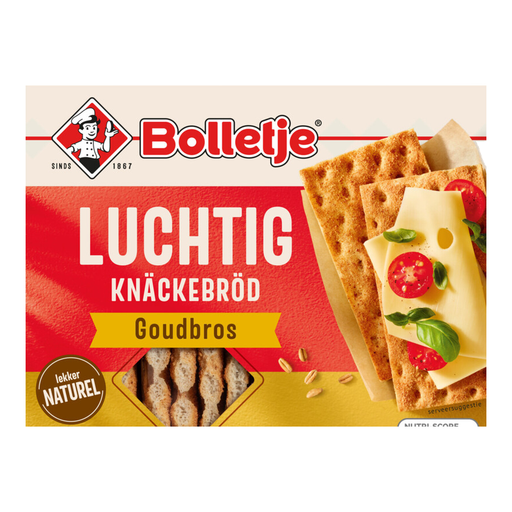 Image unavailable
The 240 g pack is one option if you’re looking for a smaller supply for breakfast or lunch. Check the pack to see how many crackers it contains if you want to plan by the piece.
 Image unavailable
A 215 g pack for anyone looking to start with a small supply and eat crispbread with toppings. Check the number of crackers and allergen information on the pack if these affect your choice.
No. Don’t use the term to work out how much is in a pack. Compare the pack weight and number of crackers, and check the cracker itself if you want to break it into smaller pieces.
Follow the instructions on the pack and seal it properly after use. The Albert Heijn product information reviewed says to store Wasa Volkoren and Leksands in a cool, dry place away from light, and Wasa Lichtgewicht in a cool, dry place.
You can’t assume that it does. The Voedingscentrum describes bread made with iodised baker’s salt as an important source of iodine in the Netherlands and notes that using baker’s salt isn’t compulsory. If you eat less bread, consider your overall diet rather than relying on the product name.
Read the ingredients and allergen information on the pack for the specific variety. According to Albert Heijn’s product information, the Wasa Volkoren and Leksands varieties reviewed contain rye and gluten; Wasa Lichtgewicht also lists milk ingredients. Don’t assume this applies to other varieties.