If you want the toppings to take centre stage, choose a simple wholegrain rye base. Sesame or sourdough is a better fit when you want the crispbread itself to bring more flavour. To help you decide, compare the ingredients, fibre and salt per 100 g, check the allergens for your guests and see how to store the pack once opened.
Who is this crispbread for?
Anyone serving brunch or drinks and nibbles
The flavour and shape of the crispbread both matter when you’re making topped bites. A simple rye base lets the toppings shine, while sesame and sourdough bring a different flavour. Also check that the shape works for the way you want to serve them.
Anyone comparing ingredients and nutritional values
For a regular breakfast or lunch, you can compare the type of grain, ingredients list and fibre per 100 g. According to Albert Heijn’s product information, the variants reviewed have different fibre values; a label such as ‘premium’ doesn’t tell you what that value is.
Anyone who needs to check allergens or dietary requirements
If you need gluten-free crispbread or have to avoid a particular ingredient, the information on the individual pack is what counts. Rye, wheat and sesame varieties differ from products explicitly labelled gluten-free. Compare the other ingredients and nutritional information too.
What should you look for in crispbread?
Before choosing crispbread for a special breakfast, lunch or drinks and nibbles, decide what you want it to do: provide a mild base for toppings, bring flavour in its own right, or meet a particular ingredient or dietary requirement. Pack size and storage matter more if you won’t use the whole pack at once.
| What to consider |
What to check when buying |
Who it matters to |
| Flavour and presentation |
Check the type of grain, flavouring ingredients and shape; check for sesame as an allergen. |
For topped nibbles, I want the flavour and shape to work with the toppings, without the crispbread overpowering the combination. For around 27% of consumers, flavour and presentation may be the main priorities when choosing. |
| Wholegrain and fibre |
Compare the ingredients list and the fibre stated per 100 g. |
If I also eat this with an everyday lunch, I want to be able to compare the grain base and nutritional value. Wholegrain and fibre are likely to matter most to around 33% of consumers. |
| Ingredients and dietary requirements |
Read the allergen information, any gluten-free label, salt per 100 g and the ingredients if you need to check for iodised salt. |
If someone at the table needs to avoid an ingredient, I need to be able to see what’s in each variety. Ingredients and dietary requirements may be the top priorities for around 20% of consumers. |
| Pack size and storage |
Check the pack size and storage advice once opened. |
If I use crispbread across several meals, I want a pack that I can store in a well-sealed container. Practicality may be the main consideration for around 20% of consumers. |
Pitfalls to avoid when choosing
-
Assuming ‘premium’ means more wholegrain or fibre
A distinctive flavour or presentation doesn’t tell you how much fibre a product contains. Albert Heijn’s product information lists 26 g of fibre per 100 g for Wasa Vezelrijk, compared with 6.5 g per 100 g for AH Glutenvrij Vezelrijk crispbread.
Compare the nutritional information per 100 g and check which grains and other ingredients each variety contains.
-
Overlooking allergens in sesame or sourdough varieties
Sesame matters if you need to avoid this ingredient. Sourdough doesn’t automatically mean that crispbread is gluten-free: the Wasa sourdough rye product described by Joybuy has a wholegrain rye base.
Check the allergen information for the exact variety. If you need to eat gluten-free, choose a product explicitly labelled gluten-free.
-
Assuming all crispbread contains iodised salt
The Voedingscentrum says that bread isn’t required to be baked with bakers’ salt. So, a mention of iodised salt for one crispbread variety doesn’t automatically apply to others.
If iodised salt matters to you, read the ingredients list of the product you choose.
-
Choosing a pack without considering storage
If you use an opened pack over several occasions, it needs to be kept properly sealed, in line with the storage advice. Albert Heijn recommends storing AH Knäckebröd volkoren in a sealed container once opened.
Choose a pack size that suits the way you’ll use it and follow the storage instructions on the packaging.
Brands to compare
Compare each variety within a brand individually: ingredients, nutritional values and allergens can differ between crispbreads from the same brand too.
Wasa
The Wasa products reviewed include wholegrain rye, high-fibre, sesame and sourdough varieties.
- According to Albert Heijn, Wasa Volkoren is made with 100% wholegrain rye and has three ingredients; Wasa Vezelrijk lists 26 g of fibre per 100 g.
- The varieties mentioned aren’t interchangeable if you need to check allergens. Check the gluten and sesame information on the pack you choose, among other details.
Leksands
Leksands Knäcke original is a rye variety with a triangular shape, ideal if you want to make topped wedges.
- Albert Heijn lists 97% wholegrain rye flour for this variety.
- Its rye base isn’t suitable if you need a gluten-free option; check the salt and other ingredients on the current packaging.
Bolletje
The Bolletje products reviewed include both a wholegrain, high-fibre variety and a separate protein variety.
- Albert Heijn lists 14 g of fibre per 100 g for Bolletje Volkoren knäckebröd vezelrijk and 22 g of protein per 100 g for the Proteïne variety reviewed.
- These values relate to different products. Compare the ingredients and allergens of the variety you want to serve too.
Albert Heijn
The own-brand range includes both wholegrain crispbread and a variety explicitly labelled gluten-free in the product information reviewed.
- The product information for AH Glutenvrij Vezelrijk crispbread states that it is made in a completely gluten-free environment.
- The same variety lists 2.4 g of salt per 100 g. Assess the gluten-free label, ingredients and nutritional information separately.
Ryvita
Ryvita Original Crispbread is a rye variety whose ingredients you can compare with those of other simple bases.
- Ryvita lists 88 g of wholegrain rye flour per 100 g for Original Crispbread.
- For a pack sold in the Netherlands, check the current nutritional information and allergen details; rye isn’t a gluten-free grain.
Crispbread at Joybuy
These products offer different options for topped breakfasts, lunches and drinks and nibbles: sourdough or sesame for a distinctive flavour, a fibre-focused variety and simpler rye bases. Check the exact pack if ingredients, allergens or nutritional values will determine your choice.
 Image unavailable
Wasa Sourdough Rye Crackers, 235 g
A sourdough rye variety for when you want the crispbread itself to add flavour alongside the toppings. The Joybuy product description lists 100% wholegrain rye; check the allergens on the pack if they matter to your guests.
View at Joybuy
 Image unavailable
Wasa High-Fiber Crackers, 300 g
A variety to compare if fibre matters to your breakfast or lunch choice. Compare the fibre per 100 g and ingredients on this pack with those of other crispbreads, and check the allergens too.
View at Joybuy
 Image unavailable
Wasa Lightweight Crackers, 300 g
Worth considering if you’re looking for a base that lets sweet or savoury toppings take centre stage. Check the grain type and allergens on the pack, especially if you’re serving several people.
View at Joybuy
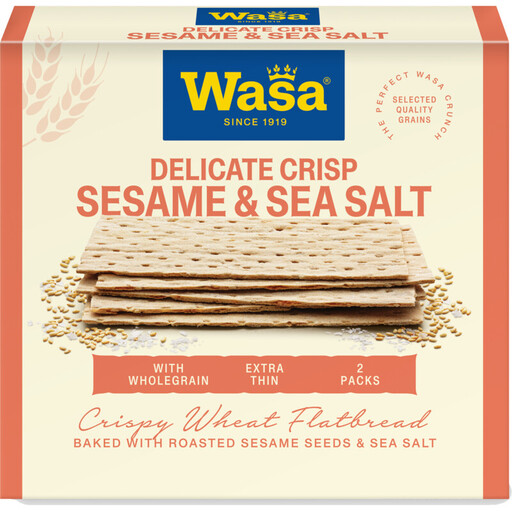 Image unavailable
Wasa Thin Crisp Sesame, 190 g
A sesame variety for topped bites where you want the crispbread to bring its own flavour too. Sesame is an important consideration for anyone with an allergy; read the full allergen information before serving.
View at Joybuy
 Image unavailable
Wasa Rustic Crispbread, 215 g
A rye crispbread to consider as a base for sweet or savoury toppings. Compare the fibre per 100 g on the pack if that matters more to you than flavour or shape.
View at Joybuy
Frequently asked questions
What makes crispbread a good fit for a special meal?
It mainly depends on the role you want it to play alongside the toppings: choose a simple rye base when the toppings should take centre stage, or sesame or sourdough when you want the crispbread itself to add flavour. For topped bites, consider the shape too, and check the allergens for your guests.
Is sourdough crispbread gluten-free?
No, sourdough doesn’t automatically mean gluten-free. Joybuy’s description of Wasa sourdough rye crispbread lists wholegrain rye. If you need to eat gluten-free, choose a variety explicitly labelled gluten-free and check the label.
How should I store crispbread once opened?
Follow the storage advice on the pack and seal it well to keep out moisture. Albert Heijn recommends storing AH Knäckebröd volkoren in a sealed container once opened.
Does crispbread in the Netherlands always contain iodised salt?
No, you can’t assume that across the whole category. The Voedingscentrum says bread isn’t required to be baked with bakers’ salt. If iodised salt matters to your choice, read the ingredients list for the specific crispbread variety.


