
Small households during the holidays
If you make lunch at home for just a few people, pack size, any inner packaging and clear storage instructions are especially useful.


If you’re making lunches at home for a small household during the school holidays, choose a pack you can finish while the crispbread stays crisp. A smaller pack or one with individually wrapped portions may be more practical than a large pack. Then compare the grains, fibre and salt listed on the label. If you need a strictly gluten-free option, look for an explicitly labelled gluten-free product; don’t assume it contains iodine just because it’s called crispbread.
If you make lunch at home for just a few people, pack size, any inner packaging and clear storage instructions are especially useful.
If you regularly top crispbread, you can compare wholegrain content, fibre and salt per 100 g, while also bearing in mind the portion you eat.
If you need to avoid gluten or another allergen, choose based on the current ingredients and allergen information for the specific variety, not just the product category.
For lunches at home during the school holidays, first work out how much crispbread you’ll use once the pack is open. Then compare the label details that matter most to your household.
| What to consider | What to check when buying | Who it matters to |
|---|---|---|
| Pack size and storage | Compare the weight, number of pieces, any inner packaging and the storage instructions after opening. | If I’m only making a few lunches at home, I don’t want to open more than I can keep crisp. For around 50% of consumers, reducing leftovers would be the first consideration. |
| Wholegrain, fibre and salt | Check the wholegrain claim and compare fibre and salt per 100 g; also consider your portion and toppings when choosing what to have for lunch. | If I regularly have crispbread with toppings for lunch, I want to know what the crispbread itself adds to the meal. Around 40% of consumers would compare the nutritional information first. |
| Allergens and iodine information | If you need a strictly gluten-free option, check the gluten-free label and allergen information. To check for iodine, look for a product-specific mention of iodised salt. | If an ingredient or allergen limits my choice, I need to be able to rely on the label for that exact variety. Checking the label would be the first priority for around 10% of consumers. |
The Wasa, Bolletje, Albert Heijn and Jumbo wholegrain varieties described here contain rye and/or wheat. So a wholegrain label doesn’t mean a product is suitable for someone who needs to avoid gluten.
If you need a gluten-free option, choose only a variety explicitly labelled gluten-free and check the rest of the allergen information too.
A 375 g pack with 25 portions may not be the best choice if you don’t use much, especially if the crispbread loses its crunch before you finish it.
Compare the number of pieces and any inner packaging too. Once opened, store the pack in a dry place and seal it well, following the instructions.
The name crispbread doesn’t tell you whether iodised salt has been used in a particular variety. The Netherlands Nutrition Centre says that using iodised baker’s salt in bread is not compulsory.
Check the ingredients of the product you choose for iodised salt, or ask the manufacturer.
Fibre, salt, portion size and toppings each play a different part in what makes up a lunch. A fibre figure doesn’t tell you how much salt there is in the whole lunch, including the toppings.
Compare fibre and salt on the same basis, such as per 100 g, then consider the portion you actually use.
Wasa offers several types of crispbread. If you’re choosing between the wholegrain rye variety and other options, compare the label for the specific product.
The Bolletje wholegrain variety described here is worth considering if you’re looking for a pack with individually wrapped portions.
The own-brand range includes a 375 g wholegrain pack; Albert Heijn also lists gluten-free products separately.
Jumbo has a 375 g own-brand wholegrain pack for households that use this size.
This ALDI own-brand range includes a wholegrain pack and a separate seeded variety.
Ryvita sells crispbread and crackerbread as separate product ranges.
These are compact packs of crispbread for lunches with toppings at home. Compare the weight with how much you use; check the number of pieces, inner packaging and allergens for each variety if they’re relevant to your choice.
 Image unavailable
A 265 g pack to consider if you’re looking for a wholegrain base for lunches with toppings in a small household.
Check the inner packaging and the latest ingredients and allergen information for this variety.
 Image unavailable
The 215 g pack is a good option if you don’t want to open a large pack for lunches.
If you want to spread it over several lunches, check the number of pieces and whether there’s any inner packaging.
 Image unavailable
This compact wholegrain pack is ideal for lunch with your choice of toppings if 260 g is a good fit for how much you use.
According to the Joybuy product information, this variety is made with wholegrain rye. Check the number of pieces and the storage instructions for after opening.
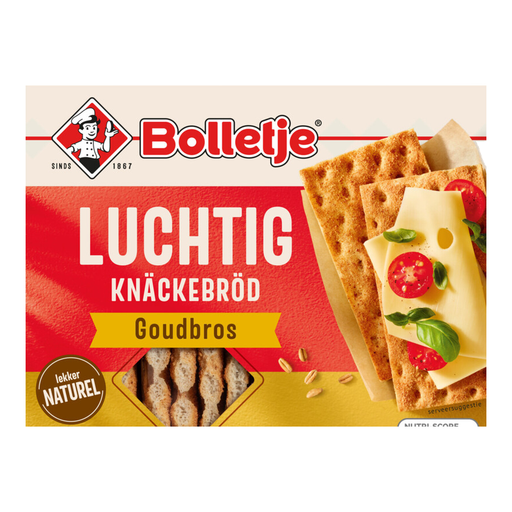 Image unavailable
This 240 g pack is another compact option for lunches at home. The name Light on its own doesn’t tell you which nutritional values matter to you.
Before buying, check the current packaging for allergens, especially sesame, and look at the number of pieces if you plan to spread the pack over several lunches.
No. The product name doesn’t tell you whether iodised salt has been used. The Netherlands Nutrition Centre says that using iodised baker’s salt in bread is not compulsory, so check the ingredients of the specific crispbread or ask the manufacturer.
Once opened, store the pack in a dry place and seal it well, following the instructions. Albert Heijn recommends keeping its wholegrain crispbread in a sealed tin; if you don’t use much, a smaller pack or individually wrapped portions can also help you avoid opening too much at once.
No. Wholegrain and gluten-free mean different things. The Wasa, Bolletje, Albert Heijn and Jumbo wholegrain varieties described here contain rye and/or wheat. If you need a gluten-free option, choose a product explicitly labelled gluten-free and check the rest of the allergen information.