
Small-gathering hosts
You’re buying for one evening and don’t want lots left over. Compare the net weight with what your guests are likely to eat, and check how to store an opened pack.


For a small gathering, the pack’s net weight is a more useful guide than the description ‘half loaf’. Choose bite-sized crackers if you mainly want something to dip and share, or wholegrain crispbread as a base for toppings. For the variety you choose, check the ingredients, allergens and storage instructions too.
You’re buying for one evening and don’t want lots left over. Compare the net weight with what your guests are likely to eat, and check how to store an opened pack.
You’re looking for small pieces you can serve with dips or toppings without cutting them up. Check the ingredients and allergens for each variety if you’re serving guests.
You want a wholegrain base and compare the fibre content per 100 g. Don’t rely on the product category if allergens or iodine are also important to your choice.
First decide how much you’ll need for the evening and whether you want to serve it with dips or toppings. Then compare the labels of the varieties you’ve shortlisted.
| What to consider | What to check when buying | Especially relevant if |
|---|---|---|
| Quantity and leftovers | Compare the net weight, any individually wrapped portions, the best-before date and the storage advice. | I’m buying for a small gathering and don’t want to be left with a large opened pack. Around 40% of consumers put a smaller quantity first. |
| Size for sharing | Check whether the crackers are bite-sized or whether you’d prefer to break the crispbread into pieces yourself. | I want to serve pieces on a sharing board with dip that guests can pick up straight away; around 30% of consumers prioritise this size. |
| Ingredients and nutritional information | Read the ingredients, allergens and nutritional information for the exact variety. Compare fibre per 100 g if that matters to your choice. | I’m buying for guests with a food allergy or looking for a wholegrain base, so the pack I choose needs to suit that requirement. Around 30% of consumers prioritise this when choosing from the label. |
The ranges shown by Albert Heijn and Jumbo list specific net weights. A description such as ‘half loaf’ doesn’t tell you how much crispbread you’re buying for the evening.
Compare the weights in grams and, if listed, the number of individual portions before choosing a flavour.
Ingredients and allergen information vary between varieties. Another product from the same brand is therefore no substitute for checking the information on the pack you’re buying.
Before buying, read the ingredients list and allergen information for the exact variety, especially if you’re serving guests with a food allergy.
According to the Netherlands Nutrition Centre, wholegrain cereal products contain more fibre than white cereal products made with flour. ‘Wholegrain’ alone tells you nothing about the allergens or iodine content of a particular crispbread.
Compare the ingredients and nutritional information for the variety you choose. Don’t make assumptions about iodine across the whole category.
Bite-sized crackers can be handy with dips, while larger pieces of crispbread are served differently. Pack sizes and ingredients can also vary.
First decide how you want to serve the product, then compare the packs that suit your plans.
The Jumbo range includes Wasa products in different sizes, including wholegrain crispbread and Delicate Crackers.
Albert Heijn lists Leksands Knäcke original in a 175 g pack as an option if you’re looking for traditional crispbread to serve with toppings.
Albert Heijn lists Kies AH Knäckebröd sesame in a 200 g pack.
These products offer two options for your Sinterklaas sharing board: crackers to serve with dip and crispbread as a base for toppings. Compare the pack weight with the number of guests; a smaller pack doesn’t necessarily mean you’ll have less left over.
 No image available
An option if you want to serve crispbread as a base for toppings. The pack contains 215 g; choose an amount to suit your gathering, and check the label on the pack you choose if anyone has allergies.
 No image available
For serving rye crackers with toppings. The pack contains 235 g; consider how much you expect to use during the evening, and read the label if anyone has allergies.
 No image available
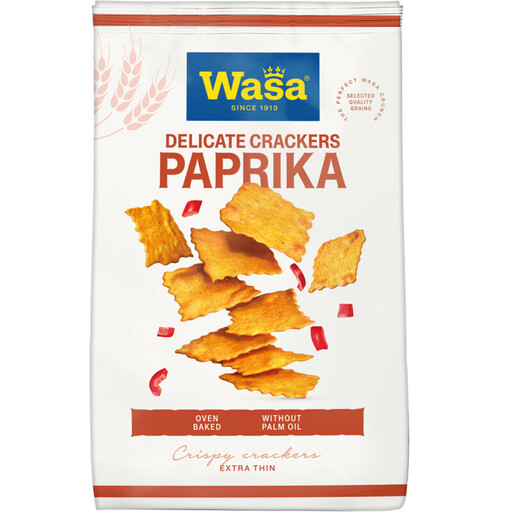
A cracker option for a sharing board with dip or toppings. At 150 g, this is the lightest pack in this product selection; if you’re serving guests, check the ingredients and allergens for the exact variety.
 No image available
For anyone looking for crackers as a base for toppings and who can make use of a larger pack. The pack contains 300 g; consider how much you’d store after the evening, and compare the nutritional information on the pack if fibre is important to your choice.
 No image available
An option if you want to serve crispbread with toppings. The pack contains 265 g; compare it with the smaller packs if you want to avoid leftovers, and read the ingredients on the pack you choose.
Don’t use that description as a guide to quantity. The ranges shown by Albert Heijn and Jumbo list specific pack weights; compare the net weight and any individual portions with what you’ll need for the evening.
Follow the storage instructions on the pack for your variety and seal an opened pack as directed. Instructions can vary by product, so don’t automatically follow the advice for a different cracker.
Before buying, read the ingredients list and allergen information for the exact variety. The Netherlands Food and Consumer Product Safety Authority explains allergen labelling; a brand name or picture of a similar product is no substitute for that product information.
No, don’t assume that it does. The mention of iodine-enriched baker’s salt in Dutch regulations doesn’t prove which salt is used in a particular crispbread. Check the specific product information if iodine is important to your choice.