What should you look for when buying?
Start with a cracker the pupil will enjoy and can put toppings on. Then check the wholegrain information, nutritional details and allergens. If a medium-sized cracker is important, check the dimensions of each one: ‘medium sliced’ isn’t a standard size.
| What to consider |
What to check when buying |
Who is this important for? |
| Wholegrain base and size |
Look for the wholegrain information and check whether one cracker is large enough for the topping you’ve chosen. |
For every school day, I want a wholegrain base that works with my topping; around 33% of consumers put this need first. |
| Allergens |
Read the ingredients and allergen information for the exact variety and the topping; check whether the school has any rules. |
If I need to take coeliac disease or an allergy into account, I want to know what’s in the whole lunch before packing it. This check is the top priority for around 27% of consumers. |
| Fibre |
Compare the nutritional information per 100 g and check the ingredients in the variety you’ve chosen. |
When choosing my lunch, I mainly want to focus on fibre, but I also want a cracker I enjoy eating; around 20% of consumers put this first. |
| Packaging and storage |
Check the weight, number of crackers and storage instructions for an opened pack. |
When I’m preparing lunches for several school days, I want to know how many useful portions are in a pack. Around 20% of consumers prioritise this need. |
Crispbread on Joybuy
These products include wholegrain crispbread and varieties for comparing fibre when putting together a school lunch. Check whether the crackers in each pack are large enough for the topping and whether the ingredients are suitable for the pupil and any school rules.
 No image available
Bolletje Whole Grain Crispbread 265 g
For a lunch where you’re looking for a wholegrain variety and want to compare fibre. Check the nutritional information per 100 g and the allergens in both the crispbread and the topping.
Check whether each cracker is large enough for the portion you want to top.
View on Joybuy
 No image available
g'woon Wholemeal Crispbread 375 g
For anyone wanting to keep crispbread for several school lunches. Check how many individual crackers are in the pack and follow the storage instructions after opening.
Check the ingredients and allergens in both the cracker and the topping before packing the lunch.
View on Joybuy
 No image available
Wasa Wholegrain Crispbread 260 g
For anyone looking for a wholegrain crispbread base for toppings. Check whether the cracker is the right size and read the allergen information if gluten or other ingredients are a concern.
View on Joybuy
 No image available
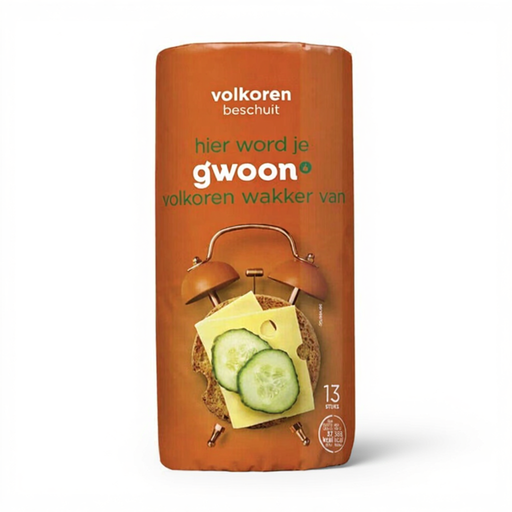
g'woon Wholegrain Crispbreads 125 g
For anyone looking for a 125 g pack and wanting to check whether these crackers are suitable to take separately with toppings. Check the size of each cracker and read the ingredients and allergen information.
View on Joybuy
 No image available
Wasa High-Fiber Crackers 300 g
If you want to compare fibre content, check the nutritional information per 100 g alongside that of other varieties. Also check the allergens and whether the crackers can be taken to school with your chosen topping.
View on Joybuy
Frequently asked questions
Is wholegrain crispbread suitable for a secondary school lunch?
Yes. Wholegrain crispbread can be part of a varied school lunch if the pupil enjoys eating it and the product is suitable for any allergen restrictions. The Netherlands Nutrition Centre includes wholegrain products in its advice on a varied diet for teenagers. Choose toppings that suit the pupil and, if you like, add some fruit or vegetables.
Is wholegrain crispbread automatically gluten-free?
No. Jumbo lists wheat, rye and gluten in its Wholegrain Crispbread. If you need a gluten-free product, look for an explicit gluten-free label and check the current label for the exact variety.
What should I check before packing crispbread for school?
Read the current ingredients and allergen information for both the crispbread and the topping, and take into account any individual arrangements at school. The Netherlands Food and Consumer Product Safety Authority says that allergens must be identifiable in the ingredients list on the label.
Can I assume that crispbread contains iodised baker’s salt?
No, you can’t tell from the name ‘crispbread’. If iodised baker’s salt is important to your choice, check the ingredients list on the specific pack.
How can I take crispbread to school without it going soft?
Follow the storage instructions on the pack and consider packing moist toppings separately. That way, you can add the topping at lunchtime instead of spreading it on the crackers early in the day.


