
Parents keeping an eye on sugars
If you’re looking for crispbread for a school lunch, you can compare the sugars per 100 g without assuming that a lower sugar value also means less salt or more fibre.


If you’re looking for crispbread as a base for a school lunch, compare the ‘of which sugars’ values per 100 g, and check fibre, salt and allergens too. According to Albert Heijn product information, Leksands Knäcke extra crispy baked contains 0.5 g of sugars and Wasa Wholemeal contains 1.5 g of sugars per 100 g; both list 20 g of fibre and 1.2 g of salt per 100 g. Both contain cereals containing gluten, so check the label and your school’s guidelines before packing lunch.
If you’re looking for crispbread for a school lunch, you can compare the sugars per 100 g without assuming that a lower sugar value also means less salt or more fibre.
If you need to follow guidelines on ingredients such as gluten or sesame, it’s important to check both the product label and your school’s rules about food in the classroom.
If you regularly eat crispbread for breakfast or lunch, you’ll want to weigh up the fibre, salt and ingredients as well as the sugars.
For a school lunch, start by checking the sugars per 100 g and the allergens on the label. Then compare fibre and salt, and consider how you’ll store the opened pack during the school week.
| What to consider | What to check when buying | Who is this important for? |
|---|---|---|
| Sugars | Compare ‘of which sugars’ per 100 g and check the ingredients list if added sugar is also a concern. | If I mainly want to reduce the sugars in my child’s lunchbox, I give more weight to the value per 100 g than to the wording on the front of the pack. Sugar reduction is the deciding factor for around 36% of consumers. |
| Allergens and school guidelines | Read the allergen information and any ‘may contain’ statements; ask about the school’s guidelines. | If my child needs to avoid certain ingredients, I want to know before packing lunch whether the product and meal fit the agreed guidelines. This check comes first for around 29% of consumers. |
| Fibre and other nutritional values | Compare fibre and salt per 100 g with the sugar value; look at protein separately if it’s relevant to your choice. | If I regularly use crispbread for lunch, I want to weigh up more than just the sugars. Around 21% of consumers prioritise fibre and the wider nutritional profile. |
| Packaging and storage | Check the pack size and storage instructions for after opening. | If lunches are spread across the school week, I want to know how to store an opened pack. Daily use is the most important factor for around 14% of consumers. |
That wording is no substitute for the nutrition table. According to Albert Heijn product information, the Leksands, Wasa and AH varieties compared here have different ‘of which sugars’ values.
Compare products per 100 g and take fibre, salt and the ingredients list into account too.
The rye and wheat varieties discussed contain cereals containing gluten. A wholemeal label doesn’t mean a product is suitable for someone who needs to avoid gluten.
Check the allergen information every time you buy, and follow the individual guidelines for food at school.
According to the Voedingscentrum, baker’s salt has iodine added, but bakers aren’t required to use it. You can’t tell whether it’s used just from the type of product.
Check the label for baker’s salt if it’s something you need to consider for your household.
General product information won’t tell you what rules apply in your child’s classroom regarding allergens or sharing food.
Ask about your school’s guidelines before the school year starts, and take any individual plans into account.
Wasa Wholemeal and Wasa Protein+ show why it’s worth checking the nutritional information for each variety, even within the same brand.
The extra crispy baked variety and the oat variety have different nutritional values and ingredients.
AH Wholemeal Crispbread is an option for anyone who wants to consider pack size and nutritional values together.
These crispbread varieties are worth considering if you’re looking for a base for breakfast or lunch. For a school lunch, compare the nutritional information and allergens on your chosen pack with your own priorities and the school’s guidelines.
 Image unavailable
A wholegrain crispbread option to consider as a base for lunch when you want to compare sugars, fibre and salt on the label.
Before taking it to school, check the listed cereals containing gluten and sesame.
 Image unavailable
An option to consider if fibre is as important as the sugar value; compare both values per 100 g on the pack.
Check the information about cereals containing gluten and sesame, as well as any warnings about traces of milk.
 Image unavailable
A wholemeal option for anyone who wants to weigh up the nutritional information when using it regularly as a base for lunch.
Read the allergen information carefully: this variety includes gluten, sesame, egg, milk and lupin among its allergens.
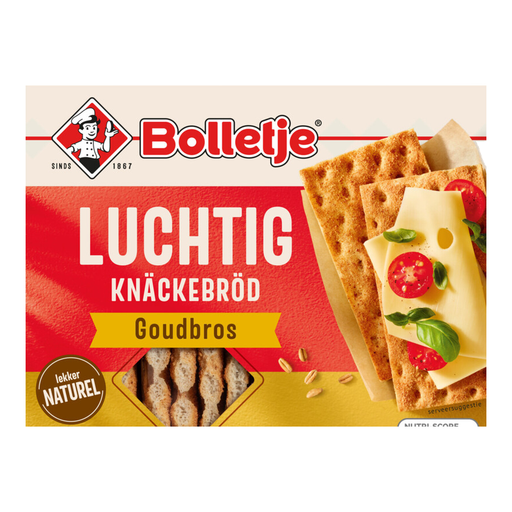 Image unavailable
A crispbread option for breakfast or lunch; compare the nutritional values per 100 g rather than relying on the word ‘Light’ in the name.
The ingredients include wheat flour and sesame. Check which allergen guidelines apply before taking it to school.
 Image unavailable
A rye option to consider if the ingredients list is important to you; check the fibre content on the pack if it’s a factor in your choice.
The ingredients include rye and gluten. Also check for possible traces of milk and sesame.
Don’t assume it’s suitable: the rye varieties discussed contain cereals containing gluten. Check the label and allergen information on the pack, and follow the individual dietary guidelines.
Read the allergen information and any warnings about traces on the label. Also ask what rules the school or classroom has about food brought from home and sharing it.
No, you can’t tell from the type of product. According to the Voedingscentrum, baker’s salt has iodine added, but bakers don’t have to use it. Check the label if this is relevant to your choice.
Follow the storage instructions on the pack and seal it well after opening. For AH Wholemeal Crispbread, Albert Heijn recommends storing it in a closed tin after opening.