When choosing crispbread for a school lunch, don’t rely on the ‘thick cut’ label alone: the weight of each slice doesn’t prove how thick or sturdy it is. Compare the size and try the crispbread with the topping you plan to use. If fibre or avoiding gluten is your priority, check the nutritional information per 100 g or look for an explicit gluten-free label, and check the other allergens on the pack.
Who is this choice important for?
Pupils who bring generous toppings
If you’re packing hummus, cheese, egg or avocado, the size of each slice is worth considering. A higher weight per piece can be useful for an initial comparison, but it doesn’t tell you how well the crispbread will hold together.
Families comparing fibre content
If you’re looking for a wholegrain base for lunch, compare the ingredients and fibre content per 100 g. Wholegrain or high-fibre doesn’t mean a product is suitable for someone avoiding gluten.
Pupils who need to avoid gluten
For them, an explicitly labelled gluten-free option is the starting point. Also check the other allergens and warnings on the pack, such as any mention of oats or sesame.
What should you look for when choosing?
First decide which requirement matters most for the lunch, then compare only the product details that tell you something about it.
| What to consider |
What to check when buying |
Who is it important for? |
| Size and sturdiness |
Compare the weight per piece and its visible size. Try a slice at home with the topping the pupil will take to school; weight per piece isn’t a test of thickness or how well it holds together. |
If I’m taking generous toppings, I want the base of my lunch to be easy to handle. For around 40% of consumers, practical sturdiness is the top priority. |
| Wholegrain and fibre |
Check the types of grain in the ingredients list and always compare fibre per 100 g, not per pack or per serving of a different size. |
If you’re mainly looking for a wholegrain option, you’ll want to compare fibre values on the same basis; this takes priority for around 30% of consumers. |
| Gluten and allergens |
Check for a gluten-free label if gluten needs to be avoided, read the current allergen information and ask about your school’s own rules. |
If I need to account for a gluten restriction or a school rule when packing lunch, those checks come before size or fibre content. For around 30% of consumers, this is their main concern. |
Common mistakes
-
Assuming a heavier slice proves the crispbread is sturdier
Albert Heijn lists a 15 g serving for AH Knäckebröd Volkoren and around 16.6 g per piece for Bolletje Volkoren Knäckebröd. These are weights, not measurements of thickness or strength.
Use the weight per piece as a point of comparison, check the size and try the slice with the topping the pupil will actually take to school.
-
Confusing wholegrain or high-fibre with gluten-free
The regular wholegrain options described contain gluten-containing grains. A product labelled gluten-free may still contain other allergens or carry a warning about them.
Every time you buy, check the gluten-free label as well as the ingredients and any ‘contains’ or ‘may contain’ information.
-
Assuming all crispbread contains iodised salt
According to the Voedingscentrum, baker’s salt contains iodine, but using baker’s salt when baking bread isn’t compulsory. So seeing ‘salt’ on a label doesn’t mean it’s iodised.
If you want to know what kind of salt a specific product contains, check the ingredients list for ‘iodised salt’ or ‘baker’s salt’.
Brands to compare
Wasa
Wasa offers wholegrain rye crispbread, a high-fibre option and a separate gluten-free option, among other products. Compare the information on the pack you’ve chosen, not just the brand name.
- Jumbo lists 20 g of fibre per 100 g for Wasa Volkoren, with wholemeal rye flour, yeast and salt among the ingredients.
- The regular rye option contains gluten; Gluten Free Classic is a different product. A product description saying it’s crisp doesn’t prove how well a slice holds up under generous toppings.
Albert Heijn
The own-brand range includes a regular wholegrain option and a separate product labelled gluten-free.
- Albert Heijn lists a 15 g serving for AH Knäckebröd Volkoren; AH Glutenvrij Vezelrijk is stated to be made in a completely gluten-free environment.
- The wholegrain option lists gluten, rye, wheat and sesame among its allergens. For the gluten-free option, the mention of oats and the warning about possible sesame remain relevant.
Jumbo
Jumbo’s own-brand range includes wholegrain crispbread, which Jumbo says comes in a pack containing 25 servings of 15 g.
- Jumbo lists 10.9 g of fibre and 0.71 g of salt per 100 g, so you can compare these figures with other labels on the same basis.
- The product lists gluten, rye and wheat as allergens. The number of servings doesn’t tell you how thick or sturdy each slice is.
Bolletje
Bolletje Volkoren Knäckebröd is worth comparing if you want to check the weight of an individual slice.
- Albert Heijn lists around 16.6 g per piece and 14 g of fibre per 100 g for this option.
- This option contains gluten-containing grains and sesame, and may contain lupin. The weight per piece doesn’t show that it’s thicker or sturdier.
Products for this lunch choice
These products offer crispbread and a rye cracker to compare as a lunch base or by nutritional value. If you’re planning generous toppings, check the size and sturdiness yourself; the products shown aren’t a comparison of slices proven to be ‘thick cut’.
 Image unavailable
g'woon wholegrain crispbread, 375 g
An option to consider if you’re looking for wholegrain crispbread to top for lunch. The pack contains 375 g; check the size with your chosen topping, and if you need to avoid gluten or other allergens, check the current label.
View at Joybuy
 Image unavailable
Bolletje wholegrain crispbread, 265 g
If you want to compare individual slices as a base for lunch, Albert Heijn lists around 16.6 g per piece and 14 g of fibre per 100 g for Bolletje Volkoren Knäckebröd. The weight doesn’t prove it’s sturdy; this option contains gluten-containing grains and sesame.
View at Joybuy
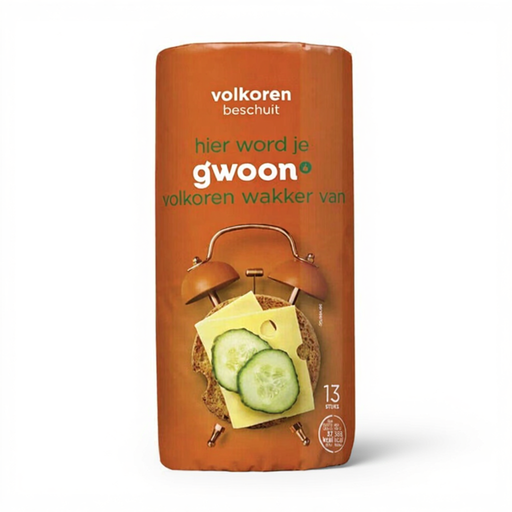 Image unavailable
g'woon wholegrain crispbread, 125 g
A smaller pack of wholegrain crispbread to consider as a base for lunch toppings. The pack weighs 125 g; check the size of the slices if generous toppings are important. This product contains gluten.
View at Joybuy
 Image unavailable
Wasa wholegrain crispbread, 260 g
A rye option if you’re looking for a wholegrain base for lunch toppings. Jumbo lists 20 g of fibre per 100 g for Wasa Volkoren, with wholemeal rye flour, yeast and salt among the ingredients. Rye contains gluten; check the label for other allergens too.
View at Joybuy
 Image unavailable
Wasa High-Fiber Crackers, 300 g
A rye cracker to consider alongside crispbread if you haven’t decided which type you want for lunch. The pack contains 300 g; check its shape and size before comparing it with crispbread for generous toppings. The listed allergens include gluten-containing grains and sesame.
View at Joybuy
Frequently asked questions
Is regular rye or wheat crispbread suitable for someone who needs to avoid gluten?
No. Choose a product explicitly labelled gluten-free instead. The regular rye or wheat options described contain gluten-containing grains; even with a gluten-free option, check the latest information about other allergens.
How can you identify allergens in packaged crispbread?
Read the ingredients list and the other allergen information on the pack. According to the European Union, allergens in prepacked foods must stand out in the ingredients list, for example through different formatting.
Does ‘salt’ on the label mean that crispbread contains iodine?
No. Seeing ‘salt’ on its own doesn’t tell you whether it’s iodised. The Voedingscentrum explains that baker’s salt contains iodine, but its use isn’t compulsory; check the exact ingredient listing for the product you’ve chosen.
How should you pack crispbread for several school lunches?
Follow the storage instructions on the pack and seal it well after opening. If the pupil wants to add toppings at school, you can pack moist toppings separately so the crispbread stays dry until then.


