For a school lunch, compare plain crispbread by its sugar content per 100 g: according to Jumbo’s product information, Wasa Volkoren and Bolletje Volkoren Knäckebröd Vezelrijk both contain 1.5 g, compared with 2.4 g for Jumbo Knäckebröd Volkoren. Also check the toppings, fibre, salt and the current allergen label. A lower sugar content in the crispbread itself doesn’t tell you how much sugar is in the topped lunch.
Who is this choice relevant to?
Parents keeping an eye on sugar
If you’re looking for a less sweet base for your child’s lunchbox, compare the crispbread’s nutritional values and take the toppings into account too. The Netherlands Nutrition Centre points out that toppings such as jam and chocolate spread also add sugar to lunch.
Families comparing wholegrain options and fibre
If you’d like to include crispbread as an alternative in school lunches, you can compare fibre per 100 g while keeping an eye on the salt content. Jumbo’s product information shows that these values vary between wholegrain options.
Parents who need to check allergens
If your child has an allergy or there are rules at school or their after-school club, check the label on the specific pack. The rye and wheat options discussed contain gluten-containing cereals; some products may also contain sesame or carry warnings about possible cross-contamination.
What should you look for when choosing?
Start by checking the sugar in the crispbread and its toppings, then compare fibre and salt. Check the allergens and any school rules before packing it.
| What to consider |
What to check |
Especially relevant if |
| Sugars and toppings |
Compare ‘of which sugars’ per 100 g across similar types of crispbread, and check the toppings separately. |
I want to pack a lunch with less sugar, so I need to know how much comes from both the crispbread and the toppings. Around 36% of consumers say reducing sugar is their top priority. |
| Wholegrain and fibre |
Read the ingredients list and compare fibre per 100 g, alongside sugars and salt. |
I want a wholegrain base for lunch and need to compare products rather than relying on the name alone. Wholegrain and fibre are top priorities for around 29% of consumers. |
| Allergens and school rules |
Read the current allergen label and any ‘may contain’ statements; check with the school or after-school club if needed. |
If an allergy or school rule is a factor, I want to know whether this pack is suitable before I put it in the lunchbox. This is the main concern for around 21% of consumers. |
| Pack size and everyday use |
Check the pack contents, suggested portion and storage instructions. |
If I regularly prepare packed lunches, I want to know whether the pack size and storage requirements suit our needs. This matters most to around 14% of consumers. |
Common mistakes
-
Looking only for ‘less sugar’
A claim on the packaging is no substitute for the nutrition table, and it says nothing about the toppings on your crispbread.
Compare ‘of which sugars’ per 100 g across similar products, then check the toppings.
-
Assuming wholegrain is suitable for someone with an allergy
The wholegrain options discussed contain gluten-containing cereals. Depending on the product, sesame or ‘may contain’ statements may also be relevant.
Read the label on the pack you’re sending in, and check with the school or after-school club if your child has an allergy.
-
Comparing fibre alone
According to Jumbo’s product information, Wasa Volkoren, Bolletje Volkoren Knäckebröd Vezelrijk and Jumbo Knäckebröd Volkoren contain 20 g, 14 g and 10.9 g of fibre per 100 g, respectively. Their salt content also varies.
When making your final choice, compare sugars, salt and allergens too.
Brands to compare
Wasa
The Wasa Volkoren 260 g product reviewed here is a rye crispbread you can compare by its nutritional values and allergens.
- According to Jumbo, this option contains 1.5 g of sugars and 20 g of fibre per 100 g.
- The same product information lists 1.2 g of salt per 100 g and rye as a gluten-containing ingredient.
Bolletje
Bolletje Volkoren Knäckebröd Vezelrijk is a specific wheat and rye option in this comparison.
- According to Jumbo, this option contains 1.5 g of sugars, 14 g of fibre and 0.97 g of salt per 100 g.
- The ingredients include wheat, rye, barley and sesame. If you have an allergy, check the current label.
Jumbo
Jumbo Knäckebröd Volkoren is a supermarket own-brand option for comparing wholegrain crispbreads.
- According to Jumbo, this option contains 2.4 g of sugars, 10.9 g of fibre and 0.71 g of salt per 100 g.
- The product contains wheat and rye and has additional ‘may contain’ statements; check the pack for details.
Albert Heijn
Albert Heijn lists its own-brand wholegrain crispbread.
- This wholegrain option is worth considering when choosing something for a school lunch.
- Before drawing conclusions about sugars or allergens, compare the nutritional values and full ingredients list on the current pack.
Ryvita
Ryvita Dark Rye is a rye crispbread; the available product specifications come from Ryvita itself.
- Ryvita lists wholegrain rye flour, rye flour and salt as ingredients in Dark Rye.
- Compare nutritional values on the same basis, such as per 100 g, and check the packaging of the option you buy.
Crispbread for school lunches on Joybuy
These crispbreads are worth considering as a base for a school lunch. Compare the nutritional values on each product’s packaging and check that the ingredients and allergens are suitable for the lunch.
 Image unavailable
Wasa High-Fiber Crackers – 300 g
An option to consider if you’d also like to compare fibre for your child’s school lunch. Check the nutritional values per 100 g and look at the label for sesame and possible traces of milk.
View on Joybuy
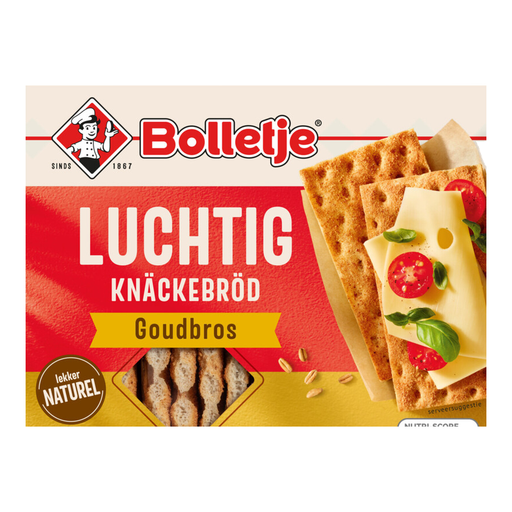 Image unavailable
Bolletje Light Crispbread Golden Crisp – 240 g
A crispbread you can compare for sugars and fibre when packing a school lunch. If wholegrain is a must, check the ingredients list; also look at the allergen information for wheat, sesame and possible lupin.
View on Joybuy
 Image unavailable
Wasa Rustic Crispbread – 215 g
A rye option to consider as a base for toppings. Compare sugars, fibre and salt on the current pack; if you have allergies, also check for rye and warnings about possible traces of milk and sesame.
View on Joybuy
 Image unavailable
Wasa Wholegrain Crispbread – 260 g
A wholegrain rye option if you’re looking for a plain base for toppings. Check the current fibre and salt values on the pack, along with the information about rye and possible traces of sesame and milk.
View on Joybuy
Frequently asked questions
Is the whole school lunch low in sugar if the crispbread contains little sugar?
No. The value on the pack applies to the crispbread only. Check the toppings too: the Netherlands Nutrition Centre lists jam, chocolate sprinkles and chocolate spread among the toppings that add sugar to lunch.
Can crispbread containing rye or wheat be taken to school?
That depends on the child’s allergies and any rules set by the school or after-school club. Rye and wheat are gluten-containing cereals, so read the allergen information on the specific pack and check what’s allowed if your child has an allergy.
Why compare fibre and salt as well as sugars?
Because crispbread options differ in more than one nutritional value. Jumbo’s product information lists different amounts of both fibre and salt per 100 g for Wasa Volkoren, Bolletje Volkoren Knäckebröd Vezelrijk and Jumbo Knäckebröd Volkoren. Compare them on the same basis.
How can I pack crispbread so it stays crunchy?
If possible, keep dry crispbread separate from moist toppings or vegetables until lunchtime. Also follow the storage instructions on the packaging; Jumbo’s product information for the Jumbo and Wasa options discussed recommends storing them in a dry place and sealing the pack well after opening.


