
Breakfast lovers who choose their own savoury toppings
You want egg, hummus or vegetables to set the flavour, so you’re looking for a plain base. The Netherlands Nutrition Centre lists egg, pulses and vegetables among the possible toppings.


If savoury toppings are meant to define the flavour of your breakfast, plain crispbread is a more natural choice than a chocolate-coated variety. Then choose based on the grain you prefer, nutritional value or a clear gluten-free label, and check the salt, ingredients and allergens on the packaging. It only makes sense to compare a chocolate variety once you have the nutritional information for a specific product.
You want egg, hummus or vegetables to set the flavour, so you’re looking for a plain base. The Netherlands Nutrition Centre lists egg, pulses and vegetables among the possible toppings.
You compare things such as fibre or protein per 100 g, without assuming the figures apply to every variety from a brand. Jumbo lists 20,0 g of protein and 9,5 g of fibre per 100 g for Wasa Protein Wheat Crispbread.
You’re looking for a product explicitly labelled gluten-free and also checking the other allergen information. A standard rye or wheat variety is not interchangeable with a gluten-free one.
Start with what matters most for your breakfast: room for savoury toppings, nutritional information, a gluten-free label or a preference for chocolate. Then look at the individual varieties.
| What to consider | What to check when buying | Who it matters to |
|---|---|---|
| Savoury toppings | Choose a plain base and check the ingredients and salt content of flavoured varieties. | If I’m adding egg, hummus or vegetables myself, I want the toppings to define the flavour. Around 36% of consumers put this savoury base first. |
| Fibre and protein | Compare the nutritional values per 100 g and per serving for the exact product; check the salt content too. | If I eat crispbread for breakfast regularly, I want to be able to compare the stated amount of fibre or protein. For around 29% of consumers, nutritional value is their main concern. |
| Gluten and allergens | Check the gluten-free label as well as the ingredients, allergens and possible traces. | If I need to avoid gluten, I need a clearly labelled gluten-free base and must also look out for other allergens. This is the main priority for around 21% of consumers. |
| Chocolate flavour | For a specific chocolate-coated product, check the ingredients and nutritional information, including sugars and fats. | I’d rather have a sweet chocolate flavour, even if it’s less suited to my plan for savoury toppings. Around 14% of consumers prioritise this flavour preference. |
A chocolate coating gives crispbread a sweet flavour. That’s a different choice from a plain base where the toppings set the flavour.
Before buying, decide whether you want a savoury breakfast or deliberately want a sweet element. Only compare a chocolate variety after checking the label of the specific product.
Jumbo lists 20,0 g of protein and 1,0 g of salt per 100 g for Wasa Protein Wheat Crispbread. This wheat variety contains gluten, so its protein content doesn’t mean it meets other requirements you may have when buying.
When comparing a high-protein variety, also check the grain, allergens and salt content on the packaging you choose.
The Wasa Gluten- & Lactosevrij Sesame & Sea Salt variety described by Jumbo contains sesame and states that it may contain milk, mustard and soya.
Alongside the gluten-free label, always read the full allergen and possible traces statement for the product.
A statement about iodine being added through baker’s salt doesn’t tell you which ingredients are in an individual pack of crispbread.
If iodine is relevant to your choice, check the ingredients of the specific product or ask the manufacturer which salt is used.
Albert Heijn and Jumbo list Wasa varieties made with different grains and carrying different product descriptions.
According to its category overview, the own-brand crispbread range includes wholegrain and seed varieties.
Albert Heijn’s category overview includes robust wholegrain and light, airy crispbread varieties from Bolletje.
Albert Heijn lists Leksands crispbread in flavours including sourdough and seeds & sea salt.
Ryvita describes several crispbread product lines internationally; its own UK information for Original Crispbread lists rye as an ingredient.
These crispbread varieties suit a breakfast where you choose your own savoury toppings. Compare the grain and the nutritional information on the packaging if they matter to your choice.
 Image unavailable
A wholegrain base for when you want to choose your own savoury toppings.
Pack size: 375 g. If you have dietary requirements, check the ingredients and allergens on the label.
 Image unavailable
A wholegrain variety for anyone putting together breakfast with their choice of toppings.
Pack size: 265 g. Check the nutritional information and allergens for this variety before comparing it with other crispbread.
 Image unavailable
Wholegrain crispbread for a breakfast where you add your own savoury toppings.
Pack size: 260 g. If you need to avoid any ingredients, check the grain and allergens on the packaging.
 Image unavailable
A crispbread variety to consider if you’re looking for a base for your choice of savoury toppings.
Pack size: 215 g. If you’re following a gluten-free diet, read the ingredients and allergen information for this variety before choosing it.
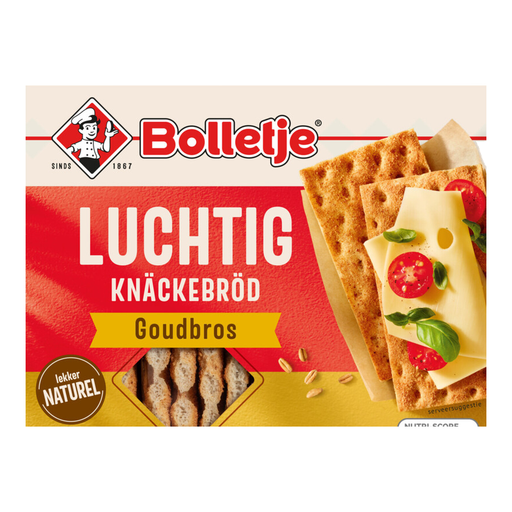 Image unavailable
A variety for anyone who wants to choose their own toppings at breakfast.
Pack size: 240 g. The name Light doesn’t replace a comparison of the nutritional values per 100 g or per serving.
For a breakfast where savoury toppings set the flavour, plain crispbread is the more natural base. If you specifically want a sweet chocolate element, check the ingredients and nutritional information for the product before comparing it with a plain variety.
Egg, hummus and vegetables are options for a savoury combination; the Netherlands Nutrition Centre lists egg, pulses and vegetables among possible toppings. When putting your breakfast together, check the ingredients and nutritional information of the toppings too.
No, you can’t assume that about every individual product. If iodine matters to your choice, check the ingredients on the packaging or ask the manufacturer which salt was used for that crispbread.
Choose a variety explicitly labelled gluten-free and also read the allergen statement. The Wasa Sesame & Sea Salt variety described by Jumbo is described as gluten- and lactose-free, but contains sesame and states that it may contain milk, mustard and soya.
Follow the storage instructions on the packaging and keep the product somewhere dry. Wasa Protein’s product information recommends a dry, dark place; the information for the gluten-free Wasa variety described recommends a dry, cool place.