If you’re looking for crispbread for a picnic where people have different grain preferences, a variety made with both wholemeal flour and white wheat flour is one option to compare. If you prefer 100% wholegrain, choose a product whose ingredients match that preference. A blend doesn’t guarantee a milder flavour: check the nutritional information and allergens on each pack, and keep the crispbread dry until you add the toppings.
Who is this choice relevant to?
Picnickers with fussy eaters
You’re looking for a crisp base for people with different grain preferences. You want to be able to see from the ingredients list whether a product contains both wholemeal flour and white wheat flour, without assuming that every blend tastes the same.
Those who prioritise 100% wholegrain
You want to know whether the crispbread is 100% wholegrain, so you compare the product description and ingredients, as well as the fibre per 100 g.
Picnickers thinking about allergens and transport
You check the packaging for grains, sesame and any ‘may contain’ warnings. You also want to choose a shape that suits how you’ll transport and top the crispbread.
What should you look for when choosing?
First, decide whether catering for different grain preferences or choosing 100% wholegrain matters more for your picnic. Then check the packaging for fibre, salt, allergens and storage instructions.
| What to consider |
What to check |
Who it matters to |
| Blend of flours |
Look for both wholemeal flour and white wheat flour in the ingredients list; compare the nutritional information for the variety you choose. |
If not everyone likes the same grain flavour, I look for a crispbread I can compare with their preferences. For around 42% of consumers, this balance of flavours comes first. |
| 100% wholegrain |
Check the description and ingredients, then compare fibre and salt per 100 g. |
I prefer 100% wholegrain and want to be able to compare the fibre content on the packaging. Around 33% of consumers prioritise this wholegrain option. |
| Transport and allergens |
Read the allergen statement on the pack you’re buying, and take the crispbread with you dry and in a sealed container. |
When sharing food in the park, I want to take allergens into account and only add toppings to the crispbread when we’re ready to eat. For around 25% of consumers, this is the most important consideration. |
Common mistakes
-
Assuming a brown colour or ‘multigrain’ means 100% wholegrain
The colour doesn’t tell you whether all the flour used is wholemeal. According to the Voedingscentrum, a cracker can only be called ‘wholegrain’ if it’s made entirely from wholemeal flour.
Read the ingredients list: choose 100% wholegrain if that’s what you want, or opt for a product that also contains white wheat flour.
-
Checking for allergens only after you’ve bought the crispbread
Similar-looking varieties can have different allergen statements. For example, Wasa lists sesame and possible traces of milk for Dun Rogge Volkoren; Bolletje lists cereals containing gluten and sesame for its wholegrain crispbread.
Check the allergen statement on the exact pack you’re taking with you, especially if you’ll be sharing the crispbread.
-
Adding moist toppings well before the picnic
If you want your crispbread to stay crunchy, it’s best to transport it dry. Albert Heijn advises storing its organic variety made with white wheat flour in a sealed container in a dry place after opening.
Take the toppings separately and add them to the crispbread just before eating.
Brands and own-label options to consider
Wasa (Wasabröd)
Wasa offers Wholegrain Rye Crispbread, among other varieties, as well as the thinner Dun Rogge Volkoren.
- According to Wasa, Wholegrain Rye Crispbread contains wholemeal rye flour, yeast and salt; the manufacturer lists 20 g of fibre per 100 g.
- Wasa lists sesame and possible traces of milk for Dun Rogge Volkoren. If you have an allergy, check the pack of the variety you choose.
Bolletje
Bolletje offers a crispbread variety made with 100% wholegrain cereals.
- According to Bolletje, Knäckebröd Volkoren contains wholemeal wheat, rye and barley.
- The manufacturer lists cereals containing gluten and sesame; check that the ingredients suit the people you’re eating with.
Albert Heijn
AH Biologisch Knäckebröd made with white wheat flour is a specific example of a product combining wholemeal flour and white wheat flour.
- Albert Heijn lists wholemeal rye flour, wholemeal wheat flour and white wheat flour in the ingredients.
- Check the current packaging for ingredients and allergens; product information can change if the recipe is updated.
Jumbo
Jumbo’s crispbread range features different product types, including wholegrain varieties and products with seeds.
- The range can help you decide which varieties you’d like to compare more closely by checking their ingredients.
- Check the information on the individual pack; a category overview may not describe every variety in the same level of detail.
ALDI
ALDI’s Goud Gebakken own-label range includes wholegrain crispbread and a variety with seeds.
- The Goud Gebakken Volkoren Knäckebröd mentioned comes in a 375 g pack.
- Check the pack of the variety you choose for ingredients and allergens.
Crispbread for different preferences
This selection of Joybuy products includes options for consumers looking for a combination of wholemeal flour and white wheat flour, as well as varieties for those who prioritise 100% wholegrain. Check the packaging of the variety you choose before taking it along to your picnic.
 Image unavailable
Wasa High-Fiber Crackers – 300 g
An option to consider if you’re looking for a combination of wholegrain cereal and white wheat flour for your picnic. Check the ingredients and allergens on the pack.
View at Joybuy
 Image unavailable
g'woon Wholemeal Crispbread – 375 g
For anyone considering a blend of wholemeal flour and white wheat flour and wanting to compare the nutritional information per 100 g. Also read the allergen statement for this variety.
View at Joybuy
 Image unavailable
Bolletje Whole Grain Crispbread – 265 g
For consumers who prefer 100% wholegrain to a blend containing white wheat flour. Check the ingredients and compare the fibre per 100 g on the packaging.
View at Joybuy
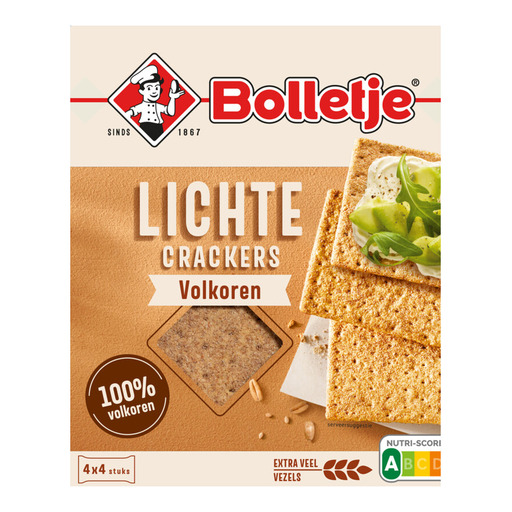 Image unavailable
Bolletje Light Whole Grain Crackers – 190 g
A variety to compare if you’re looking for a thinner cracker and want to check the wholegrain ingredients too. Check the packaging for allergens.
View at Joybuy
 Image unavailable
Wasa Wholegrain Crispbread – 260 g
For anyone who wants to take wholegrain rye crispbread along as a base for toppings. If you’re comparing varieties, check the allergens and nutritional information on this pack.
View at Joybuy
Frequently asked questions
Is crispbread made with white wheat flour also 100% wholegrain?
No, not if it’s made with white wheat flour as well as wholemeal flour. According to the Voedingscentrum, a cracker can only be called ‘wholegrain’ if it’s made entirely from wholemeal flour. Read the ingredients to tell a blend apart from 100% wholegrain crispbread.
Should I always choose 100% wholegrain crispbread for a picnic?
No, it depends on the grain preferences of the people you’re eating with. A product made with both wholemeal flour and white wheat flour is a different option from 100% wholegrain crispbread; compare the ingredients and nutritional information of the varieties you’re considering.
How do I keep crispbread crunchy on a picnic?
Transport it dry in a sealed container, and only add moist toppings just before eating. Also follow the storage instructions on the packaging; Albert Heijn advises keeping its organic crispbread made with white wheat flour sealed and dry after opening.


