
Small household that eats crispbread occasionally
You want to keep a pack in the cupboard, but don’t want to leave it open for long. A smaller pack or easy-to-manage portions make it simpler to switch between different types of bread.


For a small household that doesn’t eat crispbread often, a smaller pack is usually a better fit for your cupboard than a large pack that stays open for a long time. If you eat it regularly, a larger pack may suit you, provided you store it somewhere dry and keep it sealed after opening. Also compare the serving sizes and the label on the exact product. Don’t assume there’s a standard ‘half-loaf’ size or that all crispbread contains iodine.
You want to keep a pack in the cupboard, but don’t want to leave it open for long. A smaller pack or easy-to-manage portions make it simpler to switch between different types of bread.
You’re more likely to finish a larger pack. Check how many pieces or servings it contains, and whether you can keep it dry and sealed after opening.
You don’t choose on pack size alone. You might also compare grains, fibre, salt or allergens. If baker’s salt matters to you, check the ingredients on the exact product too.
First, work out how quickly you’ll finish an opened pack. Then compare the number of servings and the storage instructions. Use the nutritional information and ingredients list to choose between products in a suitable pack size.
| What to consider | What to check before buying | Who it matters to |
|---|---|---|
| Pack size and storage | Compare the pack weight, serving sizes and storage instructions after opening. Albert Heijn recommends storing its wholemeal crispbread in a sealed tin after opening. | If I only eat crispbread occasionally, I don’t want a large opened pack to lose its crunch. Around 46% of consumers prioritise limiting loss of quality. |
| Quantity per pack | Compare the number of pieces or servings with how much you usually eat. According to its product page, Albert Heijn’s wholemeal crispbread contains 25 servings in a 375 g pack. | If I eat it regularly, I want to have enough in the cupboard without opening a new pack each time. For around 27% of consumers, having a useful quantity in stock is their main concern. |
| Grains and fibre | Read the ingredients and compare the fibre per 100 g in the nutritional information. Albert Heijn lists 20 g of fibre per 100 g for Wasa Wholemeal and 12 g per 100 g for AH Wholemeal Crispbread. | When I find several suitable pack sizes, I want to take the grains used and fibre content into account. This is the top priority for around 18% of consumers. |
| Ingredients and allergens | Check the allergen information on the exact pack. Look in the ingredients list for baker’s salt or iodised salt if that information matters to your choice. | Before buying a supply, I want to know whether the ingredients suit my needs and not make assumptions based on the product category. Around 9% of consumers prioritise checking the label. |
A large pack means you’ll need to eat it more often or have somewhere dry where you can keep it sealed after opening. Otherwise, some of it may lose its crunch before you get round to eating it.
Think about how many servings you usually have, then choose a pack you can store properly and finish after opening.
The word ‘wholemeal’ doesn’t tell you which allergens a variety contains, or how much fibre and salt it has. Products in the same category can also have different ingredients.
Read the ingredients, allergen information and nutritional details for the variety you want to buy. Compare values on the same basis, such as per 100 g.
The fact that baker’s salt contains iodine doesn’t mean all crispbread is made with it. The Netherlands Nutrition Centre says that using baker’s salt in bread is not compulsory.
Check the ingredients list on the exact product for baker’s salt or iodised salt rather than assuming it’s there from the name ‘crispbread’.
A product page may still show product details even when that particular variety is no longer available. This applies to an older listing for a breakable Wasa product at Albert Heijn.
Before buying, check the current variety, packaging and product information at the retailer you plan to order from.
Compare specific varieties, not just brand names: pack weight, ingredients and nutritional information can vary within the same brand.
Albert Heijn lists Wasa Wholemeal in a 260 g pack, while Jumbo lists Wasa Protein Wheat in a 200 g pack. These are different varieties to compare if you’re interested in wholegrain cereals and fibre, or the stated protein content.
AH Wholemeal Crispbread is an example of a larger pack: the product page lists 375 g and 25 servings.
Leksands Trekant is a 200 g crispbread made up of triangular pieces. According to Leksands, the smaller pack suits small households and people who like to keep different types of bread at home.
ALDI lists wholemeal and sesame crispbread, each weighing 375 g and containing 25 pieces, alongside robust crispbread weighing 265 g.
Lidl Netherlands lists 250 g wholemeal crispbread as an in-store product.
Ryvita offers products including its British Original Crackerbread. This is a specific product range, so don’t assume it’s directly comparable with a crispbread variety based on the brand name alone.
These crispbread packs range from 125 g to 375 g. If you don’t eat much, start with a quantity you can finish. A larger pack is more suitable if you eat crispbread regularly and can store it somewhere dry and sealed. Compare the ingredients of the exact variety if they’re important to your choice.
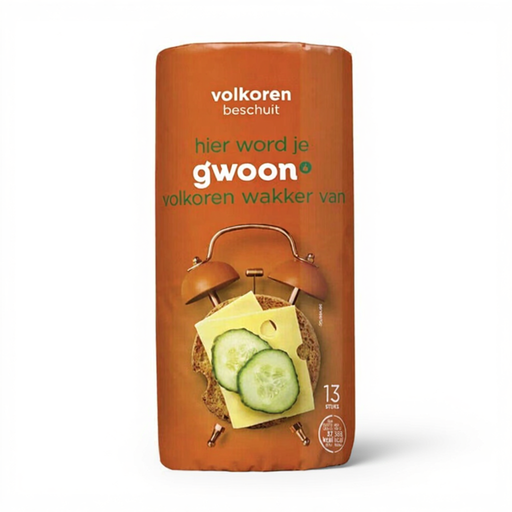 No image available
At 125 g, this is a smaller quantity to keep in the cupboard if you don’t eat crispbread often. Check how many pieces it contains if you want to work out how many servings you’ll get from the pack.
Keep the contents sealed after opening. Check the current label for ingredients, allergens and any mention of baker’s salt.
 No image available
At 215 g, this is a smaller quantity to keep in stock than a 375 g pack. Check how many pieces it contains if you want to estimate how much you’ll have per serving.
Seal the pack well after opening. Check the allergen information on the current pack if certain ingredients matter to your choice.
 No image available
At 265 g, this pack sits between the smaller and larger options in this selection. The product description mentions packs of four; check the packaging to see how well the pieces are protected after opening.
Keep the contents sealed and check the current label for ingredients, allergens and baker’s salt.
 No image available
A 375 g pack is a better fit if you eat crispbread regularly and can store the opened contents somewhere dry and sealed. Before stocking up on several packs, compare the pack size with how much you usually eat.
Check the number of pieces and the current ingredients and allergen information on the packaging.
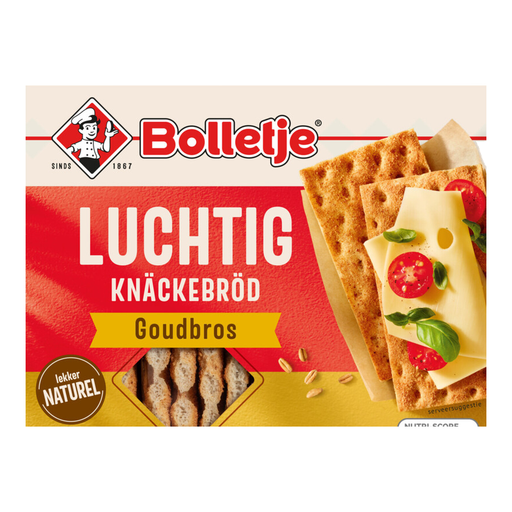 No image available
This 240 g pack is an option if you’d rather open a smaller quantity than a large pack for stocking up. The word ‘Light’ doesn’t tell you which nutritional values matter to you, so compare the information for the exact product.
Keep the contents sealed after opening and check the number of pieces if portion size matters to you.
No, don’t assume there’s a standard ‘half a loaf’ size when choosing crispbread. Compare the stated pack weight, the number of pieces or servings, and the storage instructions after opening. The products discussed here include packs of 200 g, 250 g and 375 g.
A large pack is suitable if you eat crispbread regularly and can store the opened contents properly. Albert Heijn recommends keeping its wholemeal crispbread somewhere cool, dark and dry, and transferring it to a sealed tin after opening. For other products, follow the instructions on the pack.
No, don’t assume all crispbread is made with baker’s salt. The Netherlands Nutrition Centre says that using baker’s salt in bread is not compulsory. If it matters to your choice, check the ingredients list on the exact crispbread product for baker’s salt or iodised salt.
No, ‘wholemeal’ doesn’t tell you whether a product is suitable if you need to avoid specific allergens. For example, Jumbo lists wheat and wheat gluten as ingredients in Wasa Protein Wheat. Read the allergen information for the variety you’re buying.