
Households that like to keep a supply
If crispbread is regularly eaten at breakfast or lunch, or from the biscuit tin, the pack size, number of portions and storage instructions after opening are all important points to compare.


A large pack of crispbread suits a household that regularly tops up its biscuit tin and can keep the contents dry and well sealed after opening. Also check the grains, fibre, salt content and allergens for each variety. A larger pack or a prominent nutritional claim does not automatically make a product right for everyone.
If crispbread is regularly eaten at breakfast or lunch, or from the biscuit tin, the pack size, number of portions and storage instructions after opening are all important points to compare.
If you choose crispbread for its wholegrain ingredients or fibre content, compare the ingredients and nutritional information per 100 g. Remember to check the salt content too.
If you have an allergy, follow a gluten-free diet or have questions about ingredients such as iodised baker’s salt, the information for the specific variety is what matters. The product name alone may not give you the full picture.
First, work out how much crispbread your household actually uses and can store. Then compare the ingredients and nutritional information on packs of a suitable size.
| What to consider | What to check when buying | Most relevant to |
|---|---|---|
| Stock and storage | Check the pack size, number of portions and storage instructions after opening. | If I often top up the biscuit tin, I want a pack that we can finish while keeping its contents in good condition. For around 36% of consumers, this need to keep a supply comes first. |
| Wholegrains and fibre | Compare the grains in the ingredients list and the fibre per 100 g. | When I choose crispbread mainly for its grains and fibre content, I want to be able to compare this information across varieties. Around 29% of consumers give this top priority. |
| Allergens and ingredients | Read the allergen information and check that the variety fits your dietary requirements. | If I have an allergy or follow a gluten-free diet, I need to know which grains and allergens this particular variety contains. This is the main consideration for around 21% of consumers. |
| Taste and portions | Check the grains listed, the shape and the number of pieces or portions. | For the biscuit tin, I want a type and size that everyone at home enjoys. For around 14% of consumers, this everyday practicality matters most. |
A larger pack only helps if your household eats crispbread regularly and can store the opened pack properly. The wholemeal packs from Jumbo, Bolletje and Wasa shown by Jumbo contain 375 g, 265 g and 260 g respectively.
Choose a pack size that suits how much you use, and follow the storage instructions on the pack.
The wholemeal varieties described may contain wheat, rye or other gluten-containing grains. According to the ingredients shown by Jumbo, Wasa Protein Wheat also contains wheat gluten.
Check the current ingredients and allergen information for each variety. Don’t assume a product is suitable for your diet based on the front of the pack.
According to the Voedingscentrum, using baker’s salt in bread is not compulsory. You therefore can’t assume it is present just because a product is crispbread.
Check the ingredients of the product you’ve chosen or ask the manufacturer which salt has been used.
The figures listed by Jumbo differ by variety: Jumbo Wholemeal lists 0,71 g salt per 100 g, while Wasa Wholemeal lists 1,2 g per 100 g. How light a cracker looks tells you nothing about its salt content.
Compare salt per 100 g and take into account how much you usually eat.
Jumbo’s own-brand range includes a 375 g pack of wholemeal crispbread with 25 portions. It’s a size worth considering if your household gets through crispbread regularly.
Wasa offers, among other products, a wholemeal rye variety and the separate wheat variety Protein Wheat. Compare them as different products, not as interchangeable pack sizes.
Bolletje Whole Grain Crispbread High in Fibre comes in a 265 g pack. It’s worth considering if you want to check the grains and fibre content of a specific wholemeal variety.
Leksands Knäcke original is a triangular rye crispbread. Albert Heijn lists a 200 g standard pack as well as a 3-pack option.
Lidl Netherlands lists crispbread with sunflower seeds or pumpkin seeds in a 264 g pack as an option to look out for in store.
This selection of Joybuy products includes wholemeal, rye and other crispbread varieties in packs from 215 g to 375 g. Choose a size that suits how much your household uses, and check the current ingredients, allergens and nutritional information for the variety you’re interested in.
 Image unavailable
The 375 g pack is an option if your household eats crispbread regularly. Check the storage instructions after opening, and read the current label if ingredients or allergens are important to you.
 Image unavailable
If you’re considering a 300 g pack and want to compare fibre content, you can check the nutritional information per 100 g for this Wasa variety alongside other products. Remember to check the ingredients and allergens on the current packaging too.
 Image unavailable
This 265 g pack is an option if a smaller supply better suits how much your household uses. To compare wholegrains, fibre and allergens, check the label for this specific variety.
 Image unavailable
The 215 g pack may suit you if you’d rather open a smaller amount at a time than buy a large pack for your cupboard. Check the ingredients and allergens for Wasa Rustic; don’t assume the nutritional values of other Wasa varieties apply.
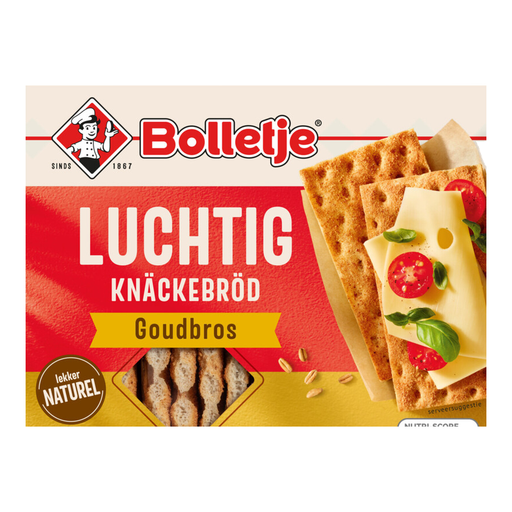 Image unavailable
At 240 g, this is a smaller pack for the biscuit tin than the 375 g pack above. Check the nutritional information and ingredients for Golden Crisp itself; don’t assume the word Light means it has a nutritional benefit.
A large pack is most useful if your household gets through it regularly and can keep it dry and well sealed after opening. Check the number of pieces or portions on the pack before deciding how much to stock up on at once.
Follow the storage instructions for the product you’ve chosen and seal the pack well after opening. Jumbo’s product information for its wholemeal crispbread advises keeping it well sealed; the Bolletje variety shown by Jumbo says to store it in a cool, dry, dark place in a sealed pack.
No. Wholemeal does not mean gluten-free. The wholemeal varieties described contain wheat or rye, among other ingredients. If you follow a gluten-free diet, choose only a product explicitly labelled gluten-free and check the current label, including the allergen information.
No, you can’t assume that all crispbread does. The Voedingscentrum says that baker’s salt is not compulsory in bread. Check the ingredients for the variety you’ve chosen or ask the manufacturer which salt has been used.
Retirement in itself doesn’t determine which variety of crispbread is right for you. Consider how much your household uses and any dietary requirements you already have. If you have a specific question about ingredients or allergens, always check the label of the product you choose.