
Shopper from a small household
You’re buying crispbread for occasional use around a street festival and want to choose a pack you’re likely to finish. Compare the net weight and number of pieces.


For a small household, choose based on net weight, the number of pieces and how much you expect to use—not the term ‘half loaf’, which isn’t a reliable way to compare how much crispbread you’re getting. Then decide whether you want crispbread to top yourself or a filled snack, and check the ingredients, nutritional information and allergens for the exact pack.
You’re buying crispbread for occasional use around a street festival and want to choose a pack you’re likely to finish. Compare the net weight and number of pieces.
You want to know which grains are used and how much fibre the product contains per 100 g, rather than relying on words such as ‘light’ or ‘protein’.
Before buying, you need to check which grains and other allergens the exact product contains, and whether the label includes warnings about possible traces.
First, work out how much crispbread you’ll actually use around the festival and whether you want plain crackers to top yourself or a filled snack. Then compare the ingredients and nutritional information on packs that are the right size for you.
| What to consider | What to check when buying | Who should consider this? |
|---|---|---|
| Pack size | Compare the net weight and number of pieces; also check the storage instructions once opened. | For a small household, I don’t want to buy more than we’ll use around the festival. About 33% of consumers rank pack size as their top priority. |
| Shape and portion | Check the size or portion per piece, and distinguish plain crackers from filled snacks. | If I want to take crispbread with me or top it myself, the shape needs to suit how I’ll use it. For around 25% of consumers, practical usability comes first. |
| Wholegrains and fibre | Check which grains are wholegrain and compare the fibre per 100 g in the nutrition table. | I want to compare wholegrain ingredients and fibre values without treating different product claims as equivalent. This is the top priority for around 25% of consumers. |
| Ingredients | Read the current allergen information and compare the salt per 100 g; check the product information if iodine is relevant to your choice. | If I need to avoid allergens or watch my salt or iodine intake, I don’t want to base my choice on the product name alone. Around 17% of consumers put checking ingredients first. |
The crispbread products compared here show quantities by net weight and, in some cases, number of pieces. The term ‘half loaf’ doesn’t tell you how many crackers you’re buying.
Compare both details with how much you expect to use around the festival.
These claims answer different questions. Albert Heijn describes Wasa Volkoren as 100% wholegrain rye, while the product information for Wasa Protein+ states that it contains 40% wholemeal wheat flour and 20 g of protein per 100 g.
Decide which criterion matters most to you, then check both the ingredients list and the nutrition information per 100 g.
The varieties compared contain different grains and other ingredients; warnings about possible traces can also vary between products. According to the NVWA, allergen information for prepacked products must appear on the label.
Check the allergen information for the exact pack, even if you already know the brand.
The fact that baker’s salt may be used in some bakery products tells you nothing about the ingredients in an individual pack of crispbread. The Voedingscentrum also states that bread does not have to be baked with baker’s salt.
If iodine is a factor in your choice, check the current product information or ask the manufacturer which salt is used.
Offers crispbread varieties made with different grains, in different shapes and with different nutritional profiles.
Offers wholegrain crispbread, among other products, which you can compare by pack contents and nutritional value.
Offers own-brand crispbread varieties, including products with wholegrains, sesame or sunflower seeds.
Offers rye crispbread in varieties including original, oat, sourdough and seeded.
These products come in a range of pack sizes for occasional use: four are crispbreads to top yourself, while the Wasa Cheese Sandwich is a filled snack. Compare the pack contents with your festival plans; the products below are not ranked by nutritional value or suitability.
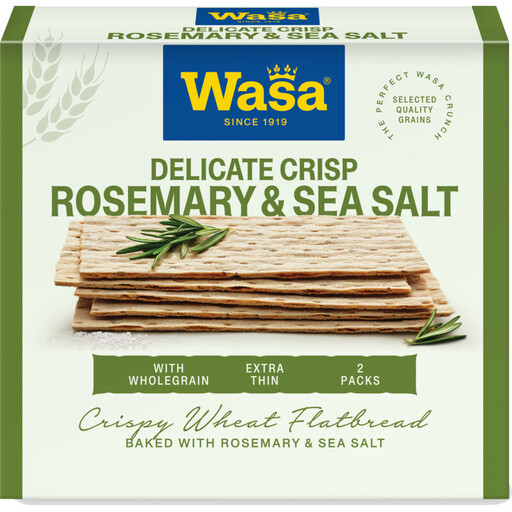 Image unavailable
These thin crackers are an option if you’re looking for a 190 g pack to top yourself for the festival. If you have allergies, check the latest information for wheat, barley, sesame and milk.
 Image unavailable
These crackers, labelled as wholemeal, are an option if you want to compare a larger pack. Check the net weight on the packaging before deciding how much you need for occasional use, and read the ingredients information if you have allergies.
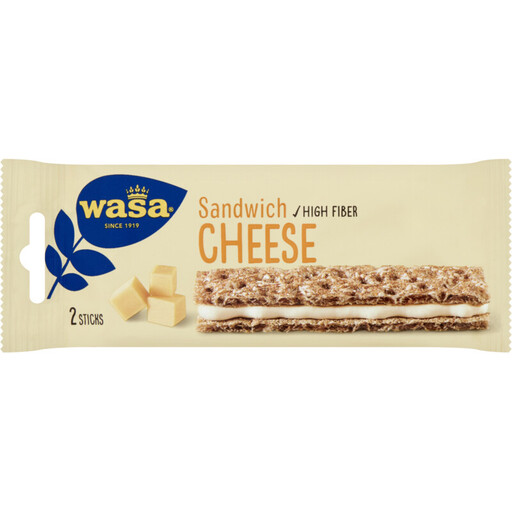 Image unavailable
The three 31 g portions are a good option if you want to take a filled snack with you rather than top plain crackers yourself. If you have allergies, be sure to check the information for rye, milk and sesame.
 Image unavailable
This 215 g pack is an option if you’re looking for crispbread to top yourself. For portion planning, also check the number of pieces on the pack; if you have allergies, check the information for rye, milk and sesame.
 Image unavailable
This 260 g crispbread, labelled as wholegrain, is an option if you want crackers to top yourself. Compare the number of pieces and fibre per 100 g on the pack; if you have allergies, check the information for rye, sesame and milk.
Don’t use ‘half loaf’ as a measure of how much crispbread is in a pack. For a small festival supply, compare the net weight, number of pieces and how much you expect to use once the pack is open.
No. A filled sandwich snack is ready to eat, while plain crackers let you choose your own toppings. Compare the portion and ingredients of the exact product, too.
Read the allergen information on the exact pack. The products compared contain a range of grains and ingredients such as milk or sesame; warnings about possible traces also vary by product. According to the NVWA, allergen information for prepacked products appears on the label.
Follow the storage instructions on the pack you choose. The product information compared here says to store the products in a dry place; some also advise resealing the pack securely after opening.
No, don’t assume this is true of every product. The Voedingscentrum says that even bread does not have to be baked with baker’s salt. Check the latest product information or ask the manufacturer which salt is used in the crispbread you’ve chosen.