What should you look for when choosing?
Start by comparing the nutritional information per 100 g for similar crispbreads. The Netherlands Nutrition Centre recommends this approach when comparing labels. Then decide which feature matters most for your coffee break.
| What to consider |
What to check |
Who is this most important for? |
| Sugar |
Compare the ‘of which sugars’ figure per 100 g for similar products; check the ingredients list too. |
If I want to choose a lower-sugar option with my coffee, I want to compare the figures on the label rather than rely on wording on the pack. This is the top priority for around 39% of consumers. |
| Fibre and toppings |
Check the fibre per 100 g and include the topping when assessing the snack. |
If you have crispbread with a savoury topping as a snack, you may consider fibre more important than simply choosing the lowest sugar content. This is the top priority for around 23% of consumers. |
| Salt |
Compare the salt per 100 g with the sugar content of the same product. |
I want less sugar, but I don’t want to accept a higher salt content without considering it. Salt is the main consideration for around 23% of consumers. |
| Ingredients and allergens |
Check the current ingredients and allergen information for the product you’ve chosen. |
If I need to avoid certain ingredients, a suitable recipe matters more than a low sugar content. This is the most important factor for around 15% of consumers. |
Brands to compare
Always compare specific varieties: the ingredients in one crispbread don’t automatically tell you anything about another product from the same brand.
Wasa
The Dutch range includes Wholegrain, Sourdough Rye and Light.
- Albert Heijn lists 20 g and 19 g of fibre per 100 g for Wasa Wholegrain and Sourdough Rye respectively; Sourdough Rye contains 0.3 g of sugar per 100 g.
- Both varieties mentioned contain 1.2 g of salt per 100 g. Check allergens for each variety: according to the product information, Light also contains milk.
Albert Heijn
AH Wholegrain Crispbread is a supermarket own-brand product for which Albert Heijn publishes nutritional information.
- The product page lists 12 g of fibre and 0.7 g of salt per 100 g.
- The same page lists 3.4 g of sugar per 100 g and ingredients including sesame, rye and wheat.
Jumbo
Jumbo Wholegrain Crispbread is an own-brand product with published nutritional information.
- Jumbo lists 2.4 g of sugar, 10.9 g of fibre and 0.71 g of salt per 100 g.
- The product contains wheat and rye. Read the full allergen information if it’s relevant to your choice.
Goud Gebakken (ALDI)
ALDI Netherlands lists Wholegrain, Sesame and Robust crispbreads among the products under this own brand.
- These varieties give you a choice of different products to compare in store.
- Check the sugar, salt and allergen information on the pack you choose before comparing it with another variety.
Lidl
Lidl Netherlands has a product page for Wholegrain Crispbread.
- The wholegrain variety is a specific option to look out for when you’re shopping.
- Use the nutritional information and ingredients list on the pack to compare sugar, salt and allergens.
Ryvita
On its UK product site, Ryvita describes Original Crispbread as a rye variety.
- Ryvita lists 0.3 g of sugar per cracker for the UK variety.
- Don’t compare that figure per cracker directly with Dutch figures per 100 g. Check the packaging and ingredients of the product you buy in the Netherlands.
Crispbread and snacks on Joybuy
These products include plain crispbread to top yourself and a filled crispbread snack. First choose which type you’d like with your afternoon coffee, then compare the nutritional information for that particular variety.
 No image available
Wasa Sourdough Rye Crackers 235 g
A sourdough rye variety for anyone who wants to choose their own topping.
When making your choice, compare the salt as well as the sugar. If you have allergies, check the current allergen information.
View on Joybuy
 No image available
Bolletje Whole Grain Crispbread 265 g
A wholegrain crispbread for anyone looking for a plain variety to have with coffee.
Compare the sugar, salt and fibre per 100 g with those of other varieties. Check the packaging if you need to avoid certain grains or sesame.
View on Joybuy
 No image available
Wasa Rustic Crispbread 215 g
A plain variety for anyone who wants to use crispbread as a base for toppings.
If sugar, salt or fibre is a deciding factor for you, check the nutritional information per 100 g. Also read the allergen information on the pack.
View on Joybuy
 No image available
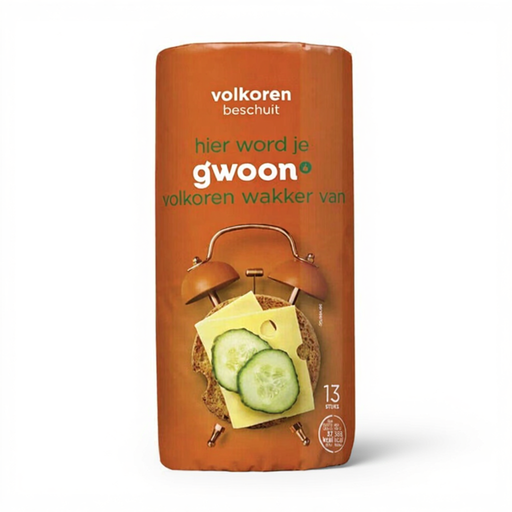
g'woon Wholegrain Crispbreads 125 g
A wholegrain variety for anyone who wants to choose their own topping with coffee.
Consider the sugar and salt together, using the current nutritional information. Check the ingredients and allergen list if you need to avoid anything.
View on Joybuy
 No image available
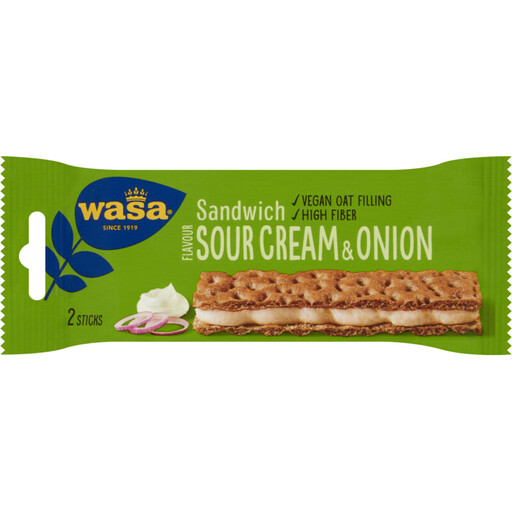
Wasa Sandwich Sour Cream & Onion 99 g
A filled crispbread snack for anyone who doesn’t want to choose a separate topping.
Compare the nutritional information for the complete snack with that of plain crispbread and the topping you’d otherwise choose. Check the salt and allergen information too.
View on Joybuy
Frequently asked questions
Does ‘less sugar’ mean that crispbread contains no sugar?
No. The ‘of which sugars’ line on the label also includes sugars that occur naturally in the product. Compare similar crispbreads per 100 g rather than relying only on figures per cracker or wording on the pack.
Which of the crispbreads compared lists the least sugar?
According to Albert Heijn’s product information, Wasa Sourdough Rye contains 0.3 g of sugar per 100 g. In the same selection, Wasa Wholegrain lists 1.5 g; Jumbo lists 2.4 g for its Wholegrain Crispbread, and Albert Heijn lists 3.4 g per 100 g for AH Wholegrain Crispbread. Sugar content alone doesn’t determine which product to choose: Wasa Sourdough Rye also contains 1.2 g of salt per 100 g.
Is less sugar the most important consideration if you have a reduced appetite?
Not necessarily. The Netherlands Nutrition Centre says that older people may need additional dietary advice if they are ill, have limitations or have a reduced appetite. If you have a reduced appetite or are losing weight unintentionally, discuss which snacks are suitable for your personal circumstances.
Does crispbread always contain iodine because of baker’s salt?
No, this doesn’t follow from the Dutch rules on baker’s salt. The Netherlands Food and Consumer Product Safety Authority explains that iodine compounds may only be present in bread, bread substitutes and other bakery products through baker’s salt. This doesn’t confirm that a particular crispbread contains baker’s salt. Check the ingredients on the pack you’ve chosen or ask the manufacturer.
How should I store crispbread once it’s been opened?
Follow the storage instructions on the packaging and seal the product well after opening. Albert Heijn recommends keeping AH Wholegrain Crispbread in a closed tin in a cool, dark, dry place; Wasa says to store the variety reviewed in a dry, dark place.


