
Shopper stocking up for a few lunches
You only take crispbread to work for a few days and don’t want to be left with an open pack for too long. Check the net weight, number of slices and whether the portions are individually wrapped.


For a few office lunches, choose crispbread by pack weight, number of slices and whether portions are individually wrapped—not by the label ‘half loaf’. A small pack limits how much you have open at once; a larger box works if you can share it or finish it within the storage period. Check the ingredients, allergens and storage instructions for the exact variant.
You only take crispbread to work for a few days and don’t want to be left with an open pack for too long. Check the net weight, number of slices and whether the portions are individually wrapped.
You want to know whether a variant is wholegrain and compare the ingredients and fibre per 100 g. Also check the other nutritional information on the exact pack.
You need to avoid certain ingredients or are looking for a clearly labelled gluten-free option. Read the allergen information on the pack you’re actually choosing; variants from the same brand can differ.
Decide how many lunches you want to get from a pack and which label details matter most to you. A filled crispbread sandwich is a different lunch option from plain crispbread topped with your own filling.
| What to consider | What to check when buying | Who it matters to |
|---|---|---|
| A small lunch stash | Compare the net weight and number of slices; check whether portions are individually wrapped. | If I’m only planning a few lunches, I don’t want to eat from the same open pack for weeks. A small stock-up is the priority for around 40% of consumers. |
| Wholegrain, fibre and allergens | Read the ingredients and allergen information; compare fibre per 100 g if that matters to your choice. | If I have an allergy or prefer wholegrain, the exact label determines which pack is right for my lunch. This dietary or allergen requirement is the priority for around 30% of consumers. |
| Making the most of a larger pack | Compare the contents with the number of lunches you’re planning and follow the storage instructions after opening. | If colleagues share it, I can finish a larger box without leaving an open pack for too long. Making good use of a larger pack is the main consideration for around 30% of consumers. |
This isn’t a useful standard size for the products in the Dutch ranges at Albert Heijn, Jumbo and ALDI. You could therefore overlook a suitable small pack.
Search by net weight and number of slices. Check separately whether a pack really contains individually wrapped portions.
Jumbo lists wheat and wheat gluten in Wasa Protein Wheat. The Bolletje Volkoren Knäckebröd Vezelrijk described here also contains gluten-containing cereals and sesame. A nutritional claim doesn’t mean a product is suitable for someone with an allergy.
Read the ingredients, allergen information and any warnings on the exact pack; don’t rely on the front of the pack alone.
According to Voedingscentrum, bakers aren’t required to use baker’s salt. So the name ‘crispbread’ doesn’t tell you whether a particular product contains iodine from baker’s salt.
If this matters to your choice, check the product label or ask the manufacturer which ingredients are used.
The range includes rye, sandwich and clearly labelled gluten-free variants.
The Bolletje Volkoren Knäckebröd Vezelrijk pack listed by Jumbo contains 4 × 4 slices and weighs 265 g.
The own-brand range includes 375 g boxes of Wholegrain and Golden Brown, as well as 265 g seed variants.
The own-brand range includes variants in different pack weights, including 225 g, 265 g and 375 g.
In the Netherlands, ALDI sells wholegrain crispbread under this brand in a 375 g pack containing 25 slices, as well as a 265 g seed variant.
These products include smaller packs and a sandwich variant for a few lunches, as well as larger packs of plain crispbread for anyone who gets through more. Compare the exact pack if individually wrapped portions, fibre or allergens affect your choice.
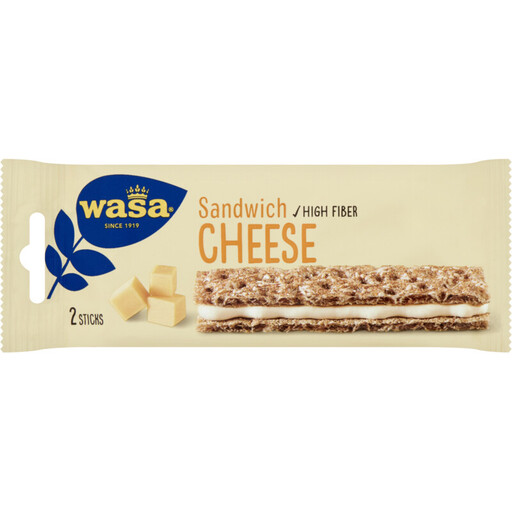 Image unavailable
For anyone who wants to take a sandwich-style option in smaller lunch portions, rather than topping plain crispbread. Check the ingredients and allergens on the exact pack.
 Image unavailable
For anyone looking for wholegrain crispbread as a lunch base who can finish a 265 g pack. Check the pack if the number of slices or allergens affects your choice.
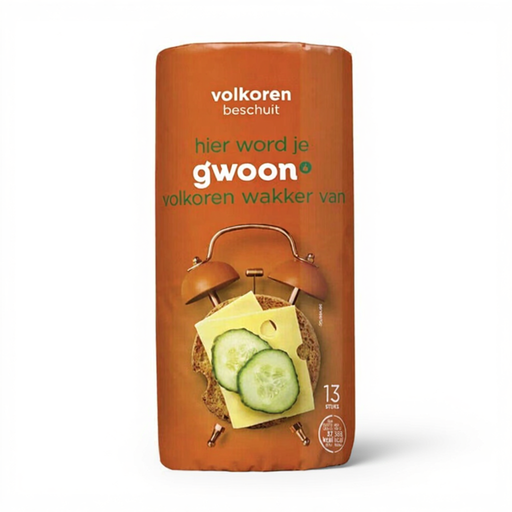 Image unavailable
A 125 g pack for anyone who wants a small supply of plain crispbread. Check the number of slices and allergens on the exact pack before planning your lunches.
 Image unavailable
For a lunch with your own toppings, if a 215 g pack suits how much you eat. Compare the label if fibre, number of slices or allergens are important to you.
 Image unavailable
For anyone who wants wholegrain crispbread with their own toppings and can finish a 260 g pack. Read the label for the fibre content, number of slices and allergens.
Not as a standard pack size in the Dutch ranges described at Albert Heijn, Jumbo and ALDI. For a small office lunch stash, compare the net weight, number of slices and whether any portions are individually wrapped.
Read the ingredients and allergen information on the exact pack before choosing. The Netherlands Food and Consumer Product Safety Authority sets out the requirement to list allergens on prepacked foods; a label such as ‘wholegrain’ or ‘high-protein’ doesn’t replace this check.
Follow the storage instructions on the pack you choose, especially after opening. Seal an opened pack as instructed and, before buying, decide whether you can finish the contents within a period that works for you.
No, you can’t tell from the product category. According to Voedingscentrum, bakers aren’t required to use baker’s salt; check the label for a specific product or ask the manufacturer about its ingredients.