
Families who regularly have coffee together
They want to keep enough crispbread at home without an opened pack sitting around for too long or losing its crunch. The number of individual packs matters just as much as the total quantity.


Choose a multipack if you want to keep several separate packs in the cupboard. Choose one larger pack if your family gets through the contents regularly and you can store them somewhere dry. A plain rye or wholegrain variety is a sensible starting point to serve with cake, but check the flavourings, allergens and storage instructions for the exact product.
They want to keep enough crispbread at home without an opened pack sitting around for too long or losing its crunch. The number of individual packs matters just as much as the total quantity.
They’re looking for a flavour that goes well with cake. A plain rye or wholegrain base can be a good starting point; sesame, seeds and other flavourings call for a more considered choice.
They need to check the ingredients and allergens for the exact variety. If you need to eat gluten-free, a standard rye or wheat variety is not interchangeable with a product explicitly labelled gluten-free.
First, work out how much crispbread you actually get through between coffee breaks. Then choose a flavour and check the nutritional information and allergens for the variety you’re considering before you buy.
| What to consider | What to look for | Who it matters to |
|---|---|---|
| Stock and storage | Compare the total quantity with the number of separate packs. Check how the contents should be stored after opening. | If crispbread is regularly served at home, I want to keep some in stock without leaving a large opened pack in the cupboard for too long. This is thought to be the main priority for around 40% of consumers. |
| Flavour with cake | Look at the main grain and any additions such as sesame, seeds or herbs. | With cake, I look for crispbread that doesn’t demand too much attention from the taste buds. Around 30% of consumers are thought to choose primarily on this basis. |
| Ingredients and nutritional information | Check the allergen declaration and, if it matters to your choice, the nutritional values per 100 g or per serving. | If I need to avoid an ingredient or compare products by nutritional value, I check the exact variety rather than relying on the packaging as a whole. This is thought to be the main consideration for an estimated 30% of consumers. |
A 300 or 375 g pack doesn’t have to contain several separate packs. Albert Heijn describes Leksands Knäcke original 3-pack as a pack supplied as separate items.
Check both the total quantity and the pack format. Choose one that suits how often you serve crispbread and the storage advice once it’s opened.
If a large opened pack is left for too long, some of the crispbread may go soft before you finish it.
Rye and wheat contain gluten. Crispbread may also contain sesame, and ingredients vary between varieties.
If you need to eat gluten-free, choose a product explicitly labelled gluten-free and read the allergen information on the exact pack.
According to the Voedingscentrum, baker’s salt contains more iodine than table salt. That doesn’t mean baker’s salt is used in every crispbread.
If the iodine content matters to your purchase, check the ingredients list or ask the manufacturer which salt is used in that variety.
Jumbo stocks Wasa varieties in different sizes and with different ingredients, including standard products and those explicitly labelled gluten-free.
A rye-based option to consider if separate packs would be useful: Albert Heijn lists Knäcke original as a 3-pack supplied as separate items.
TastyBasics describes its crispbread as light and crisp. Check the exact variety if that texture appeals to you.
Bolletje offers a range of crispbread varieties. When choosing one for the coffee table, consider its texture, flavour and pack format.
Ryvita’s UK product information lists wholegrain rye flour, rye flour and salt among the ingredients in Original.
These Joybuy products offer different sizes and varieties to consider serving with coffee and cake. Compare the quantity with how much you get through, and check whether each product is one pack or several separate packs.
 Image unavailable
Consider this rye variety if you’re looking for a pack to serve at coffee breaks and 235 g suits how much you get through.
Check the pack format, allergens and storage advice for the current product.
 Image unavailable
The 300 g size is worth considering if you eat crispbread regularly and can store an opened pack properly.
Check the nutritional information and allergens for the exact variety, and see whether the contents are divided between separate packs.
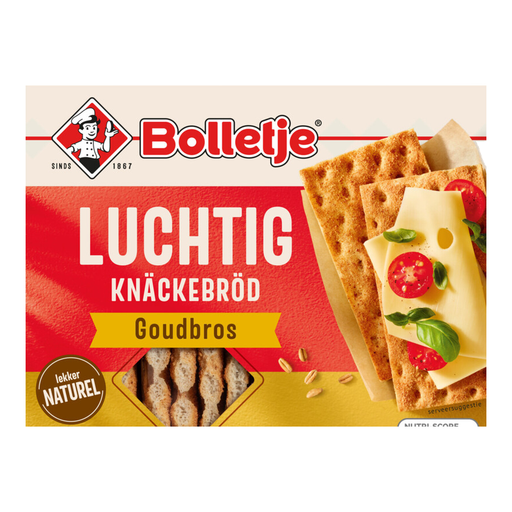 Image unavailable
Consider this Bolletje variety if 240 g is a better fit for occasional coffee breaks than a larger pack.
Before buying, check the pack format, ingredients and allergens for the exact variety.
A 3-pack is especially useful if you want to split your stock between separate packs. One large pack can also work if you eat it regularly and can store the opened contents according to the storage advice. Albert Heijn says that Leksands Knäcke original 3-pack is supplied as separate items.
Follow the storage advice on the pack of the product you’ve chosen. For AH Knäckebröd Donker, Albert Heijn recommends storing it in a sealed tin after opening; don’t assume that specific instruction applies to every other variety without checking.
No. Standard rye crispbread isn’t a substitute for a product explicitly labelled gluten-free. Check the gluten-free label and allergen information on the exact pack.
No. Information about baker’s salt doesn’t tell you which salt has been used in a particular crispbread. The Voedingscentrum describes baker’s salt as containing more iodine than table salt; check the ingredients list for the variety you’ve chosen or ask the manufacturer.