For a fussy eater who is getting used to wholegrain, a clearly labelled mix of wholemeal wheat flour and wheat flour is an option if they like the taste. According to Jumbo, Wasa Golden Brown contains 55% wholemeal wheat flour and 43% wheat flour. If a fully wholegrain base is more important, choose a product whose grain ingredients are all wholegrain and compare the fibre per 100 g. Whichever you choose, check the allergens for the exact variant.
Who is this choice relevant to?
Fussy eaters making the switch to wholegrain
They’re looking for crispbread with a clearly stated proportion of wholemeal flour, without going straight for an entirely wholegrain rye option. A stated ratio of wholemeal flour to other flour makes it easier to compare products; whether the taste appeals is a personal choice.
Consumers comparing fibre
For a late-morning snack, they want to know whether the grain base is entirely wholegrain and compare the fibre in specific products per 100 g, rather than judging by the colour of the crispbread.
Consumers checking allergens
They read the ingredients and allergen information for the chosen variant when wheat, rye, gluten, sesame or possible traces matter to their purchase. The product category alone won’t tell you this.
What should you look for when choosing?
Choosing between a grain mix and fully wholegrain crispbread starts with the taste the eater wants to try and the grain base they prefer. Then check the nutritional information and allergen details on the specific pack.
Wholemeal flour and wheat flour mix
A good choice when: A fussy eater wants to try a wheat mix and you’re also looking for a stated proportion of wholemeal flour.
Trade-off: According to Jumbo, Wasa Golden Brown contains 55% wholemeal wheat flour and 43% wheat flour; this mix does not have an entirely wholegrain base.
Fully wholegrain rye
A good choice when: A fully wholegrain base is the priority and the eater wants to try rye crispbread.
Trade-off: According to Jumbo, Wasa Wholegrain contains wholemeal rye flour and gluten; check that the taste and allergens are suitable for the eater.
| What to consider |
What to check when buying |
Who it matters most to |
| Taste and grain mix |
Read which types of grain flour are used and check whether the ratio of wholemeal flour to other flour is stated. |
If I want to help a fussy eater get used to wholegrain, I want to be able to choose a grain mix they’ll enjoy the taste of. This is the main priority for around 33% of consumers. |
| Wholegrain and fibre |
Check whether the product is wholegrain and compare fibre per 100 g using the nutritional information for the products you’re considering. |
For my snack, I mainly want a fully wholegrain base and a comparable fibre value. This is the top priority for around 27% of consumers. |
| Ingredients and allergens |
Read the ingredients and allergen information for the exact variant; check separately for any required gluten-free labelling. |
If I need to avoid certain ingredients or allergens, the specific pack will determine which variant I can choose. Around 20% of consumers put this check first. |
| Packaging and storage |
Compare pack sizes and read how to store the crispbread after opening. |
If I eat crispbread on several mornings, I want a pack I can use up and store properly. This is the top priority for around 20% of consumers. |
Common mistakes
-
Assuming golden-brown means wholegrain
A brown colour doesn’t tell you which types of flour have been used. The Netherlands Food and Consumer Product Safety Authority states that, for a product labelled wholegrain, all of its grain ingredients must be wholemeal flour.
Read the ingredients list. If you’re looking for a mix as a stepping stone, check the stated amounts of wholemeal flour and other flour, as you can with Wasa Golden Brown.
-
Assuming crispbread contains iodine as a matter of course
According to the Netherlands Nutrition Centre, bakers aren’t required to use baker’s salt. So don’t rely on the type of product alone to tell you whether baker’s salt has been used.
Check whether baker’s salt is listed in the ingredients for the pack you’ve chosen, and take this information into account as part of your overall diet.
-
Overlooking allergens in a wholegrain variant
Wholegrain doesn’t mean a product is suitable for someone with an allergy or following a gluten-free diet. According to Jumbo, Wasa Wholegrain contains rye and therefore gluten; the gluten-free Wasa variant described by Jumbo contains sesame.
Always check the ingredients and allergen information for the exact flavour and pack. The Netherlands Nutrition Centre notes that common allergens must be declared on the label.
-
Choosing a large pack without a storage plan
A larger pack may be less suitable for occasional snacking if some is left unused or loses its crunch after opening.
Choose a size that suits how much you use and follow the storage advice on the pack. Seal the product well after opening if the label recommends it.
Brands compared
Compare specific variants within each brand: wholegrain rye, a grain mix and a product with a particular allergen claim all call for different label checks.
Wasa
The product information referenced here includes wholegrain rye variants, a mix of wholemeal wheat flour and wheat flour, and a separate product described as gluten-free and lactose-free.
- Jumbo lists 55% wholemeal wheat flour and 43% wheat flour for Wasa Golden Brown; for Wasa Wholegrain, Jumbo lists 20 g of fibre per 100 g.
- The mix isn’t fully wholegrain. Check the allergens and nutritional information for each variant; a claim on one pack doesn’t apply to another.
Bolletje
Offers variants that let you compare wholegrain crispbread with other types from the same brand.
- Albert Heijn lists 14 g of fibre per 100 g for a Bolletje Wholegrain variant.
- Don’t apply this value to another pack or variant without checking its own nutritional information.
Albert Heijn
The own-brand range includes wholegrain, golden-brown, sesame and pumpkin seed crispbread variants.
- The different varieties let you choose based on the grain base and ingredients.
- Compare fibre, salt and allergens on the pack for each variant, rather than relying on the brand name.
Jumbo
Its own-brand range includes a wholegrain crispbread variant in a 375 g pack.
- Jumbo lists 10,9 g of fibre and 0,71 g of salt per 100 g for this variant, so you can compare both values on the same basis.
- The listed ingredients include wheat and rye. Check the latest allergen information for this variant before buying.
Goud Gebakken
ALDI describes wholegrain crispbread in a 375 g pack under this name, as well as a seed variant.
- The pack size is worth considering if you eat crispbread on several mornings.
- Check the latest ingredients, nutritional information and allergen details on the pack for the variant you choose.
Crispbread at Joybuy
These products are options for a late-morning crispbread snack. The range includes mainly wholegrain varieties, as well as a rosemary and salt variant. Choose based on the ingredients and label, rather than assuming that a grain mix will taste mild.
 Image unavailable
Wasa Lightweight Crackers, 300 g
Worth considering if you’re looking for crispbread for a late-morning snack. To compare it with wholegrain varieties, check the grain base and fibre per 100 g on the pack. If you have allergies, read the ingredients and allergen information too.
View at Joybuy
 Image unavailable
Wasa Sourdough Rye Crackers, 235 g
For anyone wanting to try rye crispbread as a snack. If you prefer a mild flavour, it’s best to judge the taste for yourself. Also check the label for gluten and any other relevant allergens.
View at Joybuy
 Image unavailable
Bolletje Wholegrain Crispbread, 265 g
A wholegrain option for anyone wanting to compare the grain base of a snack. Use the nutritional information on this pack to check fibre per 100 g and allergens; don’t assume values from other Bolletje variants apply.
View at Joybuy
 Image unavailable
Wasa Wholegrain Crispbread, 260 g
For anyone considering a wholegrain rye option alongside a wheat mix. Compare the fibre per 100 g using the nutritional information on this pack and check the allergens; don’t rely on values from another Wasa product.
View at Joybuy
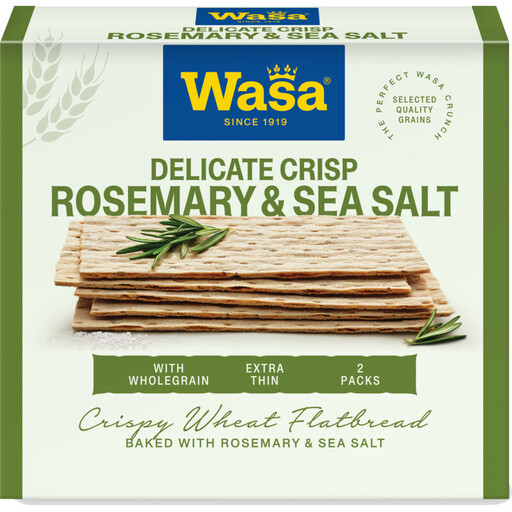 Image unavailable
Wasa Thin Crisp Rosemary & Salt, 190 g
A rosemary and salt option for anyone looking for a different flavour for a late-morning snack. Check the proportions of wholemeal and other flour, as well as fibre and salt per 100 g, on the label. Don’t assume the added flavours mean the product will taste mild.
View at Joybuy
Frequently asked questions
Is golden-brown crispbread the same as wholegrain?
No. Its colour doesn’t prove that all the grain ingredients are wholegrain. According to the Netherlands Food and Consumer Product Safety Authority, all the grain ingredients in a product labelled wholegrain must be wholemeal flour. According to Jumbo, Wasa Golden Brown contains both 55% wholemeal wheat flour and 43% wheat flour.
Does crispbread always contain baker’s salt with iodine?
No, don’t assume that it does: according to the Netherlands Nutrition Centre, bakers don’t have to use baker’s salt. Check the ingredients list on the pack you’ve chosen to see whether baker’s salt is listed.
How can I keep crispbread crunchy after opening?
Follow the storage advice on the specific pack and seal the product well after opening if instructed to do so. The Wasa and own-brand variants described by Jumbo advise storing the product in a dry place; exact instructions can vary by product.
Is wholegrain crispbread automatically gluten-free?
No. Wholegrain and gluten-free are different product characteristics. According to Jumbo, Wasa Wholegrain contains wholemeal rye flour and therefore gluten. If you need a gluten-free option, check both the explicit gluten-free claim and the other allergens for the exact variant; for example, the gluten-free Wasa variant described by Jumbo contains sesame.


