What should you look for when choosing?
Start by considering how much your household is likely to eat. Then compare the nutritional information and check any ingredients that matter to those who will be eating it.
| What to consider |
What should you check? |
Who is it important for? |
| Pack size and food waste |
Compare the pack weight, number of pieces and best-before date with how much your family usually eats. |
If you’re shopping for several people, you’ll want enough in the cupboard without leaving an opened pack unused. This is the most important consideration for around 42% of consumers. |
| Fibre and nutritional value |
Check the fibre and salt per 100 g, and see how large a typical serving of that variety is. |
If you eat it regularly, you may want to know what a serving of your chosen crispbread contains. Around 33% of consumers prioritise this nutritional comparison. |
| Ingredients and allergens |
Check the ingredient and allergen information on the exact pack, including any warnings about possible traces. |
If someone in your family needs to avoid certain ingredients, you’ll first want to know whether this particular variety is suitable. This is the most important buying question for around 25% of consumers. |
Brands to compare
Compare individual varieties within each brand: pack weights, ingredients and nutritional information can all differ.
Wasa
Jumbo lists Wasa Wholegrain in a 260 g pack and Wasa High Fibre in a 300 g pack, as well as varieties with other ingredients.
- The choice of pack weights and product types makes it easy to compare specific options.
- Check allergens for each variety: Jumbo’s information for Wasa Protein Wheat names wheat and gluten, and says it may contain lupin, mustard and soya.
Albert Heijn-huismerk
Albert Heijn lists its own-brand crispbread in varieties including wholegrain and golden brown, both in 375 g packs.
- A stated pack weight makes it easier to plan supplies for the family.
- Check the latest product information for each variety. Albert Heijn previously listed a 225 g organic wholegrain variety as discontinued.
Goud Gebakken
ALDI lists Goud Gebakken wholegrain crispbread as 25 pieces in a 375 g pack, and also offers robust crispbread with seeds.
- The stated number of pieces makes it easier to plan how much you’ll need for each person.
- Check the pack of the variety you choose for the full ingredient information.
Bolletje
Albert Heijn lists several Bolletje varieties, including Oerknäck robust wholegrain crispbread in a 300 g pack.
- The range includes different pack weights and product types to compare.
- For a nutritional comparison, use the values for the exact variety, not those for a different Bolletje product.
Leksands
Albert Heijn lists Leksands varieties featuring ingredients such as rye, sourdough and oats, usually in 200 g packs.
- A smaller pack may suit a household that gets through less of a particular variety.
- A smaller pack isn’t necessarily cheaper per kilo, so compare the packs before you choose.
Crispbread for your shop
These Joybuy products show a range of pack weights and varieties to consider for regular family use or a bit of variety. Choose a quantity based on how much you expect to use, and check the latest pack for ingredients, nutritional information and the best-before date.
 Image unavailable
Wasa High-Fiber Crackers 300 g
For a household that eats crispbread regularly and wants to compare the fibre content of different varieties. Check the pack to see how many pieces make up a serving, and read the ingredients before stocking up.
View at Joybuy
 Image unavailable
Wasa Lightweight Crackers 300 g
An option to compare with other 300 g packs if several people in your family eat crispbread regularly. Compare the nutritional information and check how to store the pack once it’s open.
View at Joybuy
 Image unavailable
Wasa Sourdough Rye Crackers 235 g
For anyone considering a sourdough rye variety and how much their household is likely to eat. Check the ingredients in this variety if anyone in your household needs to avoid certain grains.
View at Joybuy
 Image unavailable
Wasa Wholegrain Crispbread 260 g
For families considering a wholegrain rye variety as a regular cupboard staple. The Joybuy product description lists 100% wholegrain rye and three ingredients; check the current label for full information about the pack you choose.
View at Joybuy
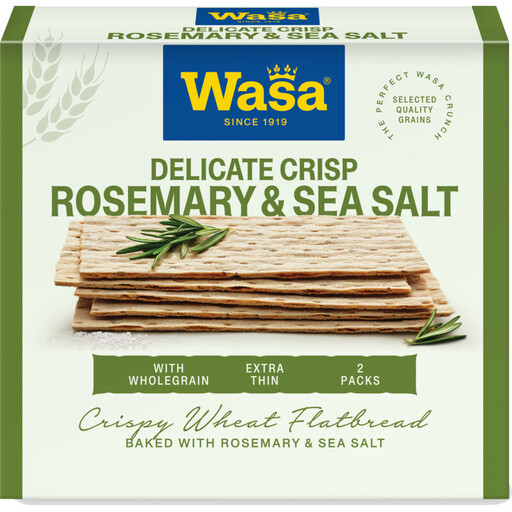 Image unavailable
Wasa Thin Crisp Rosemary & Salt 190 g
A smaller pack to consider if your household gets through less of one particular flavour. Compare the pack size with how much you expect to use, and check the ingredients in this rosemary and salt variety.
View at Joybuy
Frequently asked questions
Is a 375 g pack of crispbread always a good choice for a large family?
No. A 375 g pack is most suitable when several people in the family eat crispbread regularly. Compare the number of pieces, best-before date and storage instructions with how much you expect to use. If your household’s consumption varies, a smaller pack may be more practical.
How much fibre is in wholegrain crispbread?
According to the Netherlands Nutrition Centre, an average 10 g piece of wholegrain crispbread contains 1.4 g of fibre. Nutritional values and serving sizes vary between products, so check the nutritional information for the variety you want to buy.
How do I check for gluten and other allergens?
Read the ingredient and allergen information for the exact variety. For example, Jumbo states that Wasa Protein Wheat contains wheat and gluten and may contain lupin, mustard and soya. This information doesn’t automatically apply to other Wasa products.
Does crispbread always contain iodine from baker’s salt?
Don’t assume it does: according to the Netherlands Nutrition Centre, baker’s salt isn’t compulsory when baking bread. If the presence of baker’s salt matters to you, check the ingredients list on the pack of crispbread you’ve chosen.
How should I store crispbread once it’s open?
Follow the storage instructions on the pack you’ve chosen. For Wasa Protein Wheat, Jumbo advises storing it in a cool, dry place away from light. Check the instructions for other varieties, particularly if you’re buying several packs at once.


