
Hosts putting together a sharing board
Size matters when you’re serving dips and small toppings. A bite-sized cracker, such as Wasa Delicate Sea Salt, described by Joybuy, can be served as a snack in its own right.


Looking for bite-sized nibbles to serve with a dip on King’s Day? A mini crispbread cracker is a natural choice. If you want to add generous toppings, look for a wholegrain rye variety. A premium look doesn’t tell you what’s inside, so compare the size and nutritional information of each variety, and always check the current packaging for allergen information.
Before choosing a pack, think about whether you’ll mainly serve the crispbread on a sharing board, use it as a base for toppings or need an option for guests with specific food allergies.
Size matters when you’re serving dips and small toppings. A bite-sized cracker, such as Wasa Delicate Sea Salt, described by Joybuy, can be served as a snack in its own right.
If you mainly eat crispbread for breakfast or lunch, look for the wholegrain label, check the ingredients and compare the fibre per 100 g. According to the Netherlands Nutrition Centre, crackers can only be labelled wholegrain if they’re made from 100% wholemeal flour.
If gluten, milk or sesame are a concern for your guests, check the information on the specific pack. Even varieties from the same brand can have different ingredients and allergen declarations.
Start by thinking about how you plan to serve the crispbread. Then compare the ingredients, nutritional information and any allergens that matter to your guests on each pack.
| What to look for | What to check when buying | Who it matters to |
|---|---|---|
| Party size and flavour | Check whether the size suits dips or small toppings, and read the salt content per 100 g for savoury varieties. | For party nibbles, I want crackers I can serve straight away, without having to break up large slices. Around 36% of consumers prioritise ease of serving. |
| Wholegrain and fibre | Check the wholegrain label and compare the fibre per 100 g of the varieties you’re considering. | If crispbread is also going on the table at breakfast or lunch, I want to know what the grain base is made from. Wholegrain content is a top priority for around 36% of consumers. |
| Allergens | Read the current ingredients list, the allergens highlighted on the pack and any ‘may contain’ statements. | When I’m buying for guests with a food allergy, the variety I choose needs to be suitable for them. For around 18% of consumers, checking this is their first priority. |
| Quantity | Compare the pack weight and, where stated, the number of crackers with the number of guests and planned nibbles. | For a larger group, I want to be able to estimate in advance how many crackers I can serve. Quantity matters most to around 10% of consumers. |
These points call for a product-by-product choice, rather than choosing by category. A thin cracker can be handy for individual nibbles, while a wholegrain variety may suit anyone who cares about the grain content. Neither description tells you which allergens are listed on the pack.
A festive look doesn’t tell you what kind of flour a cracker is made from. According to the Netherlands Nutrition Centre, crackers can only be labelled wholegrain if they’re made from 100% wholemeal flour.
Look for the wholegrain label and read the ingredients list. Use the fibre content as an additional point of comparison, not as a substitute for checking.
Allergens vary between varieties. For example, the Wasa Sourdough Rye reviewed here lists rye and barley, and may contain sesame and milk; Wasa Delicate Sea Salt lists wheat and milk.
Each time you buy, check the current packaging of the exact variety you plan to serve, including any ‘may contain’ statements.
The Netherlands Food and Consumer Product Safety Authority describes baker’s salt as the permitted way to add iodine compounds to bread, bread substitutes and other bakery products. This doesn’t mean that every crispbread contains iodine.
Choose a specific variety based on the ingredients and nutritional information on its pack, rather than relying on the rule alone.
These brands offer a range of crispbread styles. Even within a brand, choose the variety that suits your serving plans and the label information you need.
Albert Heijn and Jumbo stock, among other options, wholegrain, sourdough and Delicate varieties.
Albert Heijn lists sourdough, oat and seed varieties under this brand, among others.
The own-brand range includes wholegrain crispbread and varieties with sesame, pumpkin seeds or sunflower seeds.
ALDI lists its Goud Gebakken Wholegrain Crispbread as a pack of 25 crackers, weighing 375 g.
These products include options for topped crispbread as well as a bite-sized cracker for a party. Choose based on how you plan to serve them, and always check the current packaging if food allergies are a concern.
 No image available
An option if you’re looking for wholegrain rye for breakfast, lunch or generous toppings.
The information for this variety states that it contains 100% wholegrain rye and 19 g of fibre per 100 g. If you have guests with allergies, check the current label for rye and barley and the possible presence of sesame and milk.
 No image available
Consider this variety if you’re looking for a thinner base for toppings.
Joybuy’s product information describes it as 100% wholegrain rye. Check the current packaging if the ingredients or allergens matter to your guests.
 No image available
A crispbread to consider if you’re looking for a wholegrain base for breakfast or lunch.
Compare the nutritional information and, if you have guests with allergies, check the ingredients and allergens on the current packaging.
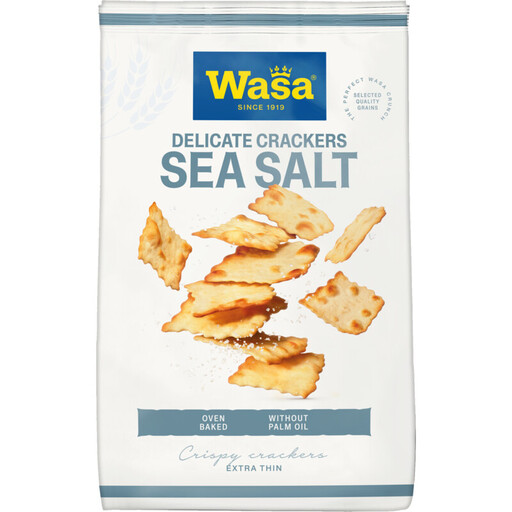 No image available
The bite-sized format works well for individual party nibbles or serving with a dip.
This sea salt variety lists wheat and milk. Check the current allergen declaration before serving it to guests with a food allergy.
 No image available
A variety to consider if you’re looking for crispbread to serve with toppings or in sandwiches.
Before choosing it for a group, check the current packaging for the ingredients, nutritional information and allergens.
No. ‘Premium’ doesn’t tell you whether a cracker is wholegrain. According to the Netherlands Nutrition Centre, crackers can only be labelled wholegrain if they’re made from 100% wholemeal flour. So check the label and ingredients on the pack you choose.
No. Always check the label for the specific variety. The Wasa Sourdough Rye reviewed here lists cereals containing gluten and may contain milk; the Wasa Delicate Sea Salt reviewed here lists wheat and milk. Also check for any ‘may contain’ statements on the current packaging.
No, that conclusion doesn’t follow from the rule. According to the Netherlands Food and Consumer Product Safety Authority, iodine compounds may be present in bread, bread substitutes and other bakery products through the addition of baker’s salt. This doesn’t guarantee that every individual crispbread contains iodine. Check the ingredients and nutritional information for the specific variety.
Store it in a dry place and seal the pack well after opening; this is also the storage advice on the Wasa product pages reviewed here. To keep the crackers crisp, add toppings just before serving.