
Coffee drinkers looking for a mild flavour
A simple crispbread should go well with coffee or a light topping. So compare a plain rye variety with savoury options that include ingredients such as garlic.


If you’re looking for a simple flavour to enjoy with your coffee, wholegrain rye crispbread is a good place to start. If you’d rather have a blend of wholemeal flour and white flour for a fussy eater, check the seasonings too: the thin garlic variety we looked at has a distinctly savoury flavour. A larger pack makes most sense if you can keep any leftovers dry after your stay.
A simple crispbread should go well with coffee or a light topping. So compare a plain rye variety with savoury options that include ingredients such as garlic.
If you don’t want a product made entirely with wholemeal flour, look for both wholemeal flour and white flour on the ingredients list. The flours alone won’t tell you how strong the finished flavour will be.
For them, the net weight, how many breakfasts it will cover and whether an opened pack can be kept dry and well sealed matter more.
First, decide which flavour will suit your coffee break. Then compare the flours and nutritional information, and only then choose a pack size that works for your stay.
| What to consider | What to check | Who should consider this? |
|---|---|---|
| Flavour with coffee | Check which seasonings have been added; a blend of wholemeal flour and white flour doesn’t guarantee a mild flavour. | If the person eating it prefers to avoid strong seasonings, I don’t want to judge by the flours alone. Taste is the top priority for around 31% of consumers. |
| Wholegrains and fibre | Compare the flours on the ingredients list and the fibre content per 100 g in the nutritional information. | For breakfast, I want to know whether a crispbread is entirely wholegrain or contains a blend. Around 31% of consumers say this is their top priority. |
| Packaging and storage | Check the net weight and whether you can keep an opened pack dry and well sealed. | For a short stay, I don’t want to carry a large opened box in my luggage; for several mornings, that might be different. Packaging practicality comes first for around 23% of consumers. |
| Allergens and salt | Check the allergens present, any ‘may contain’ statements and the salt content per 100 g on the current packaging. | If someone needs to watch what they eat, I want to be able to assess the variety I’ve chosen rather than rely on the product name. For around 15% of consumers, this is their main concern when buying. |
The Wasa Delicate variety described by Albert Heijn combines wholemeal wheat flour with wheat flour, but also contains roasted garlic and sea salt. It may not be what you had in mind for your coffee.
Check the seasonings as well as the flours before choosing a blend for a fussy eater.
A product made with both wholemeal flour and white flour has a different composition from one made entirely with wholemeal flour. The Netherlands Nutrition Centre makes the same distinction when using the term ‘wholegrain’.
Check the ingredients list if the balance of flours will determine your choice.
A 375 g box could work for several breakfasts, but takes up more space during a short stay. Once opened, crispbread needs to be kept dry and well sealed to stay crisp.
Choose a quantity based on how much you can use and store during and after your stay.
The product name doesn’t tell you which type of salt has been used in that particular crispbread.
If the type of salt matters to you, check the ingredients list on the pack you choose.
The varieties we looked at offer two different options: Wasa Volkoren, made with rye, and a thin Delicate variety made with wholemeal wheat flour and wheat flour.
Jumbo Knäckebröd Volkoren is a own-brand variety we looked at, sold in a 375 g pack.
ALDI describes Goud Gebakken wholegrain crispbread as a pack of 25 pieces weighing 375 g.
Albert Heijn described an AH Knäckebröd Volkoren pack weighing 260 g.
These products offer options including wholegrain rye, a blend of flours and a thin savoury crispbread. For each product, consider whether the flavour, packaging and ingredients are right for your coffee break.
 Image unavailable
An option if you’re looking for a simple rye variety to enjoy with coffee. The pack contains 260 g; if you have allergies, check the current ingredients and any information about traces.
 Image unavailable
For anyone considering a thinner crispbread but wanting to weigh up its flavour against a simple rye variety first. The pack contains 300 g; if you have allergies, check the information on rye, milk and sesame, among other things.
 Image unavailable
A wholegrain option if you want to compare the flours and fibre per 100 g with other crispbreads. The pack contains 265 g; check the flavour and allergen information if these matter to the person eating it.
 Image unavailable
A larger pack to consider if you’re shopping for several mornings and looking for a blend of flours. The box contains 375 g; check the label for the exact ingredients, seasonings and allergens.
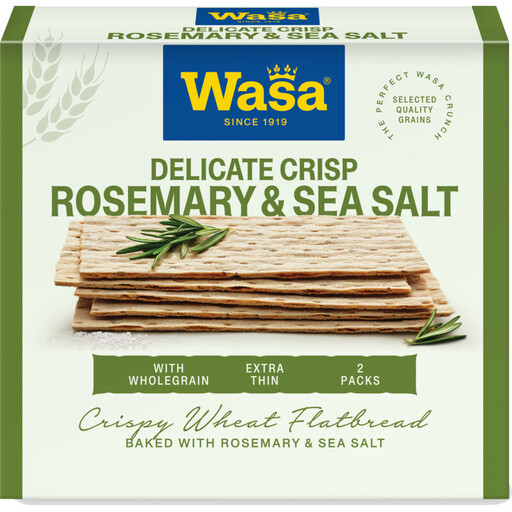 Image unavailable
A thin, savoury option for anyone who enjoys rosemary and salt with their coffee, but not for those looking for a plain crispbread. The pack lists 190 g; for this flavoured variety, pay particular attention to the salt per 100 g and the allergen information.
No. A blend of wholemeal flour and white flour isn’t the same as a product made entirely with wholemeal flour. The Netherlands Nutrition Centre makes the same distinction for crispbreads; check the ingredients list if the balance of flours will determine your choice.
Keep it somewhere dry and seal the pack well once it’s open. Jumbo gives this storage advice for the wholegrain crispbread we looked at; for a short stay, choose an amount you can store any leftovers from.
Don’t assume so: the Wasa and Jumbo varieties we looked at contain gluten-containing grains such as rye or wheat. Check both the allergens present and any ‘may contain’ statements on the packaging you choose.