For weekday breakfasts, choose crispbread if you want a dry store-cupboard option that lets you take a few pieces at a time. Choose half a loaf if you want to carry on eating bread but find a whole loaf takes too long to finish. In either case, consider how quickly you’ll use it. For crispbread, also compare the ingredients, allergens and salt content. If you regularly replace bread, don’t assume you’ll get the same iodine intake.
Who might find this choice relevant?
Small household with a slow breakfast turnover
If you don’t have breakfast at home every day, how quickly you use things up will determine how much to keep in stock. Compare the pack size of crispbread with that of half a loaf, and check how to store an opened pack.
Breakfast eater comparing wholegrains and fibre
If crispbread is a regular feature at your table, you’ll want to know which grains it contains. Compare the ingredients and nutritional information for the exact variants, as well as their pack weights.
Breakfast eater who often replaces ordinary bread
If you eat less ordinary bread, it’s worth looking beyond the product category. According to the Netherlands Nutrition Centre, bread made with iodised baker’s salt is an important source of iodine in the Netherlands. Check the ingredients of the crispbread you choose.
What should you consider when choosing?
Crispbread
A good fit if: you want a dry store-cupboard breakfast option for weekdays, taking a few pieces at a time.
The trade-off: crispbread isn’t a smaller loaf. You’ll need to check the grain base, allergens and any iodine contribution on the label.
Half a loaf
A good fit if: you want to carry on eating bread but don’t get through a whole loaf in time.
The trade-off: even half a loaf will only help reduce waste if the quantity suits how often you have breakfast at home.
| What to consider |
What to check |
Who it matters to |
| Stock and food waste |
Compare the pack weight or loaf size with how often you have breakfast at home. For crispbread, also check the storage instructions. |
If I only have breakfast at home a few mornings a week, I don’t want to open more than I can use. For around 42% of consumers, this is the most important consideration. |
| Grain base and fibre |
Check the grains in the ingredients list and compare the fibre per 100 g in the nutritional information. |
If you regularly have crispbread for breakfast, you’ll want to know which wholegrains and how much fibre the variant contains. Around 33% of consumers prioritise this comparison. |
| Label and replacing bread |
Check the allergens and salt content on the exact pack. If you regularly replace bread, also check the ingredients and iodine information. |
If I often replace bread, I don’t want to assume crispbread has the same ingredients or provides the same amount of iodine. For around 25% of consumers, checking the label is the top priority. |
Common mistakes
-
Thinking of half a loaf as a size of crispbread
Half a loaf and a pack of crispbread are different products. Supermarkets usually place them in different categories too, so searching for just one term could mean you miss some options.
First decide whether you’re looking for a smaller amount of bread or would prefer to keep crispbread in your cupboard. Then compare packs within your chosen category.
-
Comparing pack weight alone
A small pack limits how much you have open at once, but it tells you nothing about the grains, nutritional value or allergens in the product.
Compare the pack weight with how much you expect to use, then read the ingredients list, allergen information and nutritional information for the variant you’ve chosen.
-
Assuming crispbread provides the same iodine as bread
According to the Netherlands Nutrition Centre, bread made with iodised baker’s salt is an important source of iodine in the Netherlands. The Netherlands Food and Consumer Product Safety Authority explains that iodine compounds may also be present in bread substitutes through baker’s salt. This doesn’t mean that every crispbread contains it.
If you often replace ordinary bread, check the ingredients of the crispbread rather than relying on the product category name.
-
Confusing wholegrain with allergen-free
A wholegrain base doesn’t rule out gluten-containing grains or other allergens. For example, the 265 g Bolletje variant described by Jumbo lists wheat, rye and sesame.
If you have an allergy or intolerance, always read the ingredients and allergen information on the exact pack you choose.
Brands to consider
Wasa
Worth considering if you want to compare different grain bases and pack sizes of crispbread.
- The Wasa Wholegrain pack shown by Jumbo contains 260 g. Compare the ingredients in this variant with other Wasa products.
- A 260 g pack is only suitable for a small breakfast supply if you can finish it at your usual pace.
Bolletje
Worth considering if you want to compare the grain base of wholegrain crispbread.
- For one 265 g Bolletje variant, Jumbo lists ingredients including wholemeal wheat flour and wholemeal rye flour.
- The same variant also lists sesame. Check the allergen information and whether 265 g suits how quickly you’ll use it.
TastyBasics
Worth considering if you’re mainly looking for a small pack of crispbread.
- Jumbo lists TastyBasics Poppy Seed Crispbread as an 8-piece, 150 g pack.
- A small pack or a term in the product name won’t tell you the ingredients or nutritional values of the variant.
Albert Heijn
Worth considering if you want to compare pack sizes and grains across a supermarket range.
- The range includes crispbread variants with different weights and ingredients.
- Albert Heijn says product information may change, so check the pack of the variant you choose.
Goud Gebakken
ALDI Netherlands’ own brand is worth considering if you also want to compare wholegrain crispbread there.
- ALDI Netherlands lists a wholegrain variant and a robust seed variant.
- For your final choice, check the label of the exact variant, including pack size, salt and allergens.
Crispbread on Joybuy
These are different packs of crispbread to compare with how quickly you’ll use them and your label preferences. If you’d rather carry on eating bread, compare the quantity with half a loaf instead of treating crispbread as the same product.
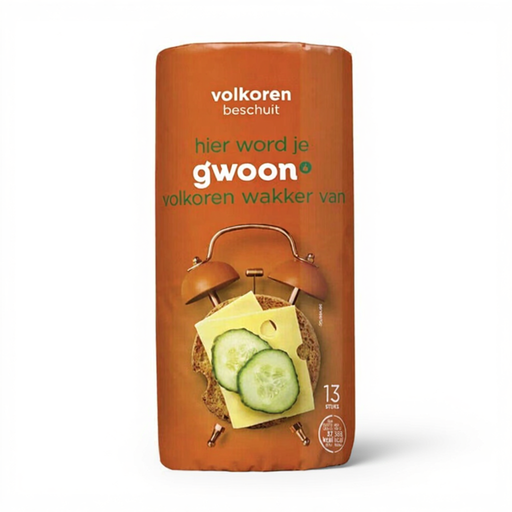 Image unavailable
g'woon wholegrain crispbread, 125 g
A 125 g pack to consider if you only get through a little crispbread during the week. Check the ingredients and allergens for this variant before choosing it.
View on Joybuy
 Image unavailable
Wasa wholegrain crispbread, 260 g
A wholegrain option to compare if crispbread is a regular part of your breakfast menu. Consider whether you’ll finish the 260 g pack before it goes stale.
View on Joybuy
 Image unavailable
Bolletje wholegrain crispbread, 265 g
A wholegrain option for comparing ingredients and nutritional information if you eat crispbread regularly. Consider whether you’ll get through a 265 g pack at your usual pace.
View on Joybuy
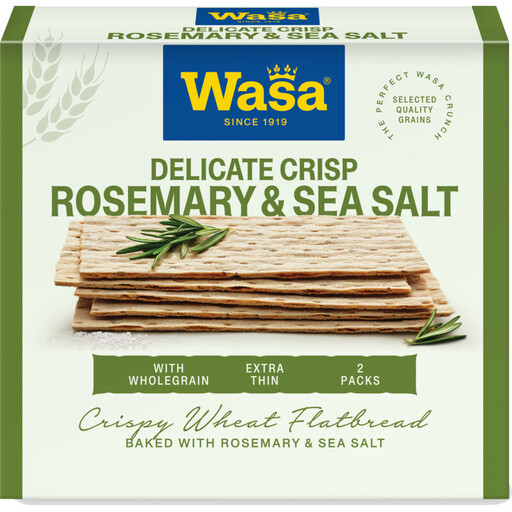 Image unavailable
Wasa Thin Crisp Rosemary & Salt, 190 g
A 190 g pack to compare if you want to keep your supply small. For this rosemary and salt variant, also check the salt content per 100 g and the ingredients.
View on Joybuy
 Image unavailable
Wasa Rustic crispbread, 215 g
A crispbread option to compare with smaller packs if you eat it regularly. Consider whether 215 g suits how much crispbread you have for breakfast, and check the grain base on the label.
View on Joybuy
Frequently asked questions
Is crispbread the same as half a loaf?
No, crispbread and half a loaf are different breakfast options. Choose half a loaf if you want to carry on eating bread but in a smaller quantity. Choose crispbread if you’d rather keep a dry store-cupboard supply and take a few pieces at a time.
How should I store crispbread after opening?
Follow the instructions on the pack you choose. For the variants it has reviewed, Jumbo recommends storing them in a cool, dry place away from light and sealing them well after opening. This is particularly useful to check if it takes you a while to finish a pack.
Is wholegrain crispbread automatically gluten-free?
No, the term wholegrain doesn’t mean a product is gluten-free. One Bolletje variant described by Jumbo contains wheat and rye, among other ingredients, and lists sesame. If you have an allergy or intolerance, always check the label of the exact variant.
Does all crispbread in the Netherlands contain iodine?
No, you can’t tell from the product category alone. The Netherlands Food and Consumer Product Safety Authority explains that iodine compounds may be present in bread substitutes through baker’s salt; it doesn’t say that every product contains them. If you regularly replace ordinary bread, check the ingredients. According to the Netherlands Nutrition Centre, bread made with iodised baker’s salt is an important source of iodine in the Netherlands.


