For a small household with a fussy eater, it’s more helpful to choose crispbread by pack weight, any inner packaging and texture than by the term ‘half loaf’. A thin variety is worth trying if a firm bite is the sticking point; a more robust cracker may suit someone who enjoys that texture. Check the ingredients and allergen information for the exact product each time.
Who is this choice relevant to?
Small households who want to try it first
If only one or two people eat crispbread, it matters how much will be left if they don’t like the taste. Compare the pack weight and number of pieces, and check whether the pack is divided into smaller portions.
Fussy eaters who care about texture
A thin cracker can make a different first impression from firm rye crispbread. Wasa describes Thin Rye Wholegrain as thin and gently baked, while Rustic is described as firm. Neither description can predict whether someone will enjoy the taste.
Shoppers who want to compare the label
If you’re checking ingredients, nutritional values or allergens, look at the exact pack. Wholegrain status alone doesn’t tell you whether it contains ingredients such as rye, wheat or sesame.
What should you look for when choosing?
Start by thinking about why a cracker might be left uneaten: its texture, the amount in an opened pack or its ingredients. Then compare different varieties based on that priority.
| What to consider |
What to check when buying |
Who is this most important for? |
| Texture and taste |
Compare the stated thickness and firmness, and look out for additions such as sesame or herbs. |
If a hard cracker is rejected straight away, I’d rather try a different texture first. Texture and taste are the top priorities for around 40% of consumers. |
| Pack size and storage |
Check the total weight, number of pieces and whether the pack is divided into smaller portions. |
If my household only eats crispbread occasionally, I don’t want to open too many crackers at once. For around 30% of consumers, the main concern is how much they need to use up. |
| Ingredients and allergens |
Compare the nutritional information per 100 g and read the ingredients and allergen list for the variety you’ve chosen. |
If an ingredient needs to be avoided in my household, the label takes priority over taste. For around 30% of consumers, checking the label comes first. |
Common mistakes
-
Treating ‘half loaf’ as a standard pack size
For crispbread, the weight in grams, number of pieces and, sometimes, how the pack is divided give you a clearer idea than this term. For example, Albert Heijn lists Wasa Wholegrain at 260 g and AH Wholegrain Crispbread at 375 g; Jumbo lists one Bolletje variety as 265 g and 4 × 4 pieces.
Think about how many crackers your household will use, then compare the pack weight and layout.
-
Choosing based only on ‘wholegrain’
Ingredients, fibre and allergens can vary between wholegrain varieties. The description also doesn’t tell you whether a fussy eater will like the texture.
Compare the nutritional values per 100 g and read the full ingredients and allergen information on the exact pack.
-
Assuming ‘salt’ means it contains iodine
The word ‘salt’ in an ingredients list doesn’t confirm that iodised baker’s salt was used in that crispbread.
If the type of salt used matters to your purchase, check the packaging or ask the manufacturer.
-
Opening several packs before the first taste test
A firm rye cracker, a thin variety and a seeded cracker offer different tastes and textures. With a fussy eater, a large supply of opened packs may end up going to waste.
Try one variety first and follow the storage instructions on the pack. Albert Heijn recommends storing its wholegrain crispbread in a sealed tin after opening; Jumbo advises resealing its crispbread securely.
Brands compared
Wasa
Wasa offers several rye varieties that mainly differ in texture.
- Wasa describes Thin Rye Wholegrain as thin and gently baked, while the brand describes Rustic as firm.
- Check the allergens for each variety separately: according to Wasa, Thin Rye Wholegrain contains sesame and may contain traces of milk.
Albert Heijn
The own-label range includes a 375 g pack of wholegrain crispbread.
- The stated pack weight helps you compare the quantity with how often your household eats crispbread.
- When trying a new taste, a larger pack means you’ll need to give extra thought to what’s left after opening.
Jumbo
For its crispbread with sunflower seeds, Jumbo states that the pack contains 4 × 4 pieces.
- The stated pack layout is useful if you want to use smaller quantities at a time.
- A seeded variety isn’t an obvious first choice if that’s the taste or texture the eater dislikes. Check the allergen information too.
Ryvita
Ryvita describes Dark Rye and Multigrain Crispbread, among others, as having different compositions.
- According to Ryvita, Dark Rye contains 92 g of wholemeal rye flour per 100 g of product; for Multigrain, the brand lists 17.2 g of fibre per 100 g.
- Don’t assume these UK product specifications apply to the label on a pack you buy in the Netherlands.
Crispbread for different tasting options on Joybuy
These products offer different pack sizes and flavours to compare, from a wholegrain variety for a first taste to a seasoned or more firmly textured cracker. Before making your final choice, check the product packaging for the contents, any inner packaging and allergen information.
 Image unavailable
Bolletje Whole Grain Crispbread, 265 g
A wholegrain variety to consider if you want to see whether the taste goes down well with your household.
The pack is labelled 265 g. Check the packaging for the number of crackers and how they’re packed if you only want to open a small quantity at a time.
View on Joybuy
 Image unavailable
Wasa Wholegrain Crispbread, 260 g
A rye variety for anyone who wants to try a wholegrain cracker without choosing a larger pack straight away.
The stated pack weight is 260 g. To get a better idea of the quantity, check how many pieces it contains; if you have allergies, check the label on the exact pack.
View on Joybuy
 Image unavailable
Wasa Lightweight Crackers, 300 g
This variety is worth considering if you’d prefer a thinner cracker, although the only way to know whether the taste appeals is to try it.
The pack is labelled 300 g. Compare that weight with how much you’ll use, and read the ingredients for this variety before choosing it.
View on Joybuy
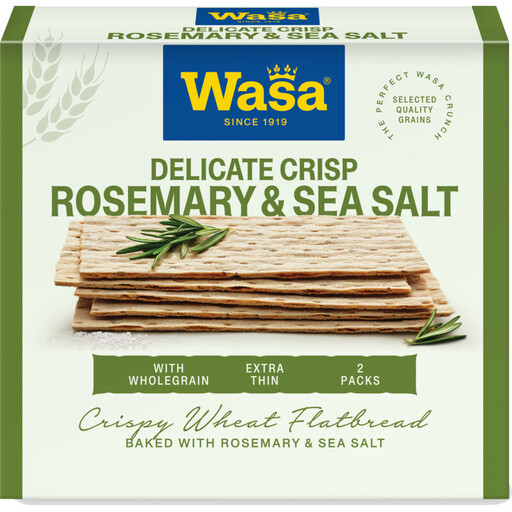 Image unavailable
Wasa Thin Crisp Rosemary & Salt, 190 g
An option if a thin cracker sounds appealing, but choose the rosemary flavour only if it suits the eater.
The product name states 190 g; check the net weight and number of pieces on the current packaging.
View on Joybuy
 Image unavailable
Wasa Rustic Crispbread, 215 g
Wasa describes its Rustic variety as firm. It’s worth trying if you’re looking for that kind of bite, but may be less suitable if firmness is what puts you off.
The pack is labelled 215 g. Check the packaging for the number of crackers and allergen information.
View on Joybuy
Frequently asked questions
Is ‘half loaf’ a useful way to measure crispbread?
It’s better to judge the quantity by the pack weight, number of pieces and any inner packaging. Dutch product pages from Albert Heijn and Jumbo describe crispbread in grams and sometimes by the number of pieces, such as a pack containing 4 × 4 crackers.
How do I keep an opened pack of crispbread crisp?
Follow the storage instructions for your chosen product and seal it securely after opening. Albert Heijn recommends storing its wholegrain crispbread in a sealed tin; Jumbo says its crispbread should be sealed securely after opening.
Is wholegrain crispbread automatically gluten-free?
No. Wholegrain crispbread may contain gluten-containing cereals such as rye or wheat. Check the allergen information for the exact product rather than relying on the term ‘wholegrain’.
Does crispbread always contain iodine from baker’s salt?
No, you can’t assume that’s the case for every crispbread. If the type of salt used matters to your choice, check the packaging or ask the manufacturer; the word ‘salt’ alone doesn’t tell you.


