
Families who regularly pack crispbread for lunch
If several lunches come from the same pack, both the quantity and the space available to store it somewhere dry matter. For example, Jumbo lists crispbread packs weighing 375 g.


For a secondary school lunch that often includes crispbread, a larger pack is most practical if you’ll finish it at home before the quality starts to deteriorate. Choose a wholegrain rye variety if its ingredients are your priority, or a suitable gluten-free product if the pupil needs to avoid gluten. Whatever you choose, check the label on the exact pack for ingredients, allergens and storage advice.
If several lunches come from the same pack, both the quantity and the space available to store it somewhere dry matter. For example, Jumbo lists crispbread packs weighing 375 g.
You want to be able to see which grains have been used on the label and compare the nutritional information for specific varieties. The Netherlands Nutrition Centre explains what the ‘wholegrain’ label means for products such as crackers.
Before packing it for school, check which cereals containing gluten and other relevant allergens are in your chosen variety. Any arrangements in place at the school or in the class may also be important.
First, decide whether any ingredients need to be avoided. Then compare the ingredients and pack size with how often the crispbread will actually be taken to school.
| What to consider | What to check when buying | Most relevant to |
|---|---|---|
| Quantity and packaging | Compare the net weight and, if stated, the number of pieces. Also check how to store the pack once opened. | If we often eat crispbread at home, I want to be able to make several school lunches from one pack without the rest losing its crunch. For around 40% of consumers, having enough in stock is the main priority. |
| Wholegrains and fibre | Read the ingredients list and compare the stated fibre and salt per 100 g for the varieties you’re considering. | At lunchtime, I want to be able to choose a variety with clearly labelled grains and nutritional values. Around 30% of consumers give these ingredients and nutritional content top priority. |
| Gluten and other allergens | Check the current label for allergens present and any relevant ‘may contain’ statements. Bear in mind any arrangements in place at the school or in the class. | If a pupil needs to avoid certain ingredients, I want to know whether this particular variety is suitable before packing it. For around 30% of consumers, checking for allergens is their first concern. |
According to the product information, Wasa Wholegrain contains rye and gluten, while the Albert Heijn gluten-free product reviewed lists oats and may contain sesame. So the ingredients in one variety tell you nothing about another.
Before packing it, read the ingredients and allergen information on the exact pack, even if you’ve bought the product before.
A larger pack is only practical if you’ll finish the crispbread at home and can store it properly once opened. So a 375 g pack isn’t automatically a better choice than a smaller one.
Compare the quantity with the number of lunches you want to use it for, and follow the storage advice on the pack.
Fibre is just one part of the nutritional information. Salt, ingredients, allergens and what the pupil enjoys eating matter too.
Compare the values per 100 g and consider your chosen variety alongside the rest of the lunch.
Whether a pack lists iodised salt depends on the specific product. For example, it appears in the ingredients information for the Albert Heijn gluten-free crispbread reviewed.
Check the ingredients list if this is important to your choice.
Rye crispbread, including a reviewed 260 g Wholegrain variety.
Own-brand crispbread, with reviewed Wholegrain and Golden Brown packs, each containing 5 × 5 pieces and weighing 375 g.
Own-brand crispbread, including a reviewed 230 g gluten-free variety.
A brand with a reviewed Wholegrain variety containing 4 × 4 pieces and weighing 265 g.
These Wasa and Bolletje packs contain 240 to 300 g. Compare their contents and labels with the number of school lunches you want to prepare. They don’t all meet the same nutritional or allergen requirements.
 Image unavailable
A pack to consider if you regularly take crispbread to school. It contains 300 g; check the current label for fibre per 100 g and for any cereals containing gluten, sesame and possible traces of milk.
 Image unavailable
An option for regular lunches if you like the taste and ingredients. It contains 300 g. Before packing it, check the label for rye gluten, milk and possible traces of sesame.
 Image unavailable
A pack to compare if wholegrain crispbread is on your shopping list. It contains 260 g. Check the current label for the exact ingredients: rye gluten and possible traces of sesame and milk are worth noting for this variety.
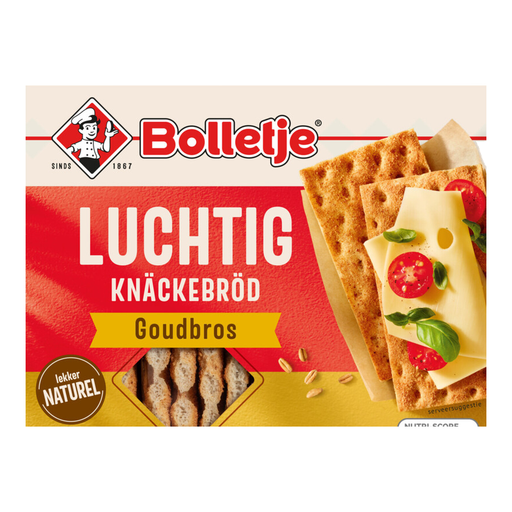 Image unavailable
A smaller pack to consider alongside your other lunch options. It contains 240 g. Check the ingredients and allergens for this variety: wheat, gluten and sesame are worth noting.
No. According to the product information, Wasa Wholegrain contains rye and gluten. The AH Gluten-Free High-Fibre crispbread reviewed is stated to be made in a completely gluten-free environment, but it also lists oats and may contain sesame. Always check the current label for the variety you’ve chosen.
Read the ingredients and allergen information on the pack you’re actually using. According to the Netherlands Food and Consumer Product Safety Authority, allergens that must be declared need to be clearly identifiable in the ingredients list. Also bear in mind any arrangements in place at the school or in the class.
The term refers to the flour used, not whether the whole lunch is suitable. The Netherlands Nutrition Centre says crackers can only be called ‘wholegrain’ if they’re made from 100% wholegrain flour. Also compare the nutritional information per 100 g and the allergens listed for the specific pack.
Follow the storage advice on the pack you’ve chosen. The product information for Wasa Wholegrain says to store it somewhere cool and dark; for the Albert Heijn gluten-free crispbread reviewed, it says to store it in a cool, dry place and reseal the pack securely after use.
Check the ingredients list for the exact variety rather than making assumptions based on its product category. For example, the AH Gluten-Free High-Fibre crispbread reviewed lists iodised salt.