
If you buy crispbread regularly
If you eat it often, the pack size can help you decide how much you’re likely to use. When comparing different packs, check how many pieces they contain too.


For everyday use, a pack you can finish is a practical place to start. Then choose based on the product type, wholegrain labelling and ingredients. If you’re serving crispbread at a Christmas market, it’s also worth checking that it goes well with your planned toppings. If you regularly eat it instead of bread, don’t assume you’ll get the same amount of iodine.
If you eat it often, the pack size can help you decide how much you’re likely to use. When comparing different packs, check how many pieces they contain too.
Check the wholegrain labelling for each variety and compare fibre on a like-for-like basis, such as per 100 g. The Netherlands Nutrition Centre lists fibre as one of the nutrients found in wholegrain cereal products.
If you have an allergy, always go by the current packaging: ingredients and allergens can vary between varieties. If you regularly eat less bread, also consider where crispbread fits into your overall diet.
| What to consider | What should you check? | Who is this most important for? |
|---|---|---|
| Pack size | Compare the net weight and number of pieces for the same type of product. | If I eat crispbread regularly, I want to choose a pack that suits how much I use. Around 40% of consumers put this everyday quantity first. |
| Wholegrains and fibre | Check the wholegrain labelling and compare the stated fibre content per 100 g. | For breakfast or lunch, I mainly want to know whether my chosen variety is wholegrain. For around 30% of consumers, wholegrains or fibre are the top priority. |
| Ingredients and allergens | Read the current ingredients list, allergen information and any warnings on the packaging. | If I need to avoid certain ingredients, I can’t rely on the product name alone. Around 20% of consumers give these checks top priority. |
| Serving and storage | Check whether the shape works with your planned toppings and follow the storage advice. | For small bites, I want crispbread that I can serve with my chosen toppings and store in advance. Around 10% of consumers put this serving purpose first. |
A wholegrain label doesn’t mean a product is free from allergens. The Wasa examples mentioned contain cereals with gluten; ingredients vary between varieties.
If you have an allergy, always read the current label on the exact pack you plan to use.
According to the Netherlands Nutrition Centre, bread made with iodised baker’s salt is an important source of iodine in the Netherlands. The Centre also notes that bakers aren’t required to use baker’s salt, so the product type alone won’t tell you how much iodine a particular crispbread contains.
If you’re replacing bread regularly, check the ingredients of your chosen product and consider your overall diet. If in doubt, seek advice from a nutrition professional.
For small bites, how the crispbread works with your toppings may matter more than it does for an everyday bread substitute. A product name won’t tell you whether your planned combination will be easy to serve.
Try your chosen variety with the toppings in advance and follow the storage advice on the pack once opened.
ALDI own-brand crispbread in sesame and wholegrain varieties, in 375 g packs.
Albert Heijn own-brand sesame crispbread, listed in a 375 g pack.
Jumbo own-brand wholegrain crispbread in a pack of 5 × 5 pieces.
A brand with a range of crispbread varieties; the separately listed high-fibre crackers are a different type of product.
The brand behind Leksands Knäcke original, listed as a 200 g pack at Albert Heijn.
These crispbread options are suitable for everyday use or serving with toppings. Compare the pack size, product type and current label before choosing.
 No image available
A wholegrain option to consider for everyday crispbread.
375 g pack. If you have an allergy, check the ingredients and allergens on the current label.
 No image available
A wholegrain option to consider if you’re looking for crispbread for breakfast or lunch.
265 g pack. If you have an allergy, read the current allergen information.
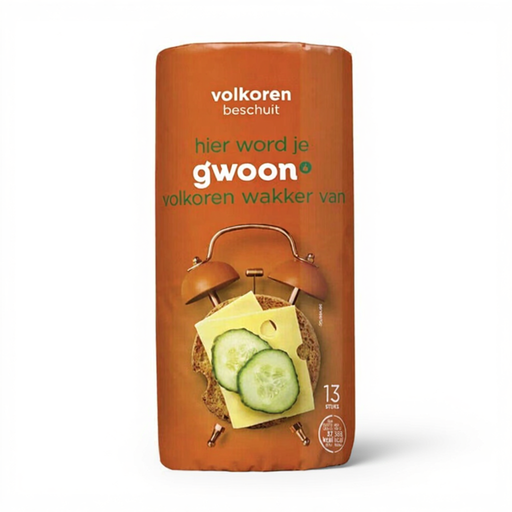 No image available
A wholegrain option in a smaller pack, ideal if you want to choose a quantity that suits how much you use.
125 g pack. Check the ingredients and allergens on the current label.
 No image available
A crispbread option to consider if you’re looking for a base for toppings.
215 g pack. Check the ingredients and allergens for this specific variety on the label.
No. The Wasa varieties mentioned contain cereals with gluten. If you need to avoid gluten, check the description and ingredients on the specific pack.
Read the label on the pack you’re going to use, even if you already know the brand. The Netherlands Food and Consumer Product Safety Authority states that allergens must be clearly and correctly labelled on prepacked foods. Check for any warnings about cross-contamination too.
You can’t tell from the product type alone. The Netherlands Nutrition Centre identifies bread made with iodised baker’s salt as an important source of iodine in the Netherlands. If you regularly replace bread, consider the product you’ve chosen and your overall diet.
Follow the storage advice on your chosen pack and reseal it as directed after opening. If you’re preparing it for serving later, check the best-before date too.