
Easter breakfast shoppers keeping an eye on fibre
You’re looking for a crisp base and want to compare wholegrain options and fibre per 100 g, rather than judging by the look of the packaging alone.


For Easter breakfast, crispbread labelled ‘wholegrain’ is a useful starting point if you’re focusing on fibre. According to the Netherlands Nutrition Centre, a 10 g piece of wholegrain crispbread contains an average of 1.4 g of fibre. Then match the flavour and shape to your toppings, but if you avoid gluten or have allergies, always check the label on the exact pack. And don’t assume it contains iodine from baker’s salt: according to the Netherlands Nutrition Centre, using it is not compulsory.
You’re looking for a crisp base and want to compare wholegrain options and fibre per 100 g, rather than judging by the look of the packaging alone.
You’re choosing crispbread to go with the toppings you plan to serve. Rye, sourdough and sesame offer different flavours to choose from; if you’re serving guests, check the allergens too.
You need a gluten-free option or have specific allergens to consider. The claims and ingredients on the current packaging will tell you whether a product is suitable.
First, decide whether a dietary restriction narrows down your options. Then compare the nutritional information and flavours of suitable products to find what works with your Easter toppings.
| What to consider | What to check when buying | Who it matters most to |
|---|---|---|
| Wholegrain and fibre | Look for the word ‘wholegrain’ and compare fibre per 100 g. According to the Netherlands Nutrition Centre, crackers can be labelled wholegrain when the flour is entirely wholemeal. | For my Easter breakfast, I mainly want a wholegrain cereal product, and a light texture is less important. This is the top priority for around 42% of consumers. |
| Flavour and toppings | Choose a shape and flavour to suit the toppings you have planned; if it contains sesame or other additions, check the ingredients too. | When I’m putting together an Easter platter, I want the crispbread to go with what I’m serving on it. Around 33% of consumers give this the highest priority. |
| Gluten and allergens | Check the exact pack for a gluten-free claim and any ‘contains’ or ‘may contain’ statements. | For my guests, I first need to work out which products suit their dietary restrictions. This check matters most to around 25% of consumers. |
Colour and crunch don’t tell you whether the flour used is entirely wholemeal.
Look for the word ‘wholegrain’, then compare fibre per 100 g. The Netherlands Nutrition Centre says crackers can only be labelled wholegrain if they are made exclusively with wholemeal flour.
The gluten-free Wasa Sesame & Sea Salt option described by Jumbo contains sesame and may contain milk, soya and mustard.
Check the allergen information on the current packaging for every guest, even when it says ‘gluten-free’.
Not all crispbread is made with baker’s salt. According to the Netherlands Nutrition Centre, using baker’s salt is not compulsory.
If the type of salt used matters to you, check the ingredients of the specific product.
Albert Heijn and Jumbo list a range of Wasa crispbreads, including wholegrain and sesame options.
A brand to consider if you’re looking for rye crispbread; Albert Heijn lists a Leksands option in its crispbread range.
A reference point for rye-based crispbread, including Original Crispbread.
These are options to consider if you’re looking for crispbread with a wholegrain base for Easter breakfast. If fibre is a priority, compare the nutritional information per 100 g on the packaging. If you have dietary restrictions, always check the ingredients and allergen information.
 No image available
An option to consider if you want to compare the fibre content of crispbread. If you avoid gluten or sesame, check the ingredients and allergen information on the pack.
Pack size: 300 g.
 No image available
A wholegrain option to consider as a base for your Easter toppings. If you have allergies, read the packaging carefully, including any information about cereals and sesame.
Pack size: 375 g.
 No image available
A wholegrain option for Easter breakfast. Check the packaging to confirm the product format, and if you have allergies, check the ingredients and allergen information.
Pack size: 265 g.
 No image available
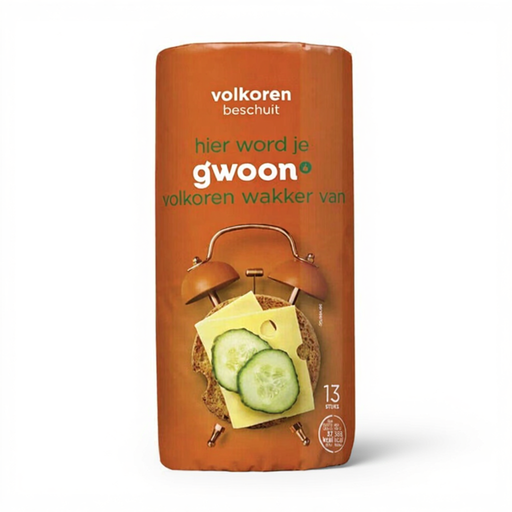
A smaller wholegrain pack to consider for your Easter toppings. Compare fibre per 100 g and confirm the product format on the packaging; check the allergen information there too.
Pack size: 125 g.
 No image available
An option to consider with the toppings on your Easter platter. If fibre is your main priority, compare the amount per 100 g on the label; check the allergen information too.
Pack size: 215 g.
No, that label alone tells you nothing about the ingredients in crispbread. If you’re choosing based on fibre, look for the wholegrain claim and nutritional information per 100 g. Don’t think of it as a solution for digestive problems.
Look for the word ‘wholegrain’ on the packaging, then compare fibre per 100 g. According to the Netherlands Nutrition Centre, crackers can be labelled wholegrain when the flour is entirely wholemeal.
No, rye contains gluten. Choose a product explicitly labelled gluten-free and check the other allergen information too. For example, the gluten-free Wasa Sesame & Sea Salt described by Jumbo contains sesame.
No, don’t assume baker’s salt is a standard ingredient in crispbread. The Netherlands Nutrition Centre says its use is not compulsory, so check the ingredients on the pack you choose.
Follow the storage instructions and best-before date on the packaging for your product. Jumbo advises storing Wasa Protein Wheat in a dry, dark place; don’t automatically apply this instruction to another variant.