
If you’re putting together the brunch board
You’re looking for crispbread that suits the way you want to present your toppings. A thin sesame variety offers a different base from wholegrain rye, so consider the shape and ingredients too.


For Easter brunch, choose wholegrain crispbread if you’re looking for a grain-based option to top with your favourite ingredients, or an extra-thin seeded variety if presentation on the brunch board is your priority. A low-carb or high-protein product is most relevant when a guest has a specific preference. Check the ingredients, allergen information and nutritional details on the packaging for each variety; don’t assume it contains iodised baker’s salt.
You’re looking for crispbread that suits the way you want to present your toppings. A thin sesame variety offers a different base from wholegrain rye, so consider the shape and ingredients too.
You want to know which grains are used and how much fibre each variety contains per 100 g. This tells you more about its grain base than the packaging does.
If a guest needs to avoid certain grains or sesame, or is keeping an eye on carbohydrates, protein or salt, check the information on the exact product packaging. Varieties from the same brand can differ.
First decide which crispbread you’d like to serve, then compare the ingredients and nutritional information of the varieties that fit the bill.
| What to consider | What to check when buying | Who it matters to |
|---|---|---|
| Presentation and toppings | Check whether the variety is extra thin or has a wholegrain base; if it contains seeds, check the ingredients. | If I want to serve a range of toppings on the brunch board, the shape of the crispbread needs to suit my serving plan. For around 25% of consumers, presentation and practicality come first. |
| Wholegrains and fibre | Compare the grains listed, the wholegrain content and the amount of fibre per 100 g. | When I serve crispbread as a grain-based option, I want to be able to compare the nutritional information for each variety. Around 33% of consumers prioritise wholegrains and fibre. |
| Carbohydrates or protein | Check the carbohydrates, protein, fat and energy per 100 g, as well as the portion you’ll serve. | If a guest has a strong preference for fewer carbohydrates or more protein, I want to be able to choose a suitable variety without relying on the front of the packaging alone. This nutritional goal comes first for around 17% of consumers. |
| Allergens, salt and iodine | Check the allergen declaration and salt content of the exact variety; if you’re concerned about iodine, check which salt is listed in the ingredients. | If guests need to avoid certain ingredients, I want to know what’s in the crispbread before serving it. For around 25% of consumers, checking the label is their first concern. |
The Netherlands Nutrition Centre says that using baker’s salt when baking bread is not compulsory. So, seeing salt listed doesn’t tell you whether iodised baker’s salt was used in a particular variety.
If this distinction matters to you, check the ingredients on the packaging.
The varieties mentioned use different grains and seeds. For example, the thin sesame variety contains sesame, while the wholegrain rye variety contains rye. Descriptions such as thin or wholegrain don’t replace allergen information.
Read the declaration on every pack and keep the packaging handy in case guests have questions about the ingredients.
Alongside its low-carb claim, the product information for TastyBasics Low carb Pompoenpit lists 25 g of fat per 100 g. A single claim on the front doesn’t tell you the full nutritional value.
Compare the nutritional information per 100 g and per portion, and check the ingredients and allergens before choosing this variety for a guest.
The crispbread varieties reviewed from these brands differ. So compare the packaging for the specific variety, rather than looking at the brand name alone.
The Wasa products reviewed include both wholegrain rye crispbread and an extra-thin sesame variety.
Leksands Knäckebröd Haver is a wholegrain variety made with several types of grain, for anyone who’d like to serve that combination on the brunch board.
The Low carb Pompoenpit variety reviewed is aimed at consumers who are specifically comparing carbohydrates or protein.
Bolletje has a wholegrain crispbread variety among those reviewed, for anyone wanting to compare grains and fibre.
These products include wholegrain crispbread as a base for toppings and a thin sesame variety for a different presentation. Choose between them based on the grains, shape and information relevant to your guests.
 No image available
A wholegrain rye variety to consider as a base for brunch toppings. Albert Heijn lists Wasa Volkoren as 100% wholegrain rye, with 20 g of fibre per 100 g. If you’re serving guests with food allergies, check the allergen information on the pack.
 No image available
A wholegrain option for serving with a range of brunch toppings. Compare the grains used, fibre per 100 g and allergens on the packaging with the other varieties you’re considering.
 No image available
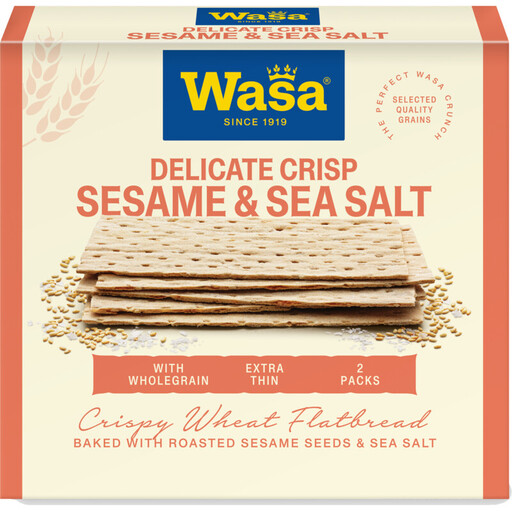
An extra-thin sesame variety if you’re looking for a different shape from traditional crispbread for your brunch board. The product information lists 11,5% sesame seeds and 1,75 g of salt per 100 g. As it contains sesame and other grains, check the packaging before serving it to guests.
 No image available
A crispbread variety to consider as a base for toppings or small sandwiches. Check the ingredients and nutritional information on the packaging if the grain type, fibre or allergens are important to your choice.
No, you can’t assume that for every variety. The Netherlands Nutrition Centre says that using baker’s salt when baking is not compulsory, so check the ingredients of the crispbread you want to serve.
Choose crispbread with a suitable gluten-free label and read the allergen information on the exact packaging. Rye, wheat and barley are found in the varieties discussed. The Netherlands Food and Consumer Product Safety Authority explains that allergens must be declared on labels, so don’t rely on the product’s name or shape alone.
Seal the packaging tightly after opening. Joybuy gives this storage advice for Wasa Volkoren; for other varieties, follow the instructions on their own packaging.