
Caterers serving a self-service buffet
They need pieces that guests can easily pick up and top, with a predictable number of portions per pack. Serving toppings separately keeps things flexible.


For a conference buffet, plain wholegrain crispbread is a practical starting point when guests can choose their own toppings. Work out how much you need only after checking the size of each piece and the number of pieces in a pack, and check the allergens in both the crispbread and the toppings. The term ‘medium sliced’ does not, by itself, provide a useful measure for planning portions.
They need pieces that guests can easily pick up and top, with a predictable number of portions per pack. Serving toppings separately keeps things flexible.
They need to be able to check which allergens are present in each chosen variety and topping. For unwrapped food, this information must be available to consumers before they order.
They may want to offer a wholegrain variety or a separate gluten-free option, for example. The information on the exact pack matters here, not just the product category or brand name.
For a conference, first choose the type of crispbread and any dietary options you need. Then use the dimensions and number of pieces per pack to work out how many packs to buy.
| What to consider | What to check before buying | Who is this most important for? |
|---|---|---|
| Size and buffet service | Ask for the dimensions and number of pieces per pack; if necessary, test whether the pieces stay intact when topped. | When I’m serving lots of guests one after another, I want to be able to plan portions without relying on pack weight alone. For around 42% of consumers, buffet logistics come first. |
| Allergens and dietary options | Check the latest ingredient and allergen information for each variety and topping; assess any gluten-free option separately. | At a buffet catering for different dietary needs, I want to give guests clear information before they make their choice. Checking allergens is the top priority for around 33% of consumers. |
| Nutritional information | Compare the ‘wholegrain’ claim, fibre and salt per 100 g; for a buffet portion, also check the amount per piece. | When the menu calls for a wholegrain base, I want to know what the chosen variety actually says on the pack. Around 25% of consumers prioritise this nutritional profile. |
Pack weight doesn’t tell you how many pieces you can serve. Even when the total amount of crispbread is the same, piece size and how easily it breaks can affect service.
Before placing your order, ask for the dimensions and number of pieces, or assess a sample pack before calculating how many packs you need.
Products from the same brand can have different ingredients and allergen declarations. For example, Jumbo lists wheat and possible traces of soya, mustard and lupin for Wasa Protein Wheat.
Record the details for the exact variety and each topping, and update the buffet information if a product or pack changes.
Encouraging the use of iodised baker’s salt in bread and bread substitutes tells you nothing about the salt in an individual pack of crispbread.
If you want to mention iodine in the menu information, check the ingredients list on the chosen pack first.
According to the Netherlands Nutrition Centre, salt levels in crackers can vary by brand. For a topped buffet portion, you also need to consider what you serve on top.
Compare the salt content of the crispbread per 100 g, and decide separately which toppings to offer.
A brand offering several types of crispbread, including wholegrain and gluten-free varieties in the range shown by Jumbo.
A supplier of AH crispbread and branded products, with wholegrain and seeded varieties among its range.
A supplier with several Wasa varieties in its crackers and crispbread category.
A supplier of crispbread varieties in sesame, wholegrain and golden-brown styles, as listed on Lidl Netherlands’ product page.
A brand offering rye crispbread; Original Crispbread is a specific variety to assess for its ingredients and nutritional information.
You can compare these crispbread products as a base for a buffet with toppings. The pack weights listed can help you choose a pack, but use the actual piece size and number of pieces to plan portions; the products have not been selected on the basis of ‘medium sliced’.
 Image unavailable
An option for when you want guests to choose their own toppings. The pack weighs 265 g; check the number and dimensions of the pieces before planning buffet portions.
For allergen information, check the latest packaging for this variety and remember to check the toppings too.
 Image unavailable
A crispbread variety for a buffet where guests make up their own toppings. The pack weighs 215 g; ask about the size and number of pieces to plan service.
Check the ingredients and allergens on the latest packaging before serving this variety at the buffet.
 Image unavailable
A 375 g pack to consider for a buffet with toppings served separately. Don’t rely on weight alone: check how many pieces are in the pack and how large they are.
Use the information on the exact pack for menu and allergen details.
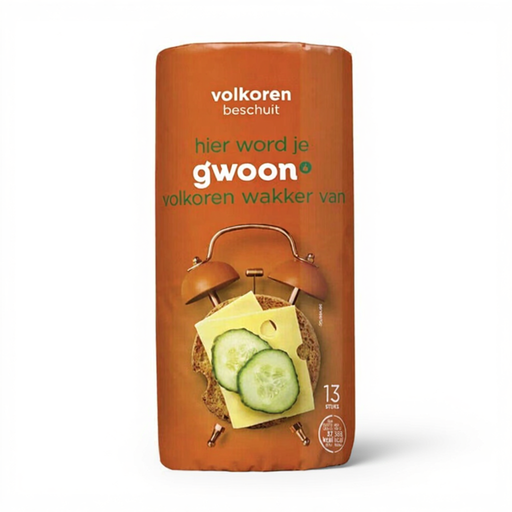 Image unavailable
A 125 g pack to consider when you want to assess a separate buffet option. Check how many pieces it contains before deciding how many packs you need.
Check the latest packaging for the precise ingredients, nutritional information and allergens.
Yes. According to the Netherlands Food and Consumer Product Safety Authority, information about the 14 relevant allergens must be available for unwrapped foods before consumers order. Check both the crispbread and any toppings; additional conditions apply if the information is given verbally.
No. Rye is a gluten-containing grain. If a gluten-free option is required, choose a product labelled gluten-free on the exact pack and check the information about preparation and service.
No. Don’t infer that it contains iodine from the product category or from the use of iodised baker’s salt in the Netherlands. Check the ingredients list on the chosen pack before mentioning iodine in the menu information.
Use ‘wholegrain’ in the menu description when that claim appears on the packaging of the chosen variety. The Netherlands Nutrition Centre says crackers can only be called wholegrain when they are made from 100% wholemeal flour; the product name alone is not a reason to assume other nutritional or dietary characteristics.