
Caterers preparing topped bites
If you’re using crispbread as the base for small lunch or drinks-party bites, you’ll want to know whether its size, flavour and sturdiness work with your planned toppings.


For a conference buffet, plain crispbread makes a practical base. You could also choose a variety for small topped bites if flavour and presentation matter. If you need a gluten-free option, keep it separate and check the allergen information for the exact product. Before ordering, also consider the size, how well it holds the toppings you have planned and the pack size.
If you’re using crispbread as the base for small lunch or drinks-party bites, you’ll want to know whether its size, flavour and sturdiness work with your planned toppings.
If you’re catering for a range of guests, you’ll need to distinguish standard products from a separate dietary option and have the allergen information for each product available.
If you need to serve a large number of portions, consider the number of pieces, pack size, storage instructions and how much you’ll actually need during the buffet.
First decide whether the crispbread will mainly be a base for toppings, a standout part of a bite or a separate dietary option. Then check that your chosen products suit the portions and serving style.
| What to consider | What to check when buying | Who it matters to |
|---|---|---|
| Presentation and suitability for toppings | Check the size and flavour, and try the product with your planned toppings in advance. | For small topped bites, I want the base to suit the topping and stay intact when served. This presentation requirement is a priority for around 25% of consumers. |
| Allergens and dietary options | Check the current label, including ‘contains’ and ‘may contain’ statements, and plan separate serving utensils where needed. | If guests need a gluten-free option, I want to serve it separately and make it easy to identify, without calling it allergen-free. This requirement matters most to around 31% of consumers. |
| Storage and serving | Read the storage instructions and decide how many packs to open each time you replenish the buffet. | At a long conference, I want to keep reserve packs sealed and replenish the buffet in small quantities. Around 25% of consumers prioritise this way of serving. |
| Quantity and purchasing | Compare the net weight and number of pieces, and confirm the quantity you need and delivery arrangements with the supplier. | For a large number of guests, I want to buy enough portions without opening more packs than necessary. This need for volume is the main consideration for around 19% of consumers. |
A gluten-free product may contain other allergens. For example, the Wasa Sesame & Sea Salt variety described by Jumbo contains sesame and states that it may contain milk, mustard and soya.
Use the information on the exact pack, make it clear which label belongs to each product and avoid contact with standard crispbread.
Serving this separately also takes space and requires extra handling for the packaging, serving utensils and buffet labels.
A large pack doesn’t tell you how many usable topped portions it will provide. Breakages, the size of each piece and separate dietary options all affect your planning.
Count the portions needed for each part of the buffet, and try the crispbread with your planned toppings before placing a large order.
The crispbread described by Albert Heijn should be stored in a dry place and kept in a sealed tin after opening. Moist toppings also make it less suitable for preparing everything in advance when food will be served over a long period.
Keep reserve packs sealed in line with the product instructions, replenish the buffet in small quantities and add toppings as close to serving as possible.
The Netherlands Food and Consumer Product Safety Authority explains the conditions under which bakery products may contain iodine through baker’s salt. This doesn’t mean that all crispbread contains baker’s salt with iodine.
Check the ingredients list for your chosen product before mentioning iodine on a buffet label.
Jumbo stocks several Wasa varieties, from standard crispbread products to specific flavours and dietary options.
Ryvita is a well-known rye crispbread brand. The product information for Original Crispbread lists wholemeal rye flour, rye flour and salt.
Albert Heijn’s crispbread range includes own-brand products and varieties from other brands.
Jumbo provides product information for a range of standard and specialist Wasa varieties.
Lidl lists crispbread with sunflower seeds and with pumpkin seeds, both in 264 g packs.
ALDI lists Goud Gebakken products including wholemeal crispbread in a pack of 25 pieces weighing 375 g, and a seeded variety weighing 265 g.
These products suit two buffet options: varieties for small topped bites and a cracker for standard serving. For topped bites, try the size and sturdiness in advance, and check the current label for every product.
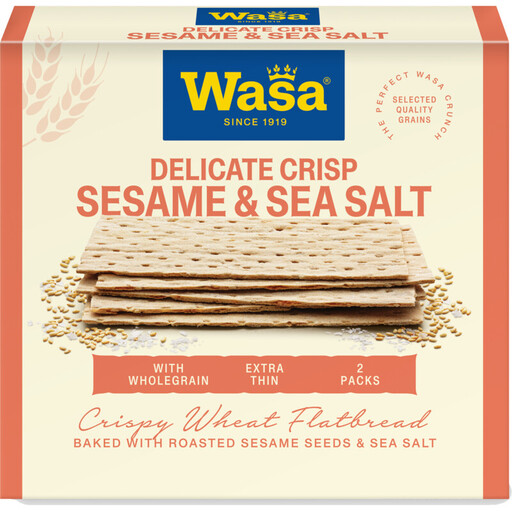 No image available
A sesame variety to consider for small topped bites. Try it in advance to see whether the pieces will hold your planned toppings.
190 g pack. Check the current packaging for allergens, paying particular attention to sesame.
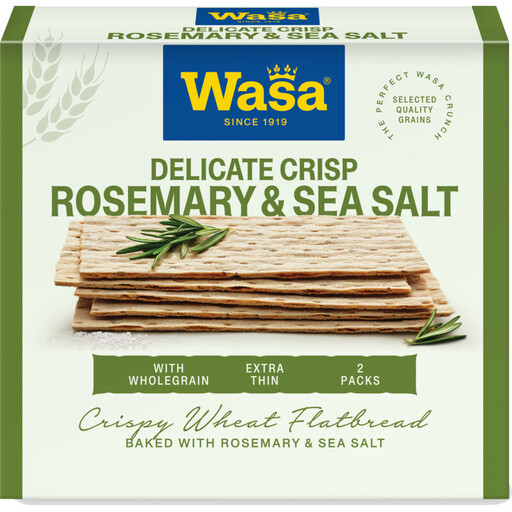 No image available
The rosemary and salt variety could work in a selection of savoury bites if the flavour complements the toppings. Check its sturdiness too.
190 g pack. Read the current label for ingredients and allergen information.
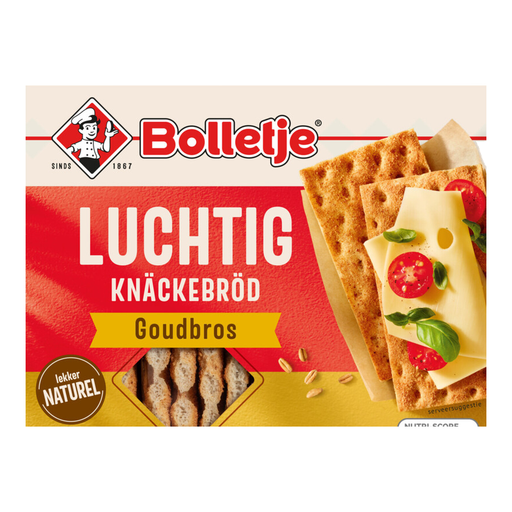 No image available
A crispbread to consider as a base for buffet toppings. Check the size and try it with your chosen topping.
240 g pack. Refer to the current packaging for allergen information.
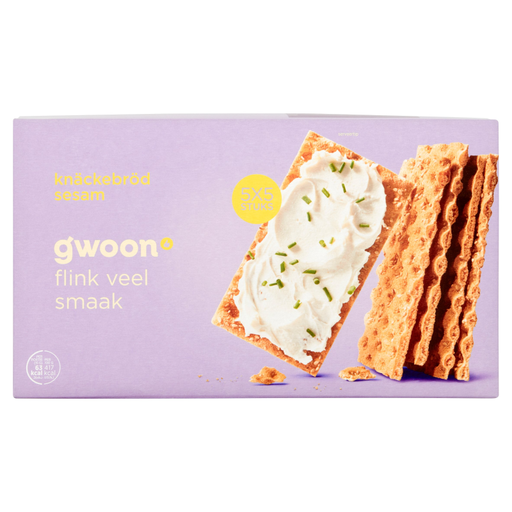 No image available
A sesame variety for a buffet where the flavour complements the toppings. Check the size of each piece before planning portions.
Pack of 5 pieces. Check the current label for sesame and other allergens.
 No image available
A cracker to consider as a standard buffet base. Check whether its size and flavour suit your planned portions.
300 g pack. Read the current label for ingredients and allergens; don’t assume it’s suitable for a particular diet based on the product name alone.
Make allergen information available before guests choose. The Netherlands Food and Consumer Product Safety Authority says that for unpackaged catering, this can be provided in writing, for example on buffet labels, or verbally, as long as guests are clearly told they can ask for it.
No. Rye is a gluten-containing grain. If you need to offer a gluten-free option, choose a product explicitly labelled gluten-free and also check the label for other allergens and ‘may contain’ statements.
No. Don’t assume that all crispbread contains baker’s salt with iodine. According to the Netherlands Food and Consumer Product Safety Authority, iodine compounds may only be present in bread, bread substitutes and other bakery products through baker’s salt, with a maximum of 65 mg of iodine per kg of salt. Check the ingredients list for your chosen product.
Keep reserve packs sealed in line with the product instructions and replenish the buffet in smaller quantities. Add moist toppings shortly before serving and follow the storage instructions on the packaging.
Use the range to compare varieties, but confirm the quantity you need and delivery arrangements directly with your chosen supplier. Also check the number of pieces per pack and any separate products needed for dietary requirements.