What should you check when buying?
Start with the grain base: a mixed variety may suit you if you're making the switch gradually, while the 100% wholemeal label describes a different choice. Then check the nutritional information and allergens for the variety you actually plan to buy.
| What to consider | What to check when buying | Who it matters to |
|---|
| Flavour and making the switch |
Check whether both wholemeal flour and flour are listed in the ingredients; don't judge the proportions by the colour. |
If a strong rye variety tends to be left uneaten, I'd like to try a different grain base first. Around 44% of consumers give this kind of gradual switch top priority. |
| Wholegrains and fibre |
Check the wholemeal claim and compare fibre per 100 g. |
When I have coffee, what matters most is being able to see which grains have been used and how much fibre the product contains. For around 33% of consumers, this information comes first. |
| Allergens and ingredients |
Check the allergens, ingredients and salt content per 100 g on the current packaging. |
I need to be able to rule out a product if its ingredients don't suit my dietary restrictions. For around 23% of consumers, this is their main concern. |
Crispbread on Joybuy
These products give you a starting point for comparing a possible blend, a wholemeal variety and a lighter option to enjoy with coffee. The product name alone doesn't tell you which grain base or allergens are listed on the current packaging.
 Image unavailable
Wasa High-Fiber crackers, 300 g
An option to consider if you're looking for a product made with different types of flour to enjoy with coffee. Check the grain base, nutritional information and allergens on the packaging before choosing this variety.
View on Joybuy
 Image unavailable
Wasa Lightweight crackers, 300 g
For anyone considering another Wasa variety alongside a blend. Check the wholemeal flour, ingredients and allergens on the current packaging; ‘Lightweight’ on its own doesn't mean it's a flour and wholemeal mix.
View on Joybuy
 Image unavailable
Bolletje wholemeal crispbread, 265 g
A wholemeal option for anyone whose priority is the grain base. Compare fibre and salt per 100 g, and check the allergens on this packaging.
View on Joybuy
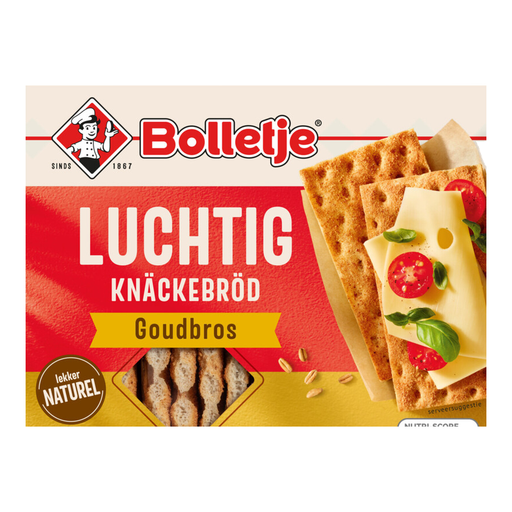 Image unavailable
Bolletje Light Crispbread Golden Crisp, 240 g
A lighter option to compare with wholemeal crispbread if texture is your main concern. Check the ingredients list: a light variety isn't automatically a mix containing wholemeal flour.
View on Joybuy
 Image unavailable
g'woon wholemeal crispbread, 375 g
An option to consider if you want to compare different types of flour. Read the current ingredients list to decide whether the balance of wholemeal flour and flour suits the kind of switch you're looking to make; check the allergens too.
View on Joybuy
Frequently asked questions
Is crispbread made with flour and wholemeal flour the same as 100% wholemeal?
No, a blend is not the same as a product made entirely with wholemeal flour. The Voedingscentrum links the ‘wholemeal’ claim for crispbread to 100% wholemeal flour; check the ingredients in a blended variety to see what grains it contains.
Could a blend suit a fussy eater?
Yes. If a strong wholemeal flavour makes the switch difficult, a variety containing both flour and wholemeal flour could be worth trying. Taste is a matter of personal preference; check the ingredients rather than judging by a light colour.
What should I look for if gluten or sesame matters to me?
Check the allergens listed on the current packaging for the variety you've chosen. Wasa Wholemeal contains rye and gluten, while the Bolletje Wholemeal High Fibre described by Albert Heijn contains cereals containing gluten and sesame, among other ingredients. The words ‘wholemeal’ and ‘high fibre’ don't tell you whether a product is suitable for someone with an allergy.
Does Dutch crispbread always contain iodised baker's salt?
Don't assume so based on the product category. If the presence of iodine matters to your choice, check the ingredients on the specific packaging or ask the manufacturer which type of salt was used.
How should I store crispbread after opening?
Keep it dry and in a well-sealed container to help it stay crisp. Follow the storage instructions on the packaging too; Bolletje advises storing its wholemeal crispbread in a dark, dry and sealed place after opening.


