
If wholegrain is your starting point
You want to serve a wholegrain option and not judge a cracker by its brown colour. The Netherlands Nutrition Centre explains that ‘wholegrain’ on crackers refers to the flour used.


For a coffee morning with guests who have different preferences, serve a crispbread labelled wholegrain alongside a lighter cracker you’ve tried in advance, rather than assuming one option will suit everyone. According to the Netherlands Nutrition Centre, ‘wholegrain’ on crackers means the flour used is entirely wholemeal; a light appearance or a mixture of flours doesn’t prove that a product is wholegrain. Check the ingredients and allergen information on both packs.
You want to serve a wholegrain option and not judge a cracker by its brown colour. The Netherlands Nutrition Centre explains that ‘wholegrain’ on crackers refers to the flour used.
You want to give guests a choice without assuming a lighter or mixed option will be more popular. Try a second option in advance and keep the packaging handy in case anyone has questions about ingredients or allergens.
You’ll need enough crispbread for several guests. Check the pack weight, the number of pieces in each pack and where you can buy your chosen option.
First decide which options you’d like to offer your guests, then check the ingredients on each pack. A thin or light-looking cracker isn’t necessarily an alternative made with a mix of white and wholemeal flour.
| What to consider | What should you check? | Who does this matter to? |
|---|---|---|
| Wholegrain and fibre | Look for the word ‘wholegrain’ on the pack and compare fibre per 100 g. | If I want to offer a wholegrain option, I want to be able to tell from the packaging, not the colour. This wholegrain choice is the deciding factor for roughly 31% of consumers. |
| Taste and texture | Try a second option in advance if you want to offer a choice; don’t use ‘light’ to predict how it will taste. | My guests have different preferences, so I want to give them something to try. Taste and texture come first for around 31% of consumers. |
| Pack size and availability | Check the pack weight, the number of pieces and whether you can buy the product in store or online. | When shopping for a group, I want to be able to get enough packs in good time. For around 23% of consumers, practical considerations like these are the main priority. |
| Labels and allergens | Read the ingredients and allergen information; compare salt per 100 g and, if you have questions about iodine, look for a mention of iodised salt or baker’s salt. | If a guest needs to avoid certain ingredients, I want to be able to show them the right pack. For around 15% of consumers, checking the label is the most important factor. |
On their own, these characteristics don’t mean that a cracker is made entirely from wholemeal flour. According to the Netherlands Nutrition Centre, the label ‘wholegrain’ on crackers refers to flour that is entirely wholemeal.
Check the wording on the pack you choose, then use the ingredients list and fibre per 100 g for a more detailed comparison.
The Netherlands Nutrition Centre says that bread doesn’t have to be baked with baker’s salt. You can’t tell whether crispbread contains it from the product name alone, either.
If it matters to your choice, look for baker’s salt or iodised salt in the ingredients list.
Crispbread containing wheat or rye may not be suitable for guests with coeliac disease or a relevant allergy. Other ingredients and possible traces also vary by product.
Ask guests about any relevant allergens, keep the packaging handy and serve a suitable alternative separately from crispbread containing gluten.
Pack weights and places to buy products vary. For example, Lidl lists its wholegrain crispbread as available in store only.
Before your coffee morning, check how many pieces you’ll need and where you can buy your chosen option.
You may need to make an extra trip to the shops if you only discover at the last minute that your preferred option is available in store only.
Jumbo lists Wasa Wholegrain in its wholegrain range; there’s also a differently named option, Wasa Lightweight.
Ryvita Original is a rye option. According to the manufacturer, it contains 88 g of wholegrain rye flour per 100 g.
AH Knackebrod wholegrain is one example of a supermarket own-brand option labelled wholegrain.
Jumbo Wholegrain Crispbread is made with wholemeal wheat and rye flour and comes in a 375 g pack.
Lidl lists a product called Wholegrain Crispbread in a 250 g pack.
ALDI describes Goud Gebakken Crispbread as wholegrain and also offers a separate robust option with seeds.
These crispbreads and crackers come in a range of pack sizes and varieties for a coffee morning. If you’re specifically looking for a mix of white and wholemeal flour, don’t choose a lighter option based on its name alone; check the ingredients on the pack.
 Image unavailable
A rye option to serve alongside a cracker with a different composition. The pack contains 235 g; check the ingredients and allergens on the packaging before serving.
 Image unavailable
An option labelled wholegrain for guests who are looking for that. The pack contains 265 g; ask guests with a relevant allergy to check the packaging.
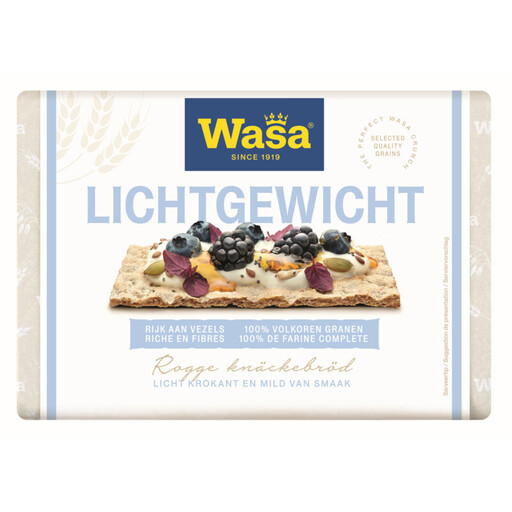 Image unavailable
A differently named Wasa option to try in advance if you want to offer a choice at the table. The pack contains 300 g; don’t infer its ingredients or taste from ‘Lightweight’—read the label.
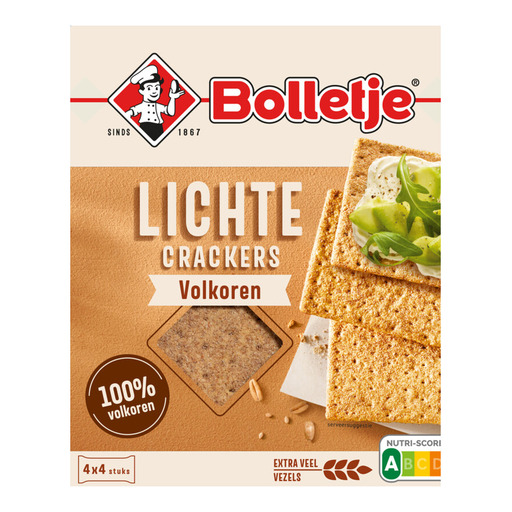 Image unavailable
A cracker option labelled wholegrain in a 190 g pack. ‘Light’ in the name doesn’t confirm that it contains a mix of white and wholemeal flour; check the ingredients if that particular combination matters to you.
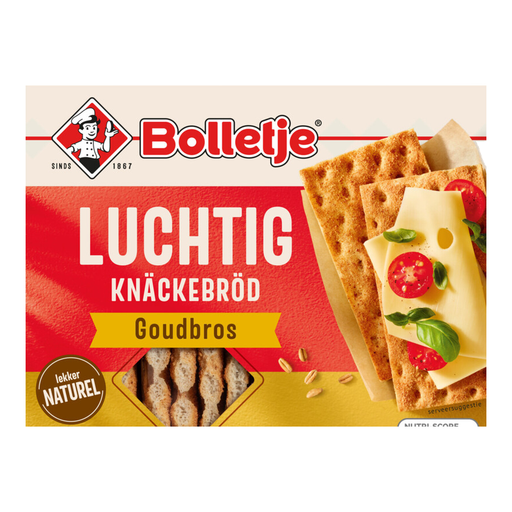 Image unavailable
A different crispbread option to try alongside a wholegrain choice. The pack contains 240 g; check the ingredients before offering this as a mix of white and wholemeal flour.
Yes. According to the Netherlands Nutrition Centre, a cracker can only be called ‘wholegrain’ if the flour used is entirely wholemeal. A product made with a mix that includes white flour may state the proportion of wholemeal flour it contains, but that isn’t the same as a cracker labelled wholegrain.
No, don’t assume it does. The Netherlands Nutrition Centre says that bread doesn’t have to be baked with baker’s salt; check the ingredients list on your chosen crispbread for baker’s salt or iodised salt.
Crispbread made with rye or wheat isn’t suitable for someone with coeliac disease, as these grains contain gluten. Check the pack for an explicit gluten-free label when choosing an alternative, and keep it separate from products containing gluten when serving.
Seal the pack well after opening and follow the storage advice on the packaging. Jumbo recommends storing its Wholegrain Crispbread in a cool, dry place; check the packaging for any other product.
Compare the salt per 100 g in the crispbread and read the nutritional information for the toppings too. That way, you can assess the combination you’re serving, rather than looking at the cracker alone.