For a coffee morning with just a few guests, choosing a suitable pack of crispbread makes more sense than looking for a ‘half loaf’. Compare the pack weight, number of pieces or servings, and storage instructions once opened. Then choose a grain and flavour to suit the toppings you plan to serve. A high-protein option is worth considering if protein content is a specific priority for you; if so, compare the rest of the nutritional information and the allergens too.
Who is this for?
Small household looking to avoid leftovers
If only a few people are joining you, the main thing to consider is how much crispbread you’ll use from a pack. Compare the pack weight and, where stated, the number of pieces or servings. Also check how to store any leftovers once the pack is open.
Host looking to serve a range of toppings
Wholegrain, rye or seeded crispbread offers a different base for sweet or savoury toppings. Decide what you want to serve first, then choose a flavour and ingredient list to suit your guests.
Shopper comparing labels
If you’re mainly looking at fibre, protein, salt or allergens, the nutritional information on specific products is more useful than a general description such as ‘wholegrain’ or ‘high-protein’. Compare values on the same basis, for example per 100 g.
What should you look for when choosing?
Start with how much you’ll need for your coffee morning. Then choose a flavour to go with your toppings and check any nutritional information or allergens that matter to your guests.
| What to consider |
What to check before buying |
Who is this important for? |
| Quantity and leftovers |
Compare pack weight, number of pieces or servings, and storage instructions once opened. |
If I’m only having a few guests, I don’t want to choose a pack that leaves lots over. For around 33% of consumers, finding a suitable quantity is the main concern. |
| Wholegrain and fibre |
Check which grains are listed in the ingredients and compare fibre per 100 g. |
I want wholegrain crispbread as a base, so I compare the ingredients and nutritional information. Around 25% of consumers put this nutritional choice first. |
| Flavour and toppings |
Choose between options such as wholegrain, rye or seeded crispbread, depending on the flavours you want to serve. |
When serving a range of toppings, I want crispbread with a flavour that suits the table. For around 25% of consumers, this pairing is the main consideration. |
| Nutritional information and allergens |
Compare protein and salt on the same nutritional basis; check the latest ingredient and allergen information. |
If a guest needs to avoid certain ingredients or I’m comparing specific nutritional values, the label is what matters. For around 17% of consumers, a requirement like this comes first. |
Nutritional values always relate to a specific product. For example, Jumbo lists 25 servings per pack and 10.9 g of fibre per 100 g for the Jumbo Wholegrain crispbread included in this research. Jumbo’s listing for Wasa Protein Wheat shows 20 g of protein and 1.0 g of salt per 100 g. Compare values like these per 100 g, and separately consider how much you’ll actually serve.
Common mistakes
-
Looking for half a loaf instead of a suitable pack
In the ranges covered by this research, crispbread is listed in packs by weight and sometimes by number of servings. So ‘half loaf’ won’t help you work out how much you need for a small gathering.
Estimate how many pieces you’d like to serve and compare packs by weight, number of pieces or servings. Also check the storage instructions for anything left after your coffee morning.
-
Assuming wholegrain or high-protein means gluten-free
The Jumbo Wholegrain crispbread included in this research contains wheat and rye. So the description ‘wholegrain’ doesn’t mean that it’s suitable for someone who needs to avoid gluten.
If a guest has a relevant allergy or follows a gluten-free diet, check the latest ingredients and allergen information on the pack you’ve chosen. Only assume a product is gluten-free if this is clearly stated on the packaging.
-
Comparing protein content alone
Jumbo’s product information lists 20 g of protein and 1.0 g of salt per 100 g for Wasa Protein Wheat. The Jumbo Wholegrain product included in this research lists 14.8 g of protein and 0.71 g of salt per 100 g. So the difference in protein doesn’t tell you the whole story about these two products.
Also compare salt, fibre, ingredients and how much you’ll serve each guest.
-
Taking iodised salt for granted
According to the Dutch baking industry, products such as imported and organic options may differ in their use of iodised baker’s salt. The product category alone won’t tell you which salt is used in a specific pack.
If this ingredient matters to your choice, check the ingredients list on the crispbread you’re planning to buy.
Brands to consider
These brands and own-label ranges offer a starting point for comparing flavour, pack size and labels. Always check the specific product: a brand name doesn’t tell you the nutritional values or allergens of an individual product.
Wasa
The ranges covered by this research at Albert Heijn and Jumbo include wholegrain, rye and high-protein options.
- The different options give you a choice of grain and flavour.
- Compare the labels for each option: the Protein Wheat listed at Jumbo contains 20 g of protein and 1.0 g of salt per 100 g, and contains wheat.
Albert Heijn
The own-label range includes wholegrain, sesame and sunflower seed options.
- The category page lists a range of flavours and pack weights, including 225 g, 265 g and 375 g.
- Check the ingredients, nutritional information and allergens for the specific option you choose.
Jumbo
Jumbo lists its own-label crispbread in a wholegrain option; the range covered by this research also includes Fjord Wholegrain Rye.
- The Jumbo Wholegrain pack included in this research is listed as 375 g and 25 servings, which can help you plan how much you need.
- The Jumbo Wholegrain product contains wheat and rye. Decide whether a 375 g pack suits the number of guests, and check the allergen information.
Goud Gebakken
ALDI Netherlands lists wholegrain crispbread and a seeded Robust option under this own-label brand.
- The product listings offer two different ingredient options.
- For details of ingredients, allergens and nutritional values, use the information on the specific pack.
Lidl eigen merk
Lidl Netherlands has a product listing for wholegrain crispbread.
- This is one brand to consider if you’re looking for a wholegrain option.
- Check the pack size, ingredients and nutritional information before choosing it for your guests.
Crispbread in different pack sizes and flavours
These Joybuy products include a smaller pack for a small gathering, rye options and wholegrain crispbread to serve with toppings. Use the pack weight to compare quantities; before serving, check the packaging for the number of pieces and any allergens relevant to your guests.
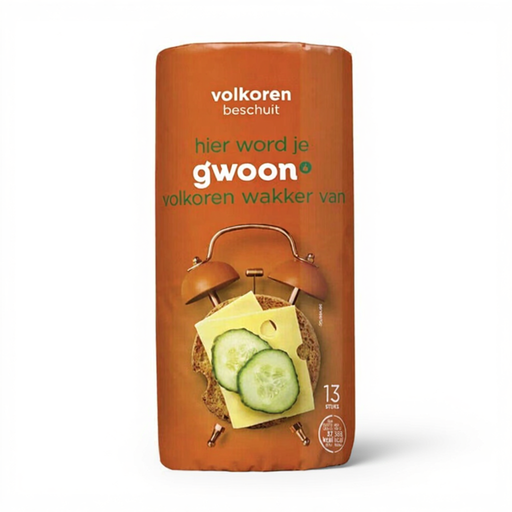 Image unavailable
g'woon Wholegrain crispbread, 125 g
A 125 g pack to consider if you’re looking for a wholegrain base for toppings for a small gathering. Before your coffee morning, check the number of pieces on the pack and read the allergen information if it’s relevant to your guests.
View at Joybuy
 Image unavailable
Wasa Sourdough Rye crispbread, 235 g
A rye and sourdough option if you’d like to serve that flavour with your chosen toppings. The pack weighs 235 g; check the packaging for the number of pieces and allergens before deciding how much you need for your guests.
View at Joybuy
 Image unavailable
Wasa Rustic crispbread, 215 g
A 215 g pack if you’re looking for a rye option to serve with toppings. Check the label if the exact ingredients, allergens or number of pieces will affect your choice.
View at Joybuy
 Image unavailable
Bolletje Whole Grain crispbread, 265 g
A wholegrain option to compare if you’re looking for more than a small pack to serve with toppings. The pack weighs 265 g; check the packaging for the number of pieces, nutritional information and allergens.
View at Joybuy
 Image unavailable
Wasa Wholegrain crispbread, 260 g
A 260 g wholegrain crispbread to compare with other pack sizes if you’re looking for a base for sweet or savoury toppings. To compare fibre or allergens, check the latest nutritional information and ingredients on the pack.
View at Joybuy
Frequently asked questions
Can I search for a smaller pack of crispbread using ‘half loaf’?
Pack weight and number of pieces are more useful when making this choice. In the ranges covered by this research, crispbread is listed by pack rather than as a standard half loaf. Decide how much you want to serve, then compare pack sizes.
How should I store crispbread left over after my coffee morning?
Follow the storage instructions on the pack you’ve chosen. For Jumbo Wholegrain, Jumbo advises storing the product in a cool, dry place and sealing the pack securely once opened.
Is wholegrain crispbread gluten-free too?
No. ‘Wholegrain’ doesn’t mean gluten-free. The Jumbo Wholegrain crispbread included in this research contains wheat and rye. If someone needs to avoid gluten, check the latest allergen information and only choose a product that is clearly labelled gluten-free.
Does every pack of crispbread contain iodised salt?
Don’t assume this based on the product category. According to the Dutch baking industry, products such as imported and organic options may differ in their use of iodised baker’s salt. If this matters to your choice, check the ingredients list on the specific pack.


